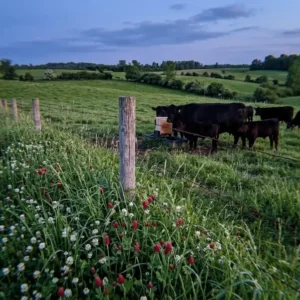
What Is Regenerative Agriculture? A Plain-English Guide
Your hay bill climbed again this year. Bare patches spreading in the back pasture. Fertilizer rep says apply more. Then someone at the farm show said “regenerative agriculture” and you walked away skeptical — sounded like a sales pitch dressed in ecology.
Fair. But here’s the thing: bare ground is the real problem on your place, and no fertilizer rep is going to tell you that. Bare ground loses moisture, feeds weeds, and costs you biology you’ve been paying to replace for years. That’s your villain. Regenerative agriculture has a name for it and a fix.
Forget the label. What we’re talking about is a set of practices aimed at leaving your ground in better shape than you found it — more water retention, better biology, lower inputs over time. You don’t need a certification to do it.
It’s Not Organic — Here’s the Real Difference
Most people figure regenerative and organic are the same deal. They’re not. Organic is defined by what you don’t use — no synthetic pesticides, no synthetic fertilizer. It’s a certification with rules you either meet or you don’t.
You can farm organically and still plow every year, leave your ground bare between seasons, run a monoculture. Technically organic. Not regenerative.
Regenerative is defined by what you’re building. Soil health. Biological activity. Long-term resilience. You can work regenerative practices into your operation without ever going near an organic cert — and most farmers who do it that way never look back.
Three Practical Goals
Pull away all the noise and you’ve got three things. Here’s what each one means on your ground.
| Goal | What It Means | On Your Farm |
|---|---|---|
| Build soil organic matter | Adds dark, spongy material that holds water and feeds biology | Cover crops, less tillage, managed grazing |
| Close nutrient cycles | Keep fertility on the farm — don’t export it with every crop | Legumes fix N; livestock manure stays on-farm; residue decomposes in place |
| Reduce inputs over time | Healthy biology means less fertilizer and herbicide needed | Takes 3–5 years of consistent practice; costs drop each year |
Soil biology is slow money — you won’t see the return this season. But that first goal, building organic matter, has a concrete number behind it: every 1% increase in organic matter lets your ground hold an additional 20,000 gallons of water per acre [1]. Come a dry July, that’s the difference between a stressed stand and one that holds on.
What It Actually Looks Like on 50 Acres
You don’t need to redesign your whole operation. Pick one field, pick one practice, get after it.
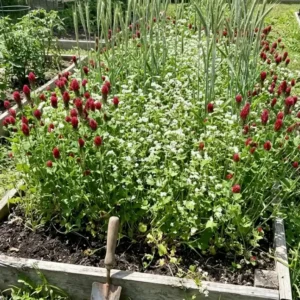
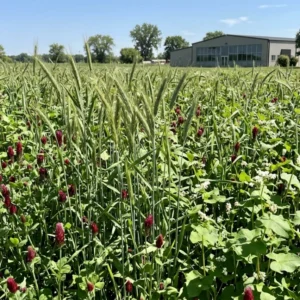
Cover crops keep living roots in your ground between cash crops or after hay harvest. Legumes like clover and hairy vetch fix nitrogen from the air. Grasses put on biomass. Brassicas bust through compaction. A two- or three-species mix drilled in after your main crop gets your soil biology moving immediately — no grand plan required.
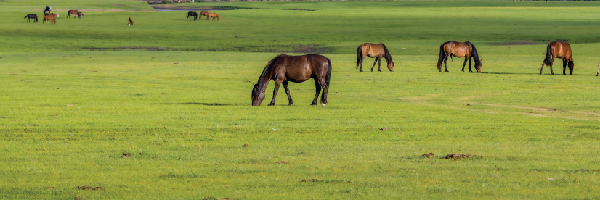
Rotational grazing moves your cattle instead of leaving them on the same ground all season. Grass that gets rest builds deeper roots. Deeper roots put carbon into your soil. It’s one of the fastest ways to tighten up thin spots and push organic matter in the right direction.
Fewer tillage passes lets fungal networks rebuild between crops. You don’t have to go no-till from day one. Just ask whether every pass is earning its keep. Some aren’t.
Start With One Thing
Nobody who made this work started with a five-year plan. They put a cover crop on one field. Saw what happened. Added the next piece when they were ready. Cover crop seed for 20 acres costs a few hundred dollars. Splitting one paddock with a strand of temporary electric fence costs almost nothing. Neither requires a loan.
Patience is the main input. The biology you’re building doesn’t show up on a balance sheet in year one.
Where to Start — No Consultant Required
Here’s a simple sequence you can run yourself:
- Get your ground tested first. A soil test from your county extension office runs $15–30. It tells you your pH, organic matter, and major nutrients — that’s your baseline before you change anything.
- Pick one practice and work it in. Growing row crops? Plant a cover after harvest. Running cattle? Try a two-paddock rotation on your worst pasture.
- Track it. Take photos. Mark which fields you changed. Retest in two to three years and look at the trend.
- Use the free money. NRCS cost-shares cover cropping and rotational grazing fence. Most small landowners never ask. Your local office will tell you what’s on the table — it takes one phone call.
→ The Soil Builder Cover Crop Kit is Nature’s Seed’s on-ramp to regenerative practice — cereal rye for biomass, white clover for nitrogen, and mustard as a biofumigant reset, shipped in three bags so you can dial your rate to your field. Shop at naturesseed.com/products/pasture-seed/soil-builder-cover-crop-kit/
Looking to go further? Hairy vetch, field peas, and sorghum-sudangrass are species commonly added to regenerative rotations that we don’t currently carry. All are widely available at farm co-ops and cover crop specialty suppliers — they layer cleanly alongside anything in our catalog.
References
- USDA Natural Resources Conservation Service. (2014). Soil health: Unlock the secrets in the soil. https://www.nrcs.usda.gov/wps/portal/nrcs/main/soils/health/
Part of our Regenerative Agriculture series — explore the full guide to find the right seeds and practices for your land.