The 5 Principles of Soil Health: Gabe Brown’s Framework for Skeptical Ranchers
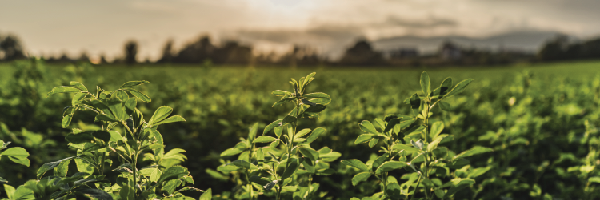
Four years in a row, Gabe Brown got hammered. Hail. Drought. Ice storms. Four consecutive crop failures in the late 1990s on his North Dakota ranch, and his inputs budget hit zero. No fertilizer. No options. No way to keep doing what he’d been doing.
What he built from nothing became the most-cited soil health framework in agriculture. Five principles. No theory — just what worked when he had no choice but to let the land carry more of the load.
The NRCS adopted it. Soil scientists studied it. Farmers across the country replicated it. If you’re skeptical about regenerative agriculture, start here. This is the practical core of it — and it didn’t come from a university extension office.
| Principle | The Rule | Where Most Farmers Fall Short |
|---|---|---|
| 1. Limit Disturbance | Every tillage pass and overgrazing event costs you biology | Running tillage as routine when it isn’t earning its keep |
| 2. Keep Soil Covered | Something covers the ground at all times: plant, residue, or mulch | Leaving fields bare from harvest through spring |
| 3. Living Roots Year-Round | Always have roots feeding the soil food web | Monoculture calendars with weeks of bare ground between crops |
| 4. Maximize Diversity | Multiple species = diverse biology below ground | Single-species cover crops or monoculture pasture |
| 5. Integrate Livestock | Managed grazing accelerates every other principle | Crop-only operations that have cut out animals entirely |
Principle 1: Every Disturbance Has a Price
Disturbance hits your ground three ways: mechanical, chemical, and biological. Mechanical is tillage — every pass tears apart the mycorrhizal networks you’ve been building, those underground fungal webs that connect your plants to nutrients and water. Chemical is herbicide and high-rate synthetic fertilizer suppressing soil biology. Biological is overgrazing — leave livestock on the same spot too long and you’re compacting soil and stripping canopy.
Brown puts overgrazing on the same level as tillage when it comes to rangeland damage. Your starting point: find your highest-disturbance practice and ask honestly whether you need it at that rate. Some tillage passes aren’t earning their keep.
Principle 2: Bare Ground Is an Invitation
Leave your ground naked and it bleeds. Moisture goes. Topsoil moves with the wind and rain. Surface temperature climbs high enough to kill biology. And every thin spot is just a head start for weeds.
Brown’s rule is blunt: something covers your ground at all times — living plants, crop residue, or mulch. A winter rye seeding after harvest is cheap insurance. The economic case is simple: every inch of topsoil you keep is fertilizer you didn’t have to buy.
Principle 3: Roots Run the Show
Plants feed soil biology through their roots. They push out sugars and compounds — root exudates — that feed bacteria and fungi. Those organisms cycle nutrients back to your plants. When your ground goes bare, that exchange stops. You restart it from scratch every season. That’s expensive biology to keep reinventing.
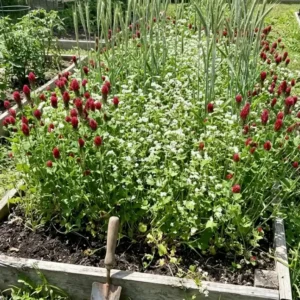
Living roots year-round means something is always in the ground. For crop farmers, that’s cover crops filling every calendar gap. For ranchers, it’s managing rest so pastures recover and roots stay intact. Perennial clovers are cheap to establish and pull double duty — fixing nitrogen while keeping roots active through the off-season.
Principle 4: What You See Above Ground Reflects What’s Below
Different plant species have different root architectures. Deep-rooted species break compaction. Shallow-rooted ones add organic matter near the surface. Each species hosts its own microbial community. Monoculture above ground means monoculture below — and that’s a brittle system.
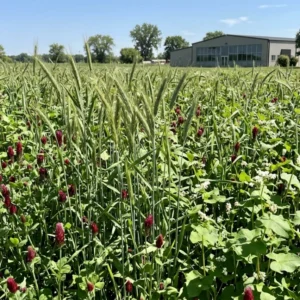
A five- to seven-species cover crop mix outperforms single-species plantings on almost every biological metric — nitrogen fixation, organic matter, weed suppression, forage quality. You don’t have to do it all in year one. Add one or two species to what you’re already planting and see what happens.
Principle 5: Cattle Are a Tool — Use Them
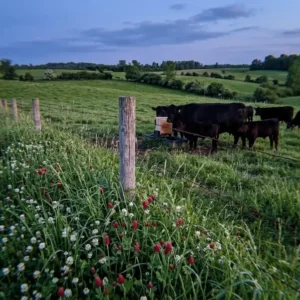
Most crop farmers skip this one. Managed livestock accelerate every other principle. They trample residue into your soil surface, speeding decomposition. Their manure seeds the ground with diverse biology. Their hooves press depressions that catch water. Managed grazing measurably improves soil carbon compared to ungrazed or continuously grazed land [2].
For ranchers already running livestock, this principle is about how you graze. High-density, short-duration passes with long rest periods mimic what wild herds used to do — and the results are dramatically different from turning cattle out and leaving them there all season.
How to Get After It — One Year at a Time
You don’t do all five in year one. Nobody does. Here’s a sequence that works on a small operation with limited capital:
- Year 1 — cover your ground (Principle 2). Put winter rye on your most vulnerable field. Cheap, reliable, works almost everywhere. Just get it in the drill.
- Year 2 — extend your living roots (Principle 3). Find where you’ve got bare ground in late summer or early fall. Fill it. One field at a time.
- Year 3 — push diversity (Principle 4). Upgrade your single-species cover to a mix. Add a legume to your pasture seeding. Two species is already better than one.
- Year 4 and beyond — tighten up disturbance and work livestock into the rotation (Principles 1 and 5). The system is ready once the biology has something to build on.
→ Brown’s five principles map directly onto two Nature’s Seed products. For soil cover, living roots, and diversity: the Soil Builder Cover Crop Kit hits all three in one planting — naturesseed.com/products/pasture-seed/soil-builder-cover-crop-kit/. For the livestock integration leg: our regional Cattle Pasture Seed mixes are built for rotational grazing systems — naturesseed.com/products/pasture-seed/
To push diversity further than our mixes go, sunflowers, cowpeas, sunn hemp, and forage brassicas like daikon radish are excellent additions. We don’t carry those as standalone seed — they’re available at farm co-ops and cover crop specialty suppliers and slot in cleanly alongside our kits.
References
- Teague, W. R., Apfelbaum, S., Lal, R., Kreuter, U. P., Rowntree, J., Davies, C. A., & Wang, F. (2016). The role of ruminants in reducing agriculture’s carbon footprint in North America. Journal of Soil and Water Conservation, 71(2), 156–164. https://doi.org/10.2489/jswc.71.2.156
- USDA Natural Resources Conservation Service. (2014). Soil health: Unlock the secrets in the soil. https://www.nrcs.usda.gov/wps/portal/nrcs/main/soils/health/
Part of our Regenerative Agriculture series — explore the full guide to find the right seeds and practices for your land.