Stockpile Grazing: How to Save on Hay When You Have the Right Grass
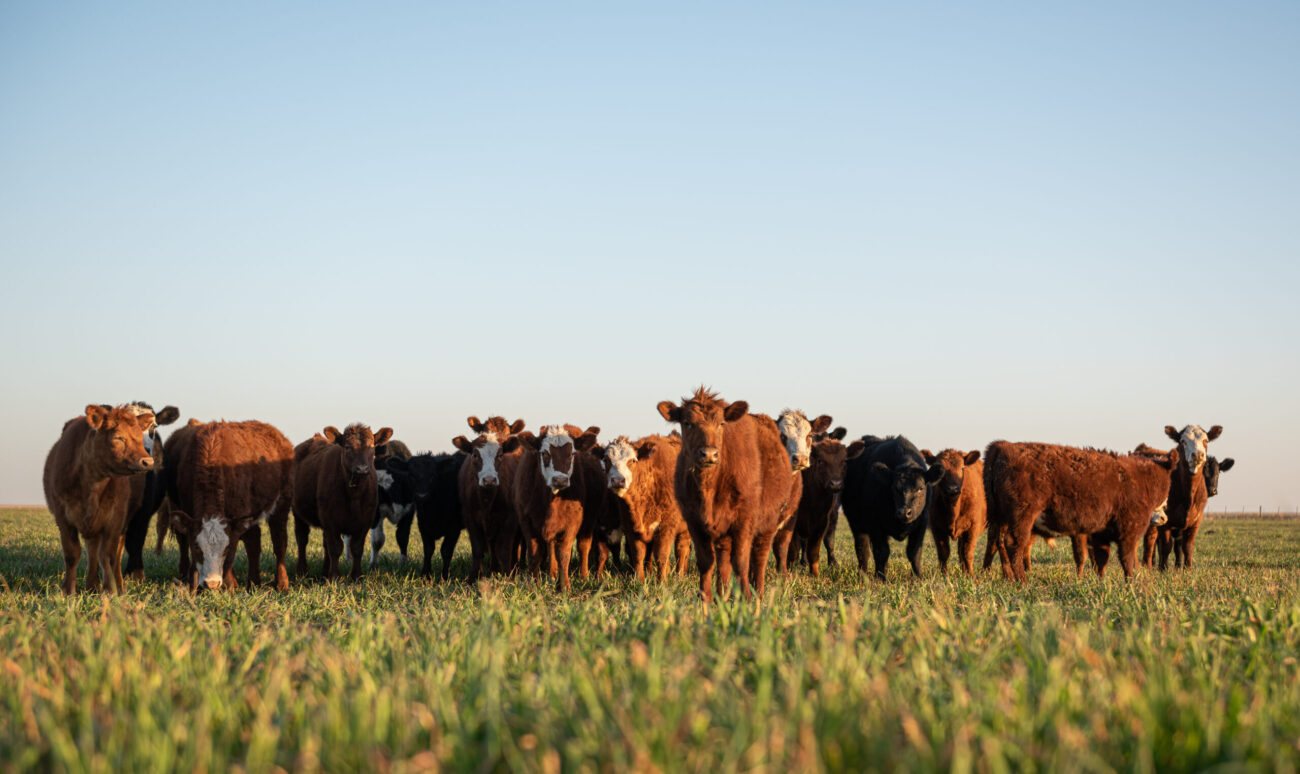
Count your hay bales in October. Now think about what each one costs. Every bale you don’t feed this winter stays in your pocket — or doesn’t get hauled from the stack in December mud.
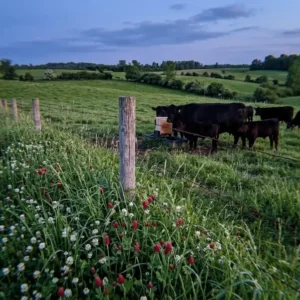
Stockpile grazing is the simplest way to shrink that stack. Close a field to grazing in late summer, let it accumulate growth, graze it standing from November through January. Right grass, right timing: you cut hay consumption by 30–50% [1] and extend your grazing season by 60–90 days without spending another dollar on feed.
The cheap filler grass on most of these operations is the problem — something that grows fast in spring and falls apart in cold. Not all grasses stockpile. Knowing which ones do in your climate determines how much you actually save.
Which Grasses Hold Up Through Winter?
| Grass | Winter Quality Retention | Cold Hardiness | Stockpile Potential | Notes |
|---|---|---|---|---|
| Tall fescue | Excellent — 12–16% crude protein [2] after frost | Excellent | Best nationwide | Use novel-endophyte variety to avoid toxicosis in cattle |
| Orchardgrass | Moderate — quality declines faster than fescue | Good | Second-best option | Worth stockpiling if fescue isn’t established yet |
| Annual ryegrass | Good quality in mild climates | Moderate (winter-kills above zone 6) | Reliable in zones 6+ | Fast-establishing alternative where fescue isn’t an option |
| Kentucky bluegrass | Moderate — semi-dormant in cold | Good | Low | Not recommended as primary stockpile grass — naturesseed.com/products/pasture-seed/kentucky-bluegrass/ |
| Bermudagrass | Moderate (semi-dormant) | Poor north of zone 7 | Good in the South only | Southern operations only — naturesseed.com/products/pasture-seed/bermudagrass/ |
Nature’s Seed carries: Tall fescue (naturesseed.com/products/pasture-seed/tall-fescue/), Orchardgrass (naturesseed.com/products/pasture-seed/orchardgrass/), Annual ryegrass (naturesseed.com/pasture-seed/individual-pasture-species/annual-ryegrass/), Kentucky bluegrass (naturesseed.com/products/pasture-seed/kentucky-bluegrass/), and Bermudagrass (naturesseed.com/products/pasture-seed/bermudagrass/).
Tall fescue stands out because freeze-thaw cycling actually improves its palatability. By the time you’re grazing it in December and January, the quality is often better than it was in September. The longer you wait, the better it gets. That’s a grass doing the opposite of most.
Watch the Fescue Variety — It Matters
Endophyte-infected tall fescue can cause toxicosis in cattle, particularly in late gestation and finishing animals. If you’re establishing new fescue for a stockpile pasture, use a novel-endophyte variety or endophyte-free seed. Don’t assume the older field is safe.
Many established fields in the transition zone carry the toxic endophyte. The hit to animal performance can easily cancel out your hay savings — which defeats the whole point. Check what you have before you count on it.
The Accumulation Window: Get Off It in Late Summer
Close the field to grazing in late August to early September — 60 to 75 days before your expected first hard frost. That’s your accumulation window. Fescue grows during the warm days of late summer and puts on serious dry matter while you’re leaving it alone.
Lay down 50 lbs of actual nitrogen per acre in the first week of the accumulation period. At urea prices, you’re spending $30–50 per acre to potentially grow 1,000–1,500 additional lbs of dry matter. That’s one of the best single-input ROI moves on a cow-calf operation.
After closure: don’t touch it. No grazing, no clipping, nothing — until you’re ready to graze in late fall or early winter.
Strip Graze It — Don’t Open the Whole Field at Once
Turn cattle into the whole field at once and they’ll graze the easy spots repeatedly, trample a third of your stockpile, and burn through a 90-day supply in 30 days. That’s not stockpile grazing. That’s just a grazed field with extra steps.
Strip grazing — temporary electric fence, fresh strip every few days — cuts waste by 40–60% and forces uniform utilization across the field. Setup cost: under $200. A single strand of polywire, step-in posts every 20 feet, a reel and a small energizer. Move the wire every three to five days.
The Math: How Much Do You Actually Need?
A 1,200-lb cow needs 24–30 lbs of dry matter daily. Well-managed stockpile yields 2,000–3,500 lbs of dry matter per acre depending on fertility, rainfall, and variety.
Running 30 cows and targeting 60 hay-free days: 30 cows × 27 lbs/day × 60 days = 48,600 lbs dry matter. At 2,500 lbs/acre, that’s roughly 20 acres. Scale the math to your herd and your target.
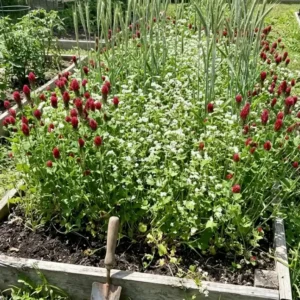
→ Build your stockpile pasture on endophyte-free Tall Fescue — the standard stockpile grass for the transition zone and upper South, safe for all livestock, productive into January. naturesseed.com/products/pasture-seed/tall-fescue/. Add a Red Clover overseed for protein: naturesseed.com/products/clover-seed/red-clover-seed/. Need a fast-establishing option where fescue isn’t established yet? Annual Ryegrass works in zones 6+: naturesseed.com/pasture-seed/individual-pasture-species/annual-ryegrass/
Novel-endophyte fescue cultivars like MaxQ and Texoma offer additional livestock safety benefits beyond endophyte-free — those branded cultivars are available through commercial forage seed dealers and are worth asking about if you’re in a high-fescue-toxicosis area.
References
- Ball, D. M., Hoveland, C. S., & Lacefield, G. D. (2015). Southern forages (5th ed.). International Plant Nutrition Institute.
- University of Kentucky Cooperative Extension Service. (2016). Stockpiling tall fescue for fall and winter grazing (AGR-162). https://publications.ca.uky.edu/sites/publications.ca.uky.edu/files/agr162.pdf
Part of our Regenerative Agriculture series — explore the full guide to find the right seeds and practices for your land.