Renovating a Tired Hobby Farm Pasture in One Season
You bought the place in spring and the back pasture looked fine. Knee-high grass, green enough. Come July you realized what you had: a field full of brome, thistle, and bare patches spreading from the low spots. Whoever owned it last grazed it hard, never reseeded, and handed you the problem with a smile.
Neglect is the villain here. A pasture that’s been grazed down and never put back together is basically a head start for weeds — and fixing it wrong costs you a full season and your seed budget. The key is diagnosing how bad it actually is before you spend a dollar.
Walk It First — Overseed or Start Over?
Walk the pasture and honestly estimate your existing stand coverage. That one number tells you which direction to go.
| Existing Stand Coverage | Verdict | Approach | Estimated Cost/Acre |
|---|---|---|---|
| >50% desirable species | Overseed | No-till drill or slit-seeder into existing stand | $25–50 seed + $50–100 equipment rental |
| 25–50% desirable species | Borderline — evaluate | Light herbicide + overseed, or full renovation | $80–150 depending on conditions |
| <25% desirable species | Full renovation | Kill stand, prep seedbed, replant from scratch | $80–120 all-in for a 10-acre field |
Cost versus reliability. Overseeding is cheaper and less disruptive. Full renovation costs more upfront but gives you a predictable outcome. Below 30–35% desirable cover, the extra cost of renovation usually pays for itself in first-year forage production — you’re not nursing a weak stand through another season.
Overseeding a Tired Stand
Overseeding puts new seed into a thinned existing stand. For it to work, you need seed-to-soil contact — not seed sitting on top of thatch while the existing grass outcompetes it.
Step 1 — Stress it down first
Graze the pasture hard in early spring or late fall, just before you seed. Get existing grass short — 2 to 3 inches. That kills competition for seedlings and exposes the soil surface. No livestock? Mow it as low as your equipment will go.
Step 2 — Test your ground before you spend money on seed
A soil test before you buy seed is not optional. pH below 6.0 kills your clover before it ever fixes nitrogen. Compaction prevents establishment depth. Lime if you need it. This is the step most hobby farm operators skip — and it’s why their overseeding fails.
Step 3 — Use a no-till drill, not a broadcast spreader
A no-till drill or slit seeder places seed directly into the soil without full tillage. Consistent seed-to-soil contact. Better germination. Higher establishment rates than broadcasting off the back of a truck. Most farm co-ops and equipment dealers rent them — budget $50–100 per acre. Worth every dollar.
Step 4 — Fence animals out until the stand takes hold
New seedlings need 60–90 days to build root systems before they can handle grazing pressure. Fence animals out completely or use temporary electric to protect newly seeded areas. This is where most renovations fall apart — somebody puts cattle back in too early and wipes out three months of work.
Full Renovation: When It’s Time to Start Over
Full renovation means killing the existing stand and starting clean. Done right, you get a bare seedbed and the freedom to put exactly what you want back in the ground.
Killing the old stand
Most reliable method: full-rate glyphosate when the existing grass is actively growing — above 55°F, stand green. One application at label rate terminates most cool-season grass pastures cleanly. Give it 10–14 days before tillage or seeding.
Organic operations: two to three intensive tillage passes in summer desiccates most stands if the timing lines up with hot, dry conditions. Takes longer. Gets there.
Working up the seedbed
One or two passes with a disk or field cultivator gets you a workable seedbed. You want firm and fine — not fluffy and cloddy. Run a culti-packer or roller after seeding to press seed into contact with the soil.
What to Plant Once You Have a Clean Seedbed
This is your chance to be intentional about what goes back in your ground. Here’s a practical species framework for hobby farm pastures.
| Component | Species | Purpose | Products We Offer |
|---|---|---|---|
| Base grass | Orchardgrass | Shade-tolerant, palatable, productive | Orchardgrass |
| Base grass | Tall fescue | Durable, drought-tolerant, stockpile-ready in winter | Tall Fescue |
| Legume | Red clover | Fast nitrogen contribution, improves forage quality | Red Clover |
| Legume | White clover | Persistent, grazing-tolerant, long-term nitrogen | White Dutch Clover |
Timing: Late Summer Is Better Than Spring
Two windows work for cool-season grasses: late summer (August–September) or spring (March–May). Late summer wins — cooler temperatures knock back weed competition, and seedlings establish through fall and are ready to graze the following spring.
Forced to seed in spring? Use a companion crop of oats to suppress weeds and put early forage in front of your livestock while the perennials get their feet under them.
What It Actually Costs on 10 Acres
Seed: $150–250. Herbicide: $80–120. Equipment rental for drill and light tillage: $400–600. Lime if needed: $150–200. All-in for a full renovation, you’re at $800–1,200 — or $80–120 per acre for a pasture you’ll use for the next decade.
Run that against your hay bill, or against the explanation you’re about to get from your vet about why your cattle aren’t gaining. It’s one of the better investments a small farm makes.
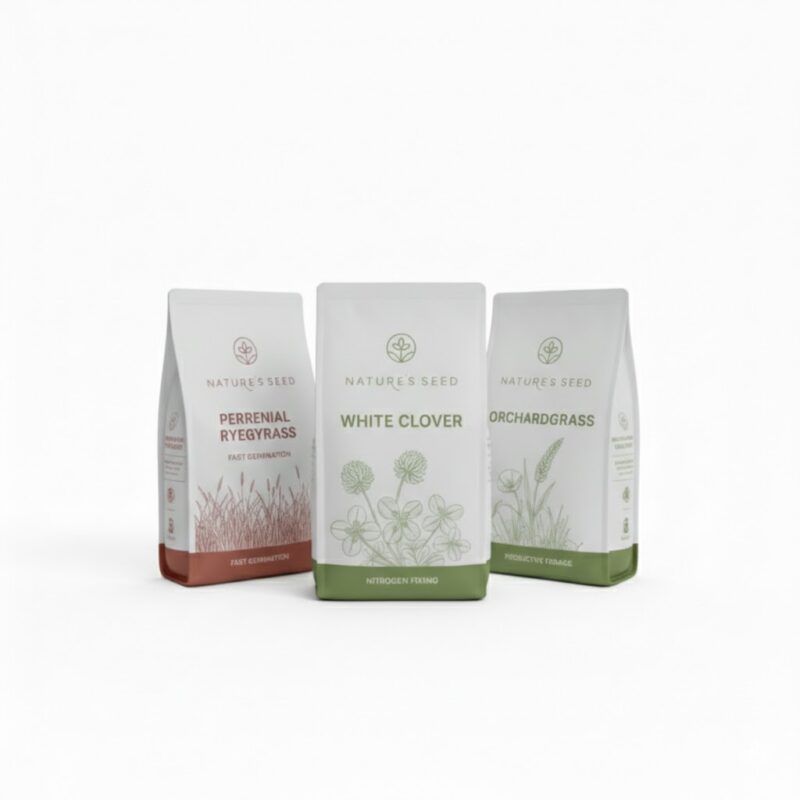
→ Nature’s Seed built the Thin Pasture Fix Kit for exactly this situation — three species in three bags (perennial ryegrass for fast cover, white clover for nitrogen, orchardgrass for deep-rooted structure) so you can match the rate to your weakest spots without overseeding what’s already working. naturesseed.com/products/pasture-seed/thin-pasture-kit/. For full renovation, browse our regional pasture seed mixes by livestock type: naturesseed.com/products/pasture-seed/
Warm-climate renovations in the Deep South often use bahiagrass and bermudagrass cultivars we don’t carry as standalone bags — sourced through regional forage suppliers. Forage chicory and plantain (popular in sheep and goat systems) aren’t in our current lineup either.
References
- Sustainable Agriculture Research & Education (SARE). (2012). Managing cover crops profitably (3rd ed.). https://www.sare.org/resources/managing-cover-crops-profitably-3rd-edition/
Part of our Regenerative Agriculture series — explore the full guide to find the right seeds and practices for your land.