Pollinator Forage for Beekeepers With Acreage: Beyond Clover
It’s July and your hives are light. Spring flow came and went — white clover flush, frames full, looked great in May. Then the landscape shut off. No nectar, bees flying out and coming back empty, colony weight dropping. That’s the midsummer dearth, and clover alone won’t get you through it.
White clover is still your anchor. Plant it everywhere. But if you have more than a few acres and you’re serious about production, you need bloom coverage across the whole season — not just June.
The goal isn’t diversity for its own sake. It’s strategic sequencing: different plants flowering at different windows so your colonies always have something working. Here’s the calendar.
Season-Long Bloom Calendar: What to Plant and When
Most forage landscapes run boom and bust: spring flush, midsummer dearth, fall flow if you’re lucky. The summer dearth is when colonies starve or fail to build winter reserves. Your planting decisions fill that gap or they don’t.
| Plant | Bloom Window | Honeybee Value | Type | Products We Offer | Other Seeds That Can Help |
|---|---|---|---|---|---|
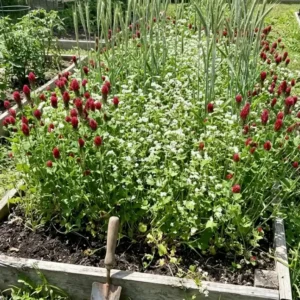
| Crimson clover | April–May | Excellent pollen source early in the season | Annual | Crimson Clover | |
| White clover | June–August | Gold standard for honey production — high nectar sugar [1] | Perennial | White Dutch Clover | |
| Red clover | June–July | Limited for honeybees — flower tube too deep for most | Perennial | Red Clover | |
| Sweet clover | June–August (year 2 of biennial) | One of the best honey plants in North America | Biennial | Yellow Sweet Clover | |
| Buckwheat | July–August | Good midsummer flow; dark strongly-flavored honey | Annual | Buckwheat | |
| Goldenrod | August–October | Critical fall colony prep — excellent nectar + pollen | Native perennial | Wildflower Mixes | Or let establish naturally from nearby populations |
| Native asters | September–October | Extends fall flow into October — good pollen and nectar | Native perennial | Wildflower Mixes | Or let establish naturally from nearby populations |
Nature’s Seed carries: Crimson clover (naturesseed.com/products/pasture-seed/crimson-clover/), White clover (naturesseed.com/products/clover-seed/white-dutch-clover/), Red clover (naturesseed.com/products/clover-seed/red-clover-seed/), Yellow sweet clover (naturesseed.com/pasture-seed/individual-pasture-species/yellow-sweet-clover/), Buckwheat (naturesseed.com/products/pasture-seed/common-buckwheat/), and wildflower mixes that include goldenrod and native asters (naturesseed.com/products/wildflower-seed/).
One plant, one choice: white clover. It covers your main flow and it’s cheap to establish. Have acreage to work with? Add crimson clover for spring and a wildflower mix with goldenrod and asters for fall. That fills the calendar with three plantings.
Laying Out Your Acreage
You don’t need to dedicate every acre. A practical layout for a 10–50 acre operation:
- Permanent perennial base: white clover overseeded into your general pasture. It doubles as livestock forage and doesn’t require dedicated ground.
- Dedicated annual strips: rotate 1–3 acre plots for high-value annuals like crimson clover and buckwheat. Move strips every two to three years — keeps the ground from going stale.
- Permanent native edges: goldenrod and native asters along fence lines, field edges, and rough ground. They produce critical fall forage, need zero maintenance once established, and don’t compete with anything else you’re doing with the land.
What to Skip
- Alfalfa: high nectar volume but the flower mechanism mostly blocks honeybees. Better for leafcutter bees. Don’t plant it expecting a honey flow.
- Ornamental double-petaled varieties: selected for looks, not nectar. The extra petals physically block bee access. Useless for your purpose.
- Treated seed: neonicotinoid-coated seed in a pollinator plot is exactly backwards. Verify seed is untreated before buying — ask the question directly.
→ Nature’s Seed built the Honey Bee Cover Crop & Pasture Mix specifically for this: sweetclover, crimson clover, white clover, lacy phacelia, and native wildflowers formulated for season-long nectar across USDA zones 4–9. One product covers your entire bloom calendar. naturesseed.com/products/pasture-seed/honey-bee-cover-crop-pasture-mix/. For targeted single-species plantings, Crimson Clover (naturesseed.com/products/pasture-seed/crimson-clover/) carries your spring flow and Buckwheat (naturesseed.com/products/pasture-seed/common-buckwheat/) fills the midsummer gap.
Borage, linden/basswood trees, and tulip poplar are major nectar sources we don’t sell — borage seed is at garden seed suppliers, trees through conservation district nurseries. For fall forage, goldenrod and native asters establish readily from wildflower mixes or can often be let in from local seed banks naturally.
References
- Vaughan, M., Black, S. H., & Shepherd, M. (2004). Farming for bees: Guidelines for providing native bee habitat on farms. The Xerces Society. https://xerces.org/publications/guidelines/farming-for-bees
Part of our Regenerative Agriculture series — explore the full guide to find the right seeds and practices for your land.