
The Best Grass Seed For California
Available Pasture Mixes for California
- Big Game Food Plot & Forage Mix
- Chicken Forage Seed Mix
- Cool Season Cattle Pasture Seed Mix
- Full Potential Food Plot
- Goat Pasture & Forage Mix - Transitional
- Goat Pasture & Forage Mix | Warm Season
- Green Screen Food Plot
- Honey Bee Cover Crop & Pasture Mix
- Horse Pasture Mix - Transitional
- Horse Pasture Mix | Warm Season
- Krunch and Munch Food Plot
- Llama & Alpaca Pasture Seed Mix
- Pig Pasture & Forage Mix
- Sandhills Prairie Mix
- Shade Mix Food Plot
- Sheep Pasture & Forage Mix - Transitional
- Sheep Pasture & Forage Mix | Warm Season
- Tortoise Forage & Habitat Mix
- Warm Season Cattle Pasture Seed Mix
Pasture Grass Species for California
Clover Seed for California
Specialty Seed for California
Wildflower Seed for California
If you live in California, finding the right grass seed might seem like a challenge due to the state’s vast climate differences. However, by identifying your specific region and plant hardiness zone, finding the right species that will thrive in your yard is simple. From the wet Pacific Northwest to the arid Southwest Desert, selecting the best drought-tolerant or cool-season turf requires local knowledge—and this guide has you covered.
The best grass seed for California varies dramatically. Coastal areas benefit from species that handle mild temperatures, while inland valleys and deserts demand turf with extreme heat and drought tolerance. To get started, reference the maps below to pinpoint your zone, then jump to the table of contents to find the best seed for your home.
Table of Contents: Find Your Region
- California Grass Seed by Region (The Five Zones)
- Best Grass Seeds for California (Top 5 Varieties)
- Essential Planting and Watering Tips for California
- FAQ: What is the Best Drought-Tolerant Grass for California?
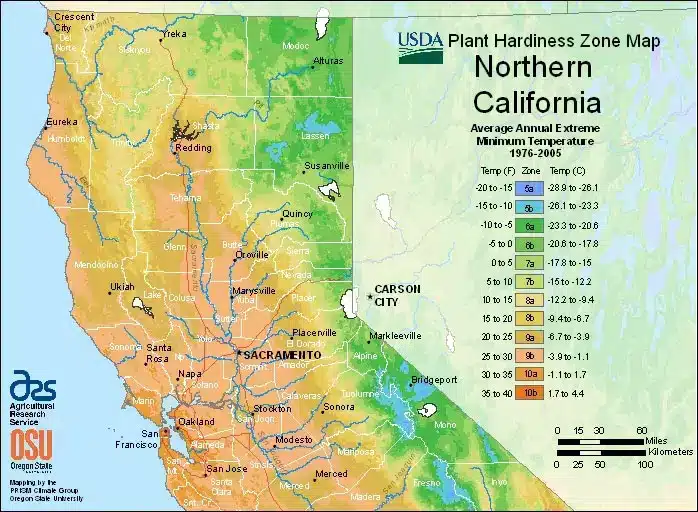
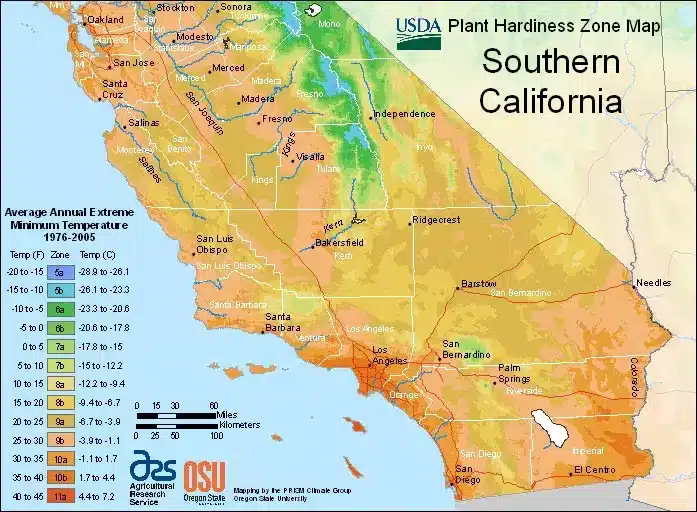
California Grass Seed by Region
California is divided into five central climate regions: Pacific Northwest, Pacific Southwest, Intermountain West, Southwest Desert, and Southwest Transitional. While temperatures don’t vary as widely as in other states, specific grass species will perform much better depending on your exact location, elevation, and proximity to the ocean. Identifying your region is the first step to a successful lawn.
Pacific Northwest (Cool-Season Focus)
This region is located in the far northwest, bordering Oregon and the Pacific Ocean. It is characterized by wet, cold conditions and extensive temperate forests. As you move inland, conditions become drier with harsh winters and warm summers, with a plant hardiness zone of 8a to 9b. These zones are ideal for cool-season varieties.
If you live in the Pacific Northwest region, you can plant a variety of cool-season grass seeds, including:
- Fine Fescue (Excellent shade and low-input tolerance)
- Kentucky Bluegrass (Premium color, requires moderate water)
- Perennial Ryegrass (Quick establishment, good for overseeding)
- White Dutch Clover (Low maintenance, adds nitrogen)
Pacific Southwest (Transition Zone)
The Pacific Southwest covers the mild coastal areas of Southern California, offering comfortable weather with warm winters and cool summers. This is a transitional zone where you can grow either cool-season or warm-season grass, depending on specific microclimates and watering needs. Hardiness zones here are typically between 6a and 9b.
Types of seeds that perform well in the Pacific Southwest include a mix of durable cool-season grasses and heat-tolerant warm-season types:
- Bermudagrass (Excellent choice for drought and heat)
- Kentucky Bluegrass
- Perennial Ryegrass (Often used for winter color)
- Tall Fescue (Strong root system, highly adaptable)
Essential Planting and Watering Tips for California
Proper planting is critical to establishing a healthy lawn in California, especially given recent water restrictions. Planting cool-season grasses (fescues, bluegrass) is best done in the early fall (September to early November) when soil temperatures are warm but air temperatures are cooling. This gives the roots time to develop before winter.
Conversely, warm-season grasses (Bermuda, Buffalograss) should be planted in the late spring or early summer (late April through July) when temperatures are consistently warm. Watering is also paramount. Use a smart irrigation system or follow strict local guidelines to ensure your lawn gets enough moisture to establish without violating municipal water codes. For deep, established roots, water deeply but infrequently.
Intermountain West (High Altitude & Dry)
The Intermountain West creeps into northeastern California along Oregon and Nevada. This area is far inland and mountainous, including parts of the Sierra Nevada. Depending on the elevation, this region experiences shorter, warmer winters and hot, dry summers. Plant hardiness zones range from 6a to 7b.
Since deserts and temperate grasslands occupy this area, the best grass seeds for the Intermountain West must be drought-tolerant and cold-hardy:
- Buffalograss (Excellent native, low-water option)
- Fine Fescue
- Kentucky Bluegrass (Requires higher moisture than Fescue)
- White Dutch Clover
Southwest Desert (Hottest & Driest)
The Southwest Desert is located along the edge of southeast California, bordering Arizona. This is one of the hottest and driest regions in the nation with little rainfall. Plant hardiness zones range from 8a to 9b. The key to success here is choosing turf that can withstand triple-digit heat and minimal irrigation.
The desert has arid soil, which requires persistent and adaptable warm-season seeds that handle dry conditions. These varieties include:
- Bermudagrass (Staple for desert lawns, exceptional heat tolerance)
- Buffalograss
- Perennial Ryegrass (Strictly for winter overseeding to maintain green color during dormancy)
- White Dutch Clover
Southwest Transitional (Mixed Plateaus)
The Southwest Transitional zone barely touches the eastern border of California along Nevada. This unique region features a mix of plateaus, deserts, and volcanic fields. It’s an extension of the Arizona transition zone, requiring grasses that can handle high heat but still have some tolerance for cold snaps.
The best grass seeds for the Southwest Transitional region must be extremely versatile:
- Buffalograss
- Fine Fescue
- Kentucky Bluegrass
- Tall Fescue Blend (Recommended for its adaptability in mixed climates)
Best Grass Seeds for California
Once you’ve established which region you live in, it’s time to pick the grass that’s best for your needs. Whether you prioritize a grass that can handle high foot traffic, or prefer one that has low water and low maintenance demands, Nature’s Seed has a variety of grass seeds for your lawn.
Buffalograss (Drought Champion)
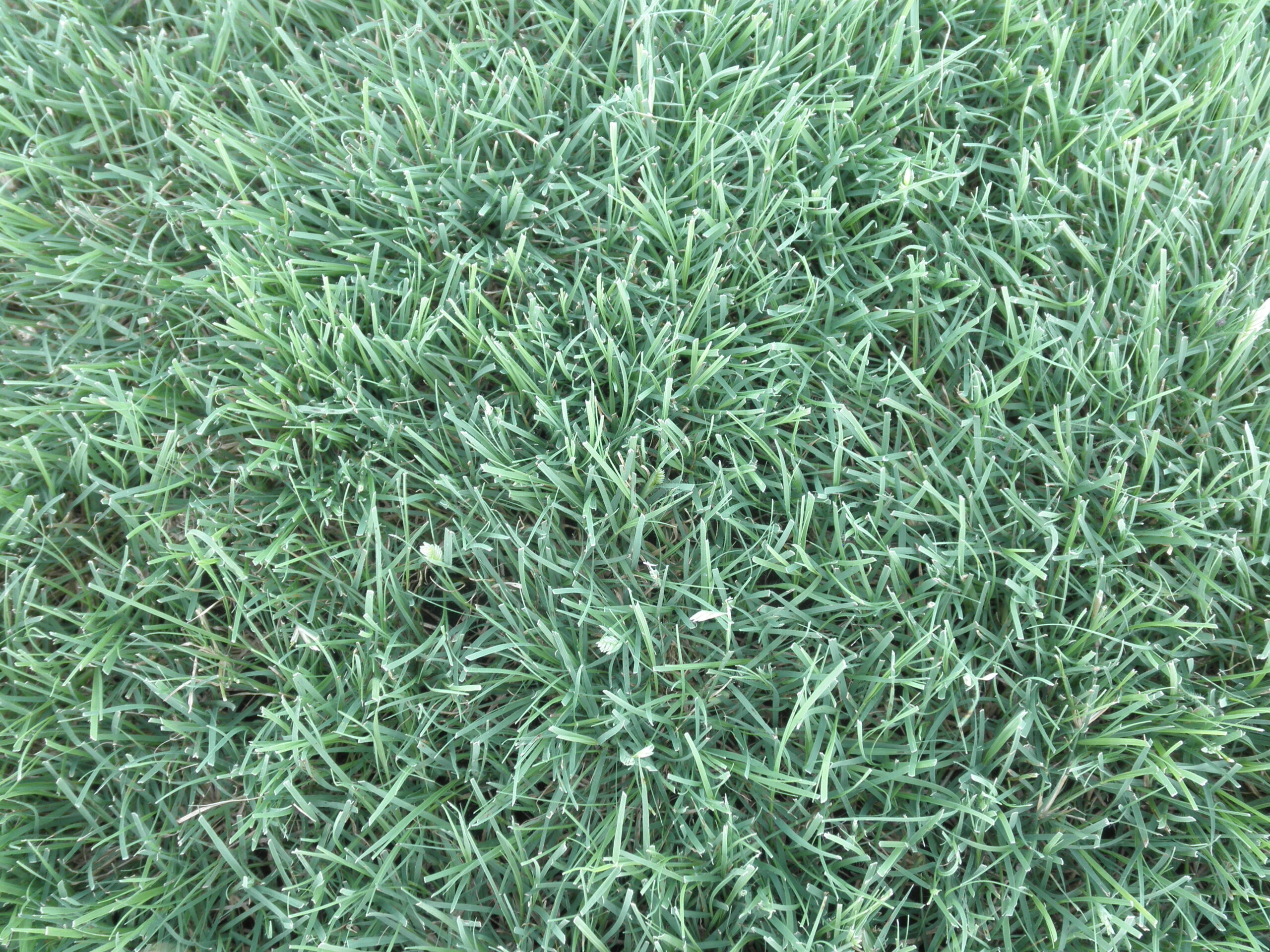
Buffalograss is a soft, dark green native grass that thrives in full sunlight and is widely used for beautifying lawns and water conservation. It has low maintenance demands, but it may take up to two years to fully establish a sod.
Buffalograss is ideal for the Southwest Desert, Intermountain West, and Southwest Transitional regions. It has excellent drought tolerance and requires very little water. It withholds its vibrant green even amid the hottest summer days—but, like all warm-season grasses, it will have a brownish color during cold winter days.
Bermudagrass (Heat and Traffic)
Bermudagrass is a bright and coarse grass that does well in full sun. This species is perfect for lawns, turfs, or any area that may experience high foot traffic. It is the most popular warm-season grass in Southern California.
Bermudagrass thrives in the Southwest Desert and Pacific Southwest and has its best color during the hot summer months. Although it establishes slowly from seed, it spreads aggressively via rhizomes, so you’ll see an adequately thick lawn within a few months of establishment. This grass requires consistent deep watering to look its best.
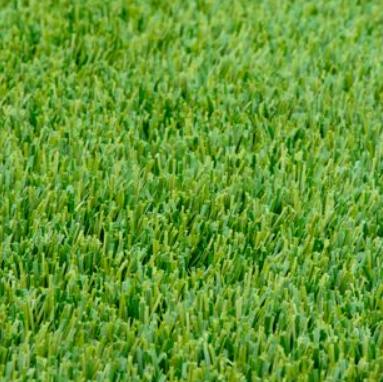
Perennial Ryegrass (Quick Color & Overseeding)
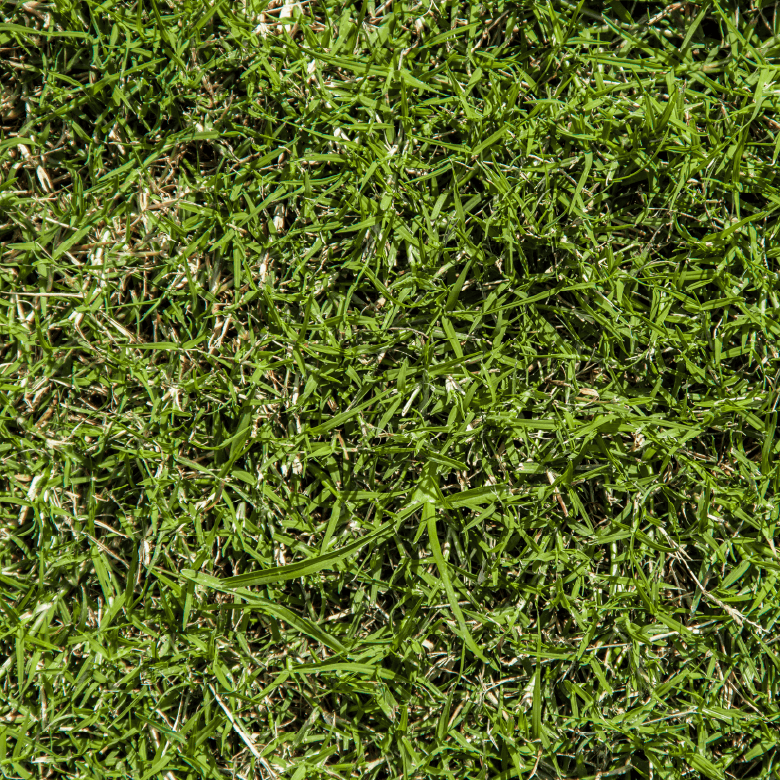
Perennial Ryegrass is widely used all over California, particularly in the northern and coastal regions. It germinates and establishes quickly with a lush, long-lasting color, even in full or partial sun. It performs well as a high-traffic lawn or for sports fields but requires consistent watering.
In the southern regions, homeowners prefer to use Perennial Ryegrass as a temporary solution to cover dormant Bermudagrass lawns during the wintertime (overseeding). This ensures year-round green color, which is essential for many commercial properties and golf courses.
FAQ: What is the Best Drought-Tolerant Grass for California?
The best drought-tolerant grass for California is Buffalograss because it is a native species that requires minimal irrigation once established and remains green under extreme heat. For a high-traffic lawn that is also drought-tolerant, Bermudagrass is the best choice, as it can be watered deeply but infrequently, especially in the desert and coastal regions.
White Dutch Clover (Lawn Additive & Nitrogen Fixer)
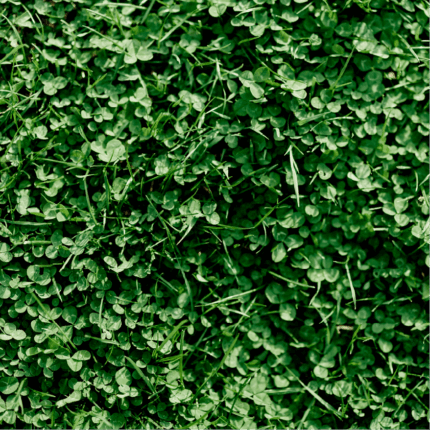
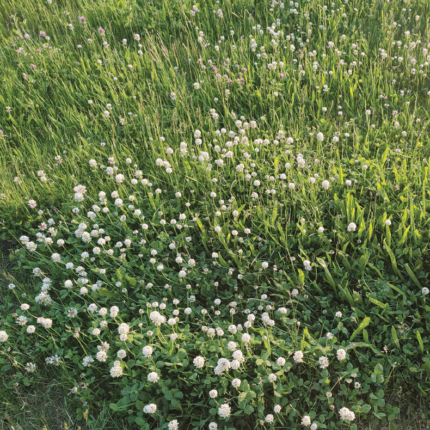
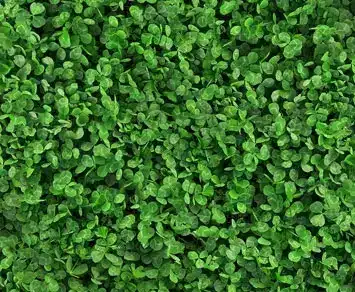
White Dutch Clover is a lawn additive that does well in any region. It does an exceptional job of covering up balding spots, outcompeting local weeds, and adding essential nutrients back into the soil through nitrogen fixation, making it ideal for low-maintenance lawns.
White Dutch Clover does well in full sun and shady areas. Although it requires a moderate amount of water, it never needs fertilizing and grows well even in poor soil. It is one of the most beautiful and straightforward lawn additives available for California homeowners seeking a natural look.
Fine Fescue (Shade & Low Maintenance)
Fine Fescue does well in the Intermountain West, Pacific Northwest, and Southwest Transitional zones. Fescue grasses are known for their adaptability, high tolerance to cold, and durability.
Fine Fescue requires little maintenance. This species is a great alternative if you have irrigation issues or poor soil conditions that other grasses can’t handle. It also performs well in partial sun and shade, making it perfect for lawns with plenty of tree coverage or north-facing yards.
Conclusion
California is made up of five regions that vary between lush forests, rocky mountains, and arid deserts. Finding the right grass for your area is essential when it comes to seeding your lawn. If you need personalized help picking the right blend for your lawn, contact Nature’s Seed today!
