
Choosing and Applying Lawn Fertilizer for a Thriving, Green Lawn
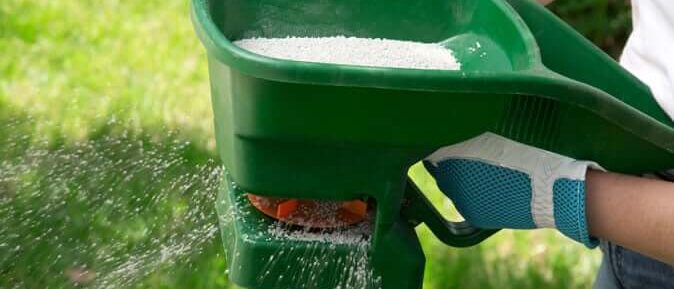
Table of Contents
- Featured Snippet: Choosing the Best Fertilizer
- Why Fertilization is Key for a Perfect Lawn
- Understanding Fertilizer’s Environmental Impact
- Starter Fertilizer V.S. Regular Fertilizer — Which Wins?
- The Science of NPK Ratios
- Preparing Your Lawn for Growth
- Soil Testing and pH Levels
- Proper Fertilization Steps for New Seed
- Aeration and Composting for Soil Health
- Timing is Everything: Frequency and Time of Year
Featured Snippet: Choosing the Best Fertilizer
What is the best type of fertilizer for new grass seed? The best type of fertilizer for new grass seed is a starter fertilizer. This fertilizer is specifically formulated with a higher concentration of phosphorus, which is the most critical nutrient for promoting strong, deep root development in new seedlings. It often includes quick-release nitrogen to encourage initial leaf growth without overfeeding the tender new grass. Always check local laws regarding phosphorus use before application.

Why Fertilization is Key for a Perfect Lawn
Just like summer bodies are made in the winter, spring lawns are sown in the fall. And sowing these lawns takes a lot more than simply popping a few seeds in soil and waiting for an early spring thaw. Fertilizer plays a large role in the health of your new shoots. From grass density to mowing frequency and maintenance, your fertilization practices can either transform your new grass seeds into a lush lawn – or force your turf to work overtime. So if you get the fertilization process wrong, the result could be a dry, patchy, and deadened lawn.
Lawn Care Requires Forethought
Lawn care takes a surprising amount of forethought. But once you’ve learned the exact method, you’ll be able to grow the perfect set of greens on your property year after year. Fertilizer delivers all-important and much-needed nutrients to the soil, adding to what’s already present. In healthy soil, this means other organic matter such as fallen leaves, grass clippings, and minerals. Planning is essential: fertilizers for new grass seeds can’t pack as much of a punch if you wait until the last minute instead of planning for, let’s say, a September or November fertilizer application.
Are You Part of the 28%? The Psychology of Lawn Envy
You might not believe it, but for many Americans having a green lawn is quite a psychological thing. It’s called “lawn envy,” and a poll of 1,055 homeowners revealed that 64% say their neighbors have “the best lawn on the block.” There is something undeniably pleasing about the fact that your lawn is lush, thick, thriving, and vibrant. Your neighbors might not know exactly how to maintain their green lawn, but rest assured, people who walk by can instantly tell if your lawn is thriving – and, by extension, if you care about it enough – or not. Part of this lawn envy is judging others: 49% say people who don’t take care of their lawns are “lazy or inconsiderate.”
There’s hope, however: 28% of Americans are proud of their lawns. With that in mind, let’s help you become a coveted part of the 28% of Americans who are proud of their lawns. How? By nailing the most important part of the process: fertilization!
Understanding Fertilizer’s Environmental Impact

To thrive, any good lawn needs proper feeding and advance planning. Once you’ve chosen the right grass seed for your property, climate, region, and purpose, fertilization is the next most significant indicator of whether your lawn will bloom – or bust! As you can see on the diagram above, a fertilizer you purchase at a retail outlet has several chemical components. These are not bad, per se, but some of their use does need to be limited. What goes into fertilizer goes into the soil. It’s that simple.
Ask yourself why many states have passed laws about what fertilizers can and can’t include – such as phosphorus – and you’ll understand that your lawn care practices play a greater role than simply helping you to become the envy of the neighborhood. The fact of the matter is that healthy fertilization practices and good quality fertilizer contribute to the cultivation of healthy soil in the region.
The Risks of Poor Soil Health
In large parts of your state, the soil makeup might not be as nutrient-rich as it once was. For a number of reasons – such as erosion – there may simply not be enough naturally-occurring organic matter to support any kind of growth. Poor soil health, often exacerbated by a lack of care or attention to fertilization, can lead to several problems:
- More insects and common lawn pests.
- Increased weeds and invasive species.
- A higher chance of diseases like yard fungus.
- Increased erosion and water runoff.
- Patchy, thinning grass.
So you can do everything else right – test your soil’s pH, prepare your soil, and choose the right grass seed – but still end up with a lackluster lawn, at best. That’s why it’s crucial to recognize and choose the right **lawn fertilizer** for your growth goals.

Starter Fertilizer V.S. Regular Fertilizer — Which Wins?
The Dangers of Over-Fertilization
Believe it or not, you can over-fertilize your lawn and end up with negative aftereffects on your grass and the environment. In the state of New York, for example, over-fertilization has been the cause of harmful algal blooms in bodies of water. Besides this, excessive fertilization:
- Causes excess fertilizer to leach through the soil faster than the roots can absorb it, leading to water table contamination.
- Triggers excessive, weak top growth, requiring frequent mowing.
- Causes weak, overgrown turf, which is susceptible to pests and disease.
- Contributes to thatch build-up, which chokes the grass.
Let’s not forget the attractiveness factor: Over-fertilized lawns get patchy, brown, and just plain dead-looking. That’s not how anyone wants to leave their lawn. This is why choosing the right type and amount of fertilizer is a mindful planning exercise.
The Difference in Nutrients

Lawns, like all living, breathing creatures, go through stages of growth, and at different stages, they need different kinds of nutrition. To begin a lawn, or to repair it anew, you’ll need starter fertilizer, rather than regular fertilizer. The difference mainly lies in the nutrients. Both types provide valuable food and energy, but newly emerging seedlings will need more phosphorus and quick-release nitrogen.
- Starter Fertilizer: Essential for new or newly repaired lawns. The high phosphorus content is critical for establishing strong, deep root systems. The quick-release nitrogen encourages the necessary initial leaf growth.
- Regular Fertilizer: Best for “regular” or well-established, mature lawns. These lawns typically do not need phosphorus or large amounts of potassium. When nitrogen is the main ingredient, regular lawns thrive with sustained, slower growth.
Many states have a law prohibiting the use of phosphorus except in cases where individuals are establishing a new lawn. So you must take the time to read the composition. It’s crucial to choosing the right – and legal – lawn fertilizer for your property.
The Science of NPK Ratios
What the Numbers Mean
Fertilizer labels will give you all the information you need about nitrogen, phosphorus, and potassium content—called an NPK Ratio. This is a measurement that helps you understand what’s in your fertilizer. When you see a label that reads “30-0-0,” or “27-3-3,” this indicates the percentage ratio of the three ingredients (Nitrogen-Phosphorus-Potassium, respectively). For example, a 100-pound bag of fertilizer labeled “10-10-10” contains 10 pounds of each compound, with 70 pounds leftover for “filler.”
Each of these chemical compounds performs a specific, important role in your fertilizer:
- N – Nitrogen: Important for leaf and blade growth. Nitrogen is the “N” part of NPK and is what makes your lawn look greener and thicker.
- P – Phosphorus: Promotes strong, deep root development, which is vital for new grass seedlings. It also increases bloom and fruit production in other plants.
- K – Potassium (Potash): Helps plants fight off diseases, enhancing their ability to withstand extreme temperatures and ward off environmental stress. Most soils already contain “potash,” so this is usually the smallest percentage in the ratio.
Starter vs. Regular NPK Comparison
Here’s a useful table that will help you understand the various ways in which regular fertilizer differs from starter fertilizer—beyond just levels of nitrogen, phosphorus, and potassium—to help you make the right decision for your lawn:
| Regular Fertilizer | Starter Fertilizer | |
|---|---|---|
| Nutrients | Contains Nitrogen (N), Potassium (K), and usually low or no Phosphorus (P). | Greater amounts of Phosphorus – which is the most critical ingredient for root growth for new seedlings – plus Nitrogen. |
| Composition | High in Nitrogen, with a typical NPK ratio of 4-1-2 or 10-0-5. | Contains 20% or more phosphorus, with typical NPK ratios like 12-24-8 or 18-24-12. |
| Effects | More mature plants benefit from slow-release varieties, promoting sustained, green top growth. | Quick release nitrogen increases nutrient uptake and encourages rapid, healthy root and initial leaf growth. |
| Application | Applied four to six inches away from the base of mature plants. | Applied to the prepared soil just before or right after inserting seeds. |

Preparing Your Lawn for Growth
To start your lawn off on the right foot, you need to prep your soil for fertilization in multiple steps. There are a range of activities you can begin with, depending on whether you’re trying to sow an entirely new lawn or rejuvenate the compacted soil of your ailing lawn. Commonplace practices include mowing and fertilizing, but you also need to consider aeration, weeding, and pest control. These are important in the prep phase and maintenance process.
Remember that these activities are all geared towards tending to your lawn’s health. They also have the added benefit of making sure that the lawn fertilizer you’ve purchased does what it’s there for: help your grass seeds root. For example, according to researchers, applications of fertilizer in the late winter or early spring contributes to top growth that is rich and green, without the need for excess growing. Following this schedule would give your lawn the best chance for thriving.
Soil Testing and pH Levels
- The results of a soil test can tell you about its pH levels, the nutrients already present, their quantities, and which nutrients are lacking.
- In general, grasses prefer a slightly acidic soil with a pH level of 6.5 to 7.0.
- Making the soil too acidic or alkaline means tender seedlings won’t be able to absorb everything they need, even if the nutrients are present in the soil.
- Too much acidity can also affect the structural stability of the soil, causing fungal disease or decimating the population of beneficial organisms. Contact your local University Extension Office for affordable, authoritative soil testing services.
Proper Fertilization Steps for New Seed
- Begin by measuring your area to make sure you have enough fertilizer, and use a tool like a broadcast spreader for even application.
- Apply starter fertilizer only once you’ve lightly raked your soil and before you sow your grass seed.
- Once your grass has seeded, the next round should be a regular fertilizer application – this round should only occur four to eight weeks after the first, starter application.
- Lawns only need one or two applications of fertilizer each year. Use your knowledge of the nutrients already present from your soil test, as well as what you now know about NPK ratios, to give your lawn the right compounds!

Aeration and Composting for Soil Health
Addressing Compacted Soil
Compacted soil occurs through play, foot traffic, or even poor drainage. Aeration is the process of “airing out” the soil so it can breathe again, pulling out little plugs of turf. These little holes allow more oxygen to reach the root system of compacted soil, which is vital for grass health. After aerating, you should brush sand into the holes to improve drainage and create a better seedbed for new seed.
- If the soil is compacted to a depth of over 2.5 inches, work it loose deeply, amend the existing soil, and either reseed or lay new sod.
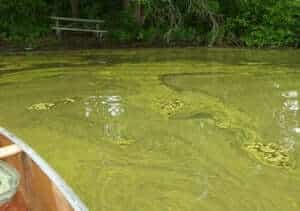
- If you live near a creek, stream, or well, you should avoid spreading high-nitrogen fertilizers because of the risk of run-offs (responsible for creating the algal pool pictured above). Soil preparation and targeted fertilization reduce this risk.
Use Compost for Your Topdress
If you’re looking to repair your compacted lawn or you want to improve the richness of your soil, consider compost – it’s the best kind of organic fertilizer, attracting micro-organisms and giving them shelter and nutrients. Apply a layer of compost once every three to four years. The best time is during the early fall when your lawn will be in active growth mode.
- Apply a thin layer and use a leaf rake to spread it evenly, working the compounds into your lawn. The grass should poke through, straight and upright.
- Avoid compost that has large amounts of topsoil or peat moss, as these decompose too slowly.
- If your soil test reveals that your soil is too acidic, consider adding lime to balance the pH! The most popular kind is dolomitic lime because it contains magnesium.
Timing is Everything: Frequency and Time of Year
The very last aspects to consider when fertilizing your lawn with new grass seeds is the time of year you’re operating in, how frequently you’ll need to fertilize, and what kind of fertilizer to use. For cool-season grasses, the most critical application time is in the fall (September and November). For warm-season grasses, it is late spring and early summer. If you already have a well-established lawn, then a basic schedule would be one application during the start of the season (usually in spring), and one more in the late summer, tailored to your grass type. Consult this USDA Soil and Water Conservation resource for deeper regional guidance on soil management.
Tips for the Best Results
- Remove any weeds first (consider our Weed Free Lawn Mixtures) and then lightly rake the soil to loosen it.
- Water the surface but only with a fine spray after seeding. This stops seeds from being uncovered. Water frequently but with small amounts. In the first two to three weeks, keep the soil moist.
- Avoid walking on new grass until it is established.
- Only mow your new lawn when it reaches three inches, cutting it back down to two inches.
Getting your lawn right is a process of mindful planning, attention to soil health, and selecting the correct lawn fertilizer for the job. Once you master the NPK ratio and timing, you’ll be well on your way to a lush, thriving yard.
