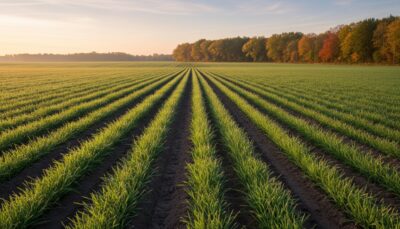
New Mexico Xeriscape Guide
Your Albuquerque lawn died over the summer — again. The bluegrass burned out the first week of July. Your water bill says you’re paying $190 a month to irrigate something the wind dries out faster than your sprinklers can run. Your HOA wants it green. The landscaper quoting xeriscape is asking $13k for crushed lava rock and three yuccas.
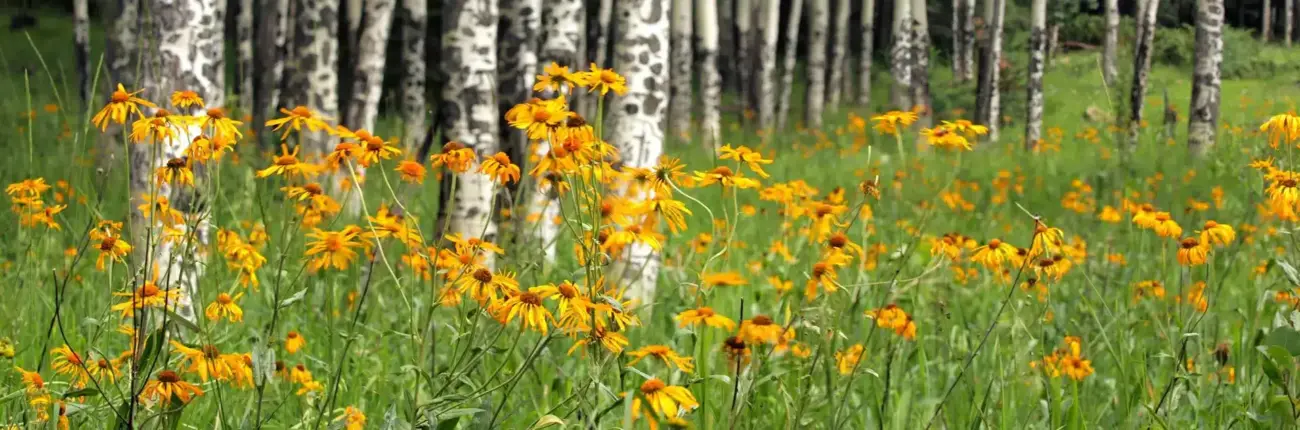
You don’t want a moonscape in your front yard. You also can’t keep paying to irrigate something that the high-desert sun cooks anyway. Here’s what nobody tells you: a real New Mexico xeriscape isn’t gravel and yucca. It’s a soft buffalograss lawn, blue grama clumps, and a sheet of native wildflowers in spring — using a fraction of the water of cool-season turf [1].
This guide gets specific. Two New Mexico climate zones, three real projects, and which seed mixes hold up where. By the end you’ll have a yard that looks alive year-round and won’t earn you another letter from the board.
In This Guide
- New Mexico Isn’t One Climate — Find Your Elevation First
- Project 1 — Replace Your Front Lawn With Something Built for Thin Air
- Project 2 — Build a Pollinator Meadow on Your Worst-Watered Patch
- Project 3 — Stabilize a Slope, Arroyo, or Construction Cut
- When to Seed in New Mexico
- Soil Notes
- New Mexico Rebate Programs + What Qualifies
- Related Reading
New Mexico Isn’t One Climate — Find Your Elevation First
Before you buy a single bag of seed, figure out which New Mexico you live in. Same state, two completely different planting jobs separated mostly by elevation.
High desert (Albuquerque, Santa Fe, Taos, Los Alamos): 5,000–7,000 ft elevation, hot dry summers, cold nights even in July, freezing winters. Hardiness zones 6a–7a. 8–14 inches of rain a year, mostly during the July–September monsoon. Soils are alkaline, sandy, often with caliche or rocky outcrops. Blue grama is the state grass — and it lives here for a reason. Buffalograss thrives below 6,500 ft.
Low desert (Las Cruces, Roswell, Carlsbad, Hatch): 3,000–4,500 ft elevation, hotter summers (100°F+), milder winters, even drier (8–10 inches annual rainfall). Pure warm-season native territory: buffalograss and blue grama. Sonoran-style wildflower mixes work here.
Not sure which one you’re in? Pull up the USDA Hardiness Zone map and check your ZIP. Albuquerque is 7a, Santa Fe is 6a, Las Cruces is 8a, Roswell is 7b. Pick the project below that matches your zone.
Project 1 — Replace Your Front Lawn With Something Built for Thin Air
This is what most New Mexico homeowners are after: a real-looking yard the kids and dog can walk on, that doesn’t need a sprinkler running every night. The right pick depends on elevation.
Albuquerque, Santa Fe, high desert (anchor pick): Sundancer Buffalograss Lawn Seed — cold-hardy ecotypes survive Santa Fe winters, and buffalograss uses 75% less water than Kentucky bluegrass [2]. Sundancer is a finer-textured cultivar with faster establishment. Mow once a month at 3 inches for a tidy look — or let it ride at 4–6 inches for a soft prairie feel. Note: it goes tan-dormant after the first hard freeze and greens up in mid-May. Seed 2–3 lbs per 1,000 sq ft after soil temps hit 60°F.
For a meadow look that handles altitude better at 7,000+ ft (Taos, Los Alamos): Blue Grama Seed. The state grass of New Mexico, native to every county. Forms soft tufted bunches with delicate seed heads. Pair with sheep fescue for a year-round mix.
Las Cruces, Roswell, low desert: Sundancer Buffalograss is still the lead pick. Heat tolerance is excellent and water savings versus St. Augustine or fescue are dramatic. Seed in late spring after the last cold front. For a pure-native blend on larger lots, add blue grama at a 1:1 rate.
Project 2 — Build a Pollinator Meadow on Your Worst-Watered Patch
You know the spot — the strip by the driveway, the back corner the sprinkler never quite reaches, the parkway out front. Stop fighting to keep grass alive there and turn it into something that actually wants to live without irrigation.
Las Cruces and southern New Mexico: Sonoran Desert Wildflower Mix. Desert marigold, globe mallow, desert lupine, Mexican gold poppy — species evolved for less than 10 inches of annual rainfall. Direct-seed in October ahead of winter rains and you’ll get bloom from February through May with zero supplemental water. Seed 1 lb per 500 sq ft.
Albuquerque, Santa Fe, high desert: a blue grama and wildflower meadow handles the cold nights and monsoon rains better than a pure Sonoran mix. Pair Blue Grama Seed with native forbs — the warm-season grass anchors the planting and holds soil through July storms.
One rule: do not till. Scratch the surface, broadcast, rake lightly, walk away. Tilling brings buried weed seed up and you’ll spend the next year fighting goathead and tumbleweed.
Project 3 — Stabilize a Slope, Arroyo, or Construction Cut
New Mexico monsoons drop two inches in fifteen minutes, and arroyos that look bone dry in May can move serious water in August. If you’ve got a bare slope, an arroyo bank, or a cut left over from new construction, your first job isn’t pretty — it’s keeping the next storm from washing your hillside away. Bare slopes lose 5–20 tons of soil per acre per inch of rain [3]. Get living roots in the ground fast.
The lead pick: Native Dryland Erosion Control Mix — fast-germinating native grasses and forbs sized for slopes up to 3:1. Roots establish in 30–60 days, holding soil through monsoon storms. Drought-tolerant once established.
For partial-shade slopes (north-facing yards, piñon-juniper understory): Sheep Fescue Grass Seed on its own. It’s the most shade-tolerant of our drought-grass options and forms a dense fine-rooted mat. Seed 8–10 lbs per 1,000 sq ft on slopes — heavier than for lawn use.
When to Seed in New Mexico — The Calendar That Actually Matters
Timing wins or loses New Mexico xeriscape projects more than any other variable. Plant the right seed in the wrong window and you’ll watch it cook off before the monsoon arrives. Here’s the calendar.
- Warm-season natives (Sundancer buffalograss, blue grama): May through June at altitude (Albuquerque, Santa Fe); April through May in the low desert (Las Cruces). Soil temps at 4-inch depth need to hit a steady 60°F. Seeding right before monsoon onset is ideal — the rains do the establishment irrigation for you.
- Cool-season grasses (sheep fescue, microclover): September through early October at altitude. The cooler nights and monsoon residual moisture set up perfect germination conditions. Late February through March is the backup window.
- Wildflowers (Sonoran desert mix): October through early November in the low desert, ahead of winter rains. At altitude, late fall dormant seeding into cold soil works well — winter freeze-thaw stratifies the seed.
- Erosion control mixes: Just before monsoon (late June) is ideal. If you’re racing a storm after grading, seed immediately regardless of season — cover with a light straw mulch.
Soil Notes — Caliche and Sand Will Eat Your Seedlings Without Prep
Most New Mexico yards sit on alkaline soils (pH 7.5–8.5), often sandy or rocky with a layer of caliche — a cement-like hardpan — within 12–18 inches of the surface. Roots can’t punch through caliche, water pools on top, and tender seedlings cook. If your shovel rings instead of slicing, you’ve got it.
Prep that doubles your germination rate: break the caliche layer with a digging bar where you can, spread 2 inches of finished compost over the seedbed, scarify the surface to 3–4 inches with a hard rake (don’t deep-till), and water deeply once before broadcasting seed. Compost buffers high pH, holds moisture in sand, and adds water capacity to caliche-influenced soils. Full walkthrough: Xeriscape Soil Preparation.
→ Blue Grama is the state grass of New Mexico — and the most reliable warm-season native for a high-desert yard. Cold-hardy, drought-proof, and it holds soil through monsoon storms. Shop at /products/pasture-seed/blue-grama/
New Mexico Rebate Programs + What Qualifies
If you live in Albuquerque or Santa Fe, your local water authority will pay you to convert turf to xeriscape. Here’s the lay of the land plus the seed mixes from our catalog that typically meet eligibility criteria.
Rebate Programs Active in New Mexico
- Xeriscape Conversion Rebate — Albuquerque Bernalillo County Water Utility Authority (ABCWUA) — per-sq-ft credit for converting turf to xeriscape — Albuquerque metro area — Apply via ABCWUA
- Water Conservation Rebates — Santa Fe Water Division — varies (typically $0.75–$1.50/sq ft) — City of Santa Fe — search “Santa Fe Water Conservation rebate” for current details.
- Las Cruces Utility Conservation — Las Cruces Utilities — varies — Las Cruces — search “Las Cruces water conservation rebate” for current details.
- El Paso Water Yard Card — covers some Sun Land Park / state-line New Mexico residents — search “El Paso Water Yard Card” for current details.
What These Programs Typically Accept
Most New Mexico turf-replacement rebates require: (a) the new landscape uses native or low-water species, (b) drip irrigation only (no spray), (c) photo before + after, (d) ABCWUA-style site visit before approval. Our seed mixes that align with most program criteria:
- Blue Grama — New Mexico state grass, native to every county; meets “native plant cover” criteria across NM programs.
- Sundancer Buffalograss — North American native; widely accepted under “low-water turf alternative” rebate categories.
- Sonoran Desert Wildflower Mix — regional native mix; pollinator habitat plantings often earn bonus rebate dollars.
- Native Dryland Erosion Control Mix — native species blend; qualifies under most native-cover and slope categories.
- Micro Clover — nitrogen-fixing ground cover; widely accepted as a low-water lawn alternative.
How to Apply (DIY)
- Take a “before” photo of the lawn area you’re converting. Most programs require this dated and uploaded with the application.
- Pick a seed mix from the list above and order; keep the receipt.
- Apply through your water utility’s rebate portal before installation. ABCWUA and Santa Fe both gate the rebate behind a pre-inspection or plant-list approval.
- Submit your application with the “before” photo, plant list, and receipt. After install, submit “after” photos within the program’s window.
Related Reading
- The Buffalograss Xeriscape Lawn Guide — deep-dive on the species that anchors most New Mexico lawn replacements.
- Native Ornamental Grasses for Xeriscape — blue grama, sideoats, little bluestem, and the natives that thrive at altitude.
- Xeriscape Soil Preparation — caliche, alkaline soil, and how to prep a high-desert seedbed.
- Xeriscape on Slopes & Erosion Control — extended guide for monsoon-prone slopes and arroyos.
Part of our Xeriscaping hub — explore region-specific seed mixes, project guides, and the rest of the state-by-state series.
References
- U.S. Environmental Protection Agency, WaterSense. “Water-Smart Landscapes.” https://www.epa.gov/watersense
- Colorado State University Extension. “Buffalograss Lawns.” https://extension.colostate.edu/topic-areas/yard-garden/buffalograss-lawns-7-224/
- USDA Natural Resources Conservation Service. “Soil Erosion.” https://www.nrcs.usda.gov/conservation-basics/soil