Xeriscape Soil Preparation: Why Your Soil Matters More Than Your Sprinkler
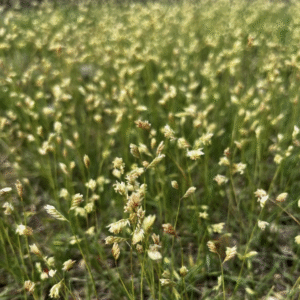
You did everything right. You picked a TWCA-certified water-wise blend. You seeded at the right time. You watered on schedule. By August, the lawn looks like it’s been on three rough years instead of three months. Thin patches. Stunted growth. Yellow tinge no fertilizer can fix.
The seed didn’t fail. The soil did.
Most failed xeriscapes don’t die from picking the wrong species. They die because the soil underneath is compacted, biologically dead, and incapable of holding water long enough for roots to use it. You can plant the most drought-tolerant grass in the world, but if it’s rooting into something that drains in two minutes or rejects water entirely, it doesn’t matter what’s on the seed bag.
This is the part of xeriscaping homeowners skip. Don’t.
What healthy soil actually does
A teaspoon of healthy garden soil contains a billion bacteria, a hundred meters of fungal hyphae, several thousand protozoa, dozens of nematodes, and visible insects. It is alive. That ecosystem is the difference between soil that works for you and soil that works against you.
Three things change when soil is alive:
It holds moisture deep
Compacted soil sheds water — you’ve seen it pool on bare ground after a rain. Aggregated, biologically active soil drinks water and stores it in pore spaces between aggregates. That stored water is what your roots use during the dry stretches.
The math is striking: every 1% increase in soil organic matter lets your ground hold an additional 20,000 gallons of water per acre. Bumping a tired lawn from 1% to 4% organic matter triples its drought reserve.
It feeds mycorrhizal networks
Mycorrhizal fungi are the secret weapon of xeriscape success. These fungi colonize plant roots and extend the root system 200–400% through fine fungal hyphae that reach into soil pores too small for roots themselves. They essentially multiply the water-and-nutrient access of every plant they’re connected to.
In native soil that hasn’t been disturbed, mycorrhizae are everywhere. In a typical residential lawn — sodded, sprayed, fertilized, compacted under foot traffic — they’re often absent. The seed has to build a network from scratch, or have one provided.
It buffers temperature swings
Soil with good structure and organic matter doesn’t heat as fast or cool as fast as bare mineral soil. Your roots stay in a more stable temperature range, which means less stress, less wilt, and better growth in the shoulders of summer heat.
Test your soil first
Before you amend anything, find out what you’re working with.
Texture: the ribbon test
Grab a handful of moist soil. Squeeze and press it between thumb and forefinger to push out a ribbon.
- No ribbon, falls apart immediately: Sandy. Drains too fast. Needs compost to retain moisture.
- Short ribbon (less than 1 inch) before breaking: Sandy loam or loam. The goal — work to maintain it.
- Long ribbon (1–2 inches) before breaking: Clay loam. Decent water holding, may need aeration.
- Long ribbon (>2 inches), feels sticky: Heavy clay. Drains too slow. Needs aeration plus organic matter.
pH: $5 strip test
Most xeriscape species prefer pH 6.0–7.5. Outside that range, they can’t access certain nutrients no matter how much fertilizer you throw at them.
- pH below 6.0: Acidic. Add lime to raise.
- pH above 7.5: Alkaline (common in arid West). Add sulfur or use ammonium-based fertilizers to lower over time.
- pH 6.0–7.5: Good. Move on.
Visual signs of dead soil
- Soil cracks badly when dry
- Water beads up and runs off rather than soaking in
- No earthworms when you dig down 6 inches
- Compacted layer 2–3 inches down that resists a screwdriver pushed in
If three or more of these are true, your soil is biologically depleted. You need amendments and inoculation, not just irrigation.
Amendments before seeding
Match the amendment to the problem.
Sandy soil
Sand drains too fast. Compost holds moisture and adds the cation exchange capacity that lets the soil hang onto nutrients.
- Spread 2 inches of finished compost across the surface
- Till to 4 inches deep
- Rake smooth, water lightly to settle
Clay soil
Clay drains too slow and compacts under any pressure. Aeration first, then organic matter to build aggregation.
- Core aerate (rent a machine — pull plugs, don’t just slice)
- Spread 1–2 inches of compost across the surface
- Rake compost into the aeration holes
- Water to settle
Loam soil
Loam is what you’re aiming for. Maintain it with annual top-dressing and avoid the things that destroy structure (heavy equipment, repeated walking on wet soil, leaf-blowing exposed soil bare).
- Top-dress with 1/2 inch compost annually
- Aerate every 2–3 years if compaction returns
- That’s it
Universal: biological inoculation
Whatever your soil texture, the missing ingredient in most residential lawns is the biology. Mycorrhizal fungi need to be present at seeding time to colonize the new roots as they emerge.
AM 120 Standard Mycorrhizal Inoculant is the workhorse here. Why this works: it’s a granular inoculant containing four arbuscular mycorrhizal species (Glomus genus) that colonize the roots of grasses, perennials, and most flowering plants. Mix it with the seed at planting, or band it under the seed in the top inch of soil. The fungi take 4–6 weeks to colonize, and once they do, your seedlings access water and phosphorus from soil volumes 200–400% larger than their roots alone reach. This isn’t an upsell — it’s the biology that makes drought tolerance work in the field. Order AM 120 Mycorrhizal Inoculant at Nature’s Seed.
The mycorrhizal advantage in plain English
A grass seedling has roots maybe 4 inches long during its first month. The roots themselves can absorb water from a thin shell of soil immediately around them. With mycorrhizae, the same seedling has fungal hyphae extending another 6–12 inches in every direction, reaching into pore spaces too small for roots and pulling water from a soil volume four to ten times larger.
In drought conditions, that’s the difference between a seedling that survives a dry week and one that doesn’t.
In compacted residential soil that’s lost its native fungal community, this network has to be rebuilt. You can wait years for it to repopulate naturally, or you can inoculate at seeding and have it functioning within six weeks.
Starter nutrition: the right fertilizer at planting
Most lawn fertilizers are designed for established turf — high in nitrogen, formulated for fast green-up. They are wrong for new seed.
What new seed needs:
- Phosphorus for root development
- Potassium for stress resistance
- Lower nitrogen so you’re not pushing top growth before roots can support it
A 4-6-4 ratio (or similar low-N, higher-P) is what you want at seeding.
Organic Seed Starter 4-6-4 is built for this. Why this works: the 4-6-4 ratio supplies what new seed actually needs — phosphorus for roots, potassium for stress, modest nitrogen to avoid pushing top growth ahead of the root system. Organic source means slower, steadier release that won’t burn seedlings or shock the soil biology you’re trying to encourage. Order Organic Seed Starter 4-6-4 at Nature’s Seed.
Mulching new seed: rice hulls beat straw
Bare seed on bare soil is exposed to four enemies: sun, wind, birds, and crust. A thin mulch layer protects against all four without smothering germination.
Straw works but introduces weed seed and can mat down. Rice hulls are the better mulch for fine seed:
- Light enough that seed pushes through easily
- Holds moisture without compacting
- Prevents soil crusting that blocks germination
- Inert — no weed seed contamination
- Breaks down over a season into organic matter
Rice Hulls Planting Aid is the product. Why this works: rice hulls hold water but don’t smother the seed, prevent the surface crust that kills germination during the first week, and break down clean — no weed contamination, no thatch buildup. Spread a thin layer (1/4 inch) over freshly seeded soil and water in. Order Rice Hulls Planting Aid at Nature’s Seed.
Putting it all together: the seed-day routine
- Soil prep complete. Texture amended, pH adjusted, surface raked smooth.
- Apply Organic Seed Starter 4-6-4 at the recommended rate. Rake in lightly.
- Mix mycorrhizal inoculant with the seed in a bucket. Or band the inoculant in the top 1 inch of soil under the seed row.
- Spread the seed at the recommended rate. A drop spreader for uniform coverage.
- Lightly rake the seed into the top 1/4 inch of soil. Don’t bury — most lawn seed germinates from the surface.
- Top with rice hulls. Thin layer, 1/4 inch.
- Water gently. Keep the surface damp but don’t wash seed off.
- Maintain moisture for 21 days. After that, taper.
This routine — soil amended, biology inoculated, seed properly fertilized, surface mulched — is what separates a xeriscape that takes off from one that limps for three years before you give up.
What changes when soil is right
- Germination rates improve by 20–40%
- Establishment compresses from 12 weeks to 6–8
- First-year drought tolerance improves measurably
- The lawn enters year two strong instead of patchy
- Your watering schedule in year one drops sooner
The investment in soil prep is small relative to the seed cost. The payback is the difference between a project that works and a project that doesn’t.
Where to go next
- If you haven’t picked your replacement grass yet, how to replace your lawn with drought-tolerant grass walks the species decision.
- For the seeding technique itself — rates, timing, watering schedule — read how to seed and establish a xeriscape.
- After establishment, xeriscape lawn maintenance is the long-term care guide.
- The full xeriscape guide is the master reference.
The sprinkler isn’t your foundation. The soil is.