
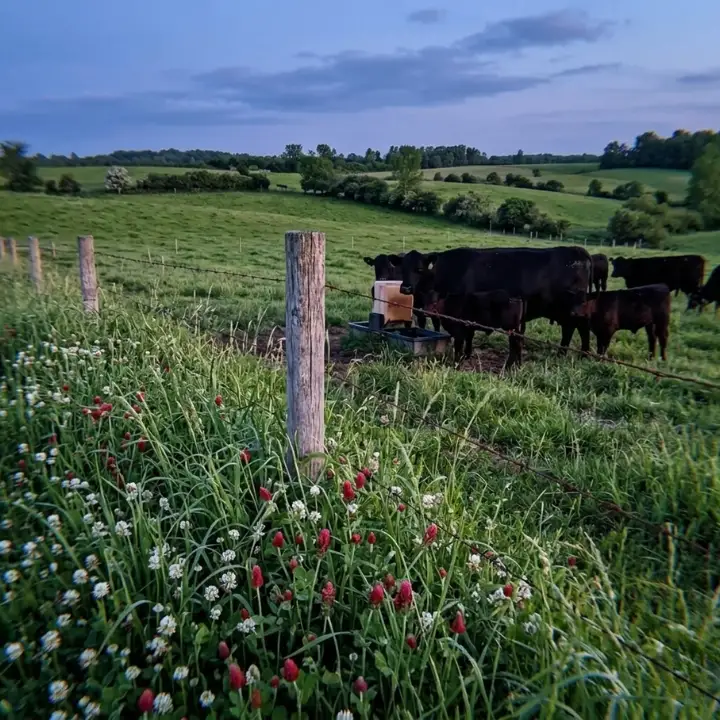
Rotational Grazing Foundation Mix

SKU: BDL-ROTGRZ

$141.99 $10.92/lb
  • Covers 1 acre
  • Seeding rate: 13 lbs per acre (kit is pre-portioned for 1 acre at pasture establishment rate)
  • 13 lb bundle
Total Price: $141.99
Estimated Delivery: 15-18 business days
Looking for more than 200 lbs?

What is the Rotational Grazing Foundation Mix?

The Rotational Grazing Foundation Mix is a four-species perennial pasture blend designed specifically for managed rotational grazing paddocks in zones 4-8. It is not a generic pasture mix — every species in this kit was selected for a specific functional role in a rotational grazing system, where paddocks are grazed intensively for short periods and then rested for regrowth.

Orchardgrass (Dactylis glomerata) is a high-yielding, palatable cool-season grass that produces early spring growth and recovers quickly after grazing — both essential traits for tight rotational schedules. Tall Fescue (Festuca arundinacea) is the durability species in the mix: it tolerates heavy traffic, wet soils, and summer heat stress better than orchardgrass, and its deep root system makes it drought-tolerant in the critical midsummer period when orchardgrass production drops. The two grasses together produce a more resilient sward than either alone. White Clover (Trifolium repens) and Red Clover (Trifolium pratense) are the nitrogen engine of the mix. Well-established clover stands fix 100-200 lbs of nitrogen per acre per year, eliminating most or all of the synthetic nitrogen requirement for the paddock. They also provide high-protein, highly digestible forage that improves livestock gain rates and reduces feed supplementation needs.

Specifications

USDA Regions 4-8
Seeding Rate 13 lbs per acre (kit is pre-portioned for 1 acre at pasture establishment rate)
Sun Requirements Full Sun to Partial Shade (tolerates up to 4 hours of shade; production decreases below 6 hours of sun)
Time to Germinate Germination 7-14 days; first grazing in 60-90 days; full stand establishment in year one

Seeding Specs

Water Needs Moderate — requires consistent moisture for establishment; drought-tolerant once established
Soil Preference Well-drained to moderately well-drained loam or clay loam; Tall Fescue tolerates heavier clay than Orchardgrass
Soil pH pH 6.0-7.0 for best production; clover component requires pH 6.2+ for effective nitrogen fixation
Planting Depth 1/4 inch for clover; 1/4 to 1/2 inch for grasses — broadcast and firm, or drill at 1/4 inch depth

Establishment Specs

Height Orchardgrass: 18-36 inches; Tall Fescue: 24-36 inches; White Clover: 4-12 inches (prostrate); Red Clover: 18-30 inches
Color White and red/pink flowers (clover)
Uses Pasture, Rotational Grazing, Hay, Nitrogen Fixation, Pollinator Habitat
Native/Introduced Introduced — all four species are European in origin, widely naturalized

Why Choose This Seed?

Rotational Recovery

The most important trait in a rotational grazing grass is recovery speed — how quickly the plant rebuilds leaf area and root reserves after a grazing event. Orchardgrass recovers faster than most cool-season grasses, typically regrowing to grazing height in 21-35 days after a grazing pass, depending on moisture and temperature. This recovery rate is what makes tight rotational schedules (5-7 paddock rotations) possible without overgrazing individual paddocks. Tall Fescue recovers slightly more slowly but compensates with dramatically better summer persistence and tolerance of repeated high-traffic grazing events that would thin an orchardgrass-only stand over time.

Free Nitrogen from Legumes

The combined white clover and red clover component of this mix provides 100-200 lbs of nitrogen per acre per year when stands maintain 25-40% legume content — a realistic target in a well-managed rotational system. This is equivalent to two or three applications of synthetic nitrogen at typical pasture rates, representing a real input cost reduction over the life of the stand. Maintaining legume content requires avoiding overgrazing during legume establishment (the first 60-90 days), managing broadleaf weed competition, and reseeding thin spots with white clover when legume content drops below 20% of stand composition.

Season-Long Production

Orchardgrass and Tall Fescue have complementary productivity curves that together extend the grazing season. Orchardgrass is the earlier spring producer, initiating growth at soil temperatures of 40°F and producing the bulk of its annual yield in April-June. Tall Fescue is the summer persistence species — it holds production and stand integrity through July and August heat stress periods when orchardgrass enters summer dormancy. In fall, both species resume active growth as temperatures cool below 75°F, providing a second flush of high-quality forage through October and into November in zones 5-7.

Sward Durability

Tall Fescue's deep root system — often extending 3-4 feet in well-drained soils — and its tolerance of wet, compacted, and heavy-traffic conditions make it the durability backbone of this mix. In paddocks with high livestock density or heavy equipment access, orchardgrass-only stands often thin out within 2-3 years. Adding Tall Fescue maintains a dense, persistent sward under those conditions. The endophyte-free variety used in this kit avoids the fescue toxicosis issues associated with endophyte-infected varieties in beef cattle and horses.

Pollinator Support

The clover component of this mix — particularly white clover — provides significant pollinator forage when paddocks are rested between grazing cycles. White clover in a rotationally managed paddock flowers continuously during rest periods, providing a dependable nectar source for honeybees, bumblebees, and native bees throughout the growing season. This is a tangible secondary benefit in grazing systems: pollinator populations in and around clover-containing paddocks are measurably higher than in pure grass stands, and this benefits neighboring vegetable and fruit production.

How to Use the Rotational Grazing Foundation Mix

Site Prep

Successful pasture establishment starts with eliminating competition from existing vegetation. For new seedings into sod or weedy ground, apply a burndown herbicide or till and allow a flush of weed germination before final seedbed preparation. For renovation seedings into thinned existing pasture, mow closely and use a slit-seeder to introduce the mix directly into the existing sward without full tillage. pH should be corrected to 6.0-7.0 before seeding — take a soil test if the field has not been limed in the past 3 years. Lime at least 60 days before seeding to allow it to react with soil. Apply phosphorus and potassium per soil test recommendations; avoid applying nitrogen at establishment, as it will favor grass over clover and suppress legume nodulation.

Seeding

Drill the mix at 13 lbs per acre using a pasture or forage drill set to 1/4 inch depth. If broadcasting, spread at 15-16 lbs per acre (slightly higher to compensate for lower seed-to-soil contact) and cultipack before and after seeding. In a slit-seeder renovation, run at 10-12 lbs per acre directly into the existing sward. Always inoculate the clover component — mix white clover and red clover seed with a fresh peat-based Rhizobium leguminosarum inoculant just before planting. Do not mix inoculant with fertilizer; the fertilizer salts will kill the bacteria. Keep inoculated seed out of direct sunlight and plant within 24 hours of inoculation.

Establishment

Germination occurs in 7-14 days under adequate moisture and soil temperatures above 50°F. Orchardgrass and Tall Fescue will emerge first; clover seedlings are small and slow to show. Do not evaluate stand success before 21-28 days. During establishment, clover seedlings are vulnerable to competition — if broadleaf weeds are heavy, mow or clip to 4-6 inches to reduce canopy competition without removing the small clover seedlings. Target stand density is 4-6 grass plants per square foot plus visible clover coverage of 20-30% of the surface area. Stands thinner than 3 grass plants per square foot should be evaluated for frost heave, seedbed conditions, or weed competition and re-seeded in any bare areas.

First-Year Management

Delay first grazing until the stand has been growing for 60-90 days and individual grass plants have established root systems deep enough to resist pulling. A simple test: tug a grass plant — if it pulls free of the soil with minimal resistance, the roots are not established enough. First grazing should be brief (1-2 days maximum) and at high plant height (6-8 inches), and the paddock should be given a full 30-45 day recovery before the second grazing. Do not over-graze in the first season; doing so thins the stand and allows weeds to re-colonize. Full rotational schedules at commercial stocking rates should begin in the second growing season.

Questions & Answers

Is this mix suitable for horses?
This mix uses endophyte-free Tall Fescue, which eliminates the fescue toxicosis risk associated with endophyte-infected varieties. Endophyte-infected fescue is a serious concern for horses and pregnant mares in particular — it causes reduced conception rates, prolonged gestation, retained placentas, and reduced milk production. Endophyte-free varieties carry none of these risks. Orchardgrass is well-tolerated by horses and is a preferred forage species in many equine grazing programs. Red and white clover are generally safe for horses at normal pasture concentrations (under 30% of the stand), though pure stands or very high clover ratios should be managed carefully in horses prone to metabolic issues. Overall, this is a horse-appropriate pasture mix.
How do I maintain the legume component over time?
Maintaining 25-40% legume content in a mixed grass-legume sward requires active management. The most common cause of legume decline is overgrazing during the first year, which prevents legumes from establishing deep root systems. After establishment, maintain legume content by avoiding continuous set-stocking (rotational grazing naturally favors legumes over continuous grazing), topdressing with phosphorus and potassium per soil test rather than nitrogen (nitrogen fertilization favors grasses and outcompetes legumes), and overseeding thin clover areas every 2-3 years with 1-2 lbs per acre of white clover. Annual pH checks and lime applications to maintain pH above 6.2 are also essential — clover root nodulation declines sharply below pH 6.0.
Can this mix be used for hay as well as grazing?
Yes. Both Orchardgrass and Tall Fescue are proven hay species, and the legume component improves hay quality by raising crude protein content. For hay production, cut orchardgrass at early head emergence for highest quality. Cut Tall Fescue before seed heads fully emerge. Red clover is best cut at 10% bloom to minimize leaf shatter loss — clover leaves are the highest-quality part of the plant and shatter easily when dry. In a combined hay and grazing system, designate some paddocks for hay and others for grazing rather than alternating the same paddock between the two uses; alternating dramatically extends stand life and simplifies management.
What stocking rate is this mix designed for?
This mix is designed for standard rotational grazing stocking rates in zones 4-8, which range from 0.5-1.5 animal units (AU) per acre depending on rainfall, fertility, and management intensity. In high-rainfall zones 6-8 with adequate fertility, this mix can support 1.0-1.5 AU per acre with a 5-7 paddock rotation and 21-35 day rest periods. In drier zones 4-5, plan for 0.5-0.75 AU per acre unless supplemental irrigation is available. Overstocking relative to carrying capacity is the leading cause of pasture degradation — when in doubt, stock conservatively in year one and expand stocking density after observing actual regrowth rates.
Will this mix work in the Southeast US?
This mix performs best in zones 4-8 with consistent cool-season moisture. In the deep South (zones 8b-9+), Tall Fescue and Orchardgrass struggle with summer heat and humidity, and warm-season grasses like Bermudagrass, Bahiagrass, or Pearl Millet are more appropriate for warm-season grazing. This mix can work as a winter annual overseeding in zone 8 if seeded in fall and grazed through late spring before summer heat sets in, but it will not persist as a permanent sward in the deep South. Contact us before purchasing if you are in zones 8b or warmer — we can recommend a more appropriate mix.
How long will this stand last?
Under good management, this mix can remain productive for 5-10 years or longer. Orchardgrass is relatively long-lived but can thin under heavy grazing pressure or prolonged drought. Tall Fescue is exceptionally persistent — stands managed without severe overgrazing often last 15+ years. White clover is perennial and self-repairs by stolons, but individual plants have a lifespan of 3-5 years; stands maintain themselves through continuous stolon spread and some reseeding. Red clover is shorter-lived (2-3 years) and benefits from periodic overseeding. Plan a light overseeding of white clover and red clover every 3-4 years to maintain legume content as original plants age out.

Still Have Questions?

Our seed experts are ready to help you find the perfect seed for your project.

1-866-322-7300 Ask a Seed Expert

Customer Reviews

No reviews yet. Be the first to share your experience.

You May Also Like
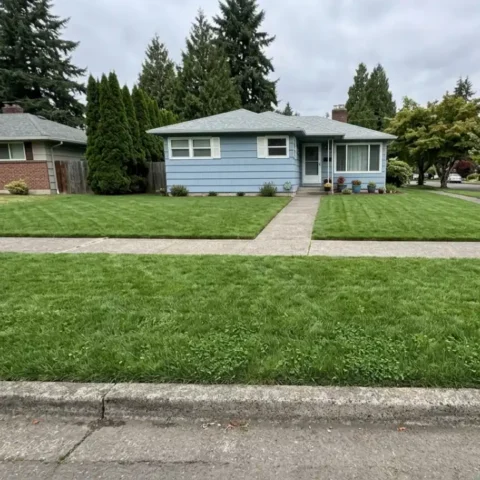
Cool-Season Xeric Lawn Builder

Year-Round Green Covers 3,000 Sq Ft

From $299.99

Zones 5–7, Deep Root System, Low Mow Frequency, Self-Fertilizing

See Details about Cool-Season Xeric Lawn Builder
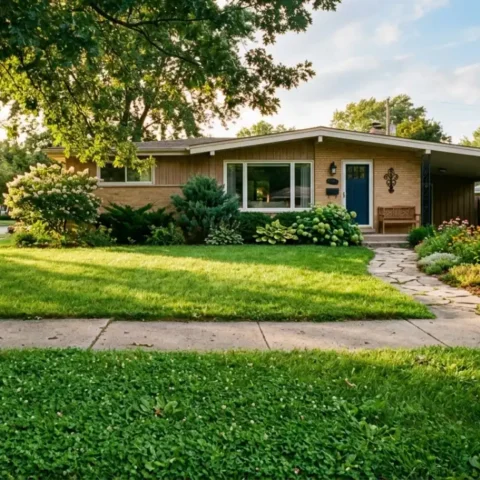
HOA-Friendly Native Lawn Alternative

HOA Appearance Ready 60% Less Water

From $429.99

Covers 3,000 Sq Ft, 4-Season Coverage, Zones 4–9, Self-Fertilizing

See Details about HOA-Friendly Native Lawn Alternative
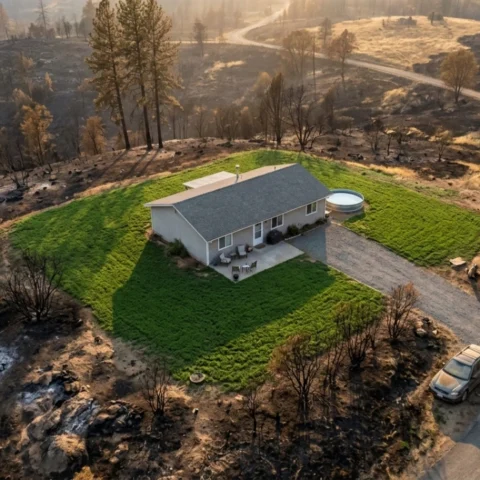
Fire-Wise Defensible Space Kit

Low Fuel Load Covers 2,500 Sq Ft

From $345.99

Zone 1 Ready, Stays Green Longer, Native Species, No Fillers

See Details about Fire-Wise Defensible Space Kit
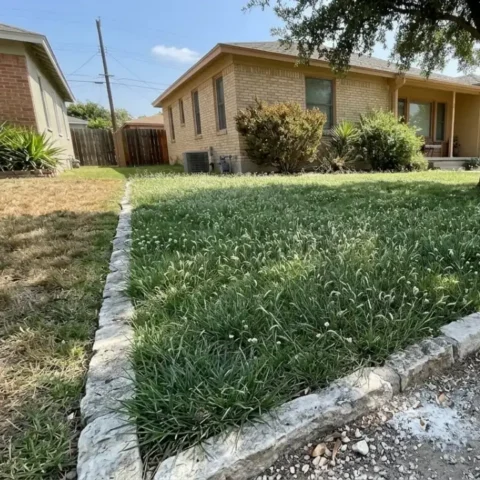
Texas Drought-Defy Bundle

Texas Native Species Covers 3,000 Sq Ft

From $305.99

Heat to 110°F, Self-Fertilizing, Zones 5–10, No Fillers

See Details about Texas Drought-Defy Bundle