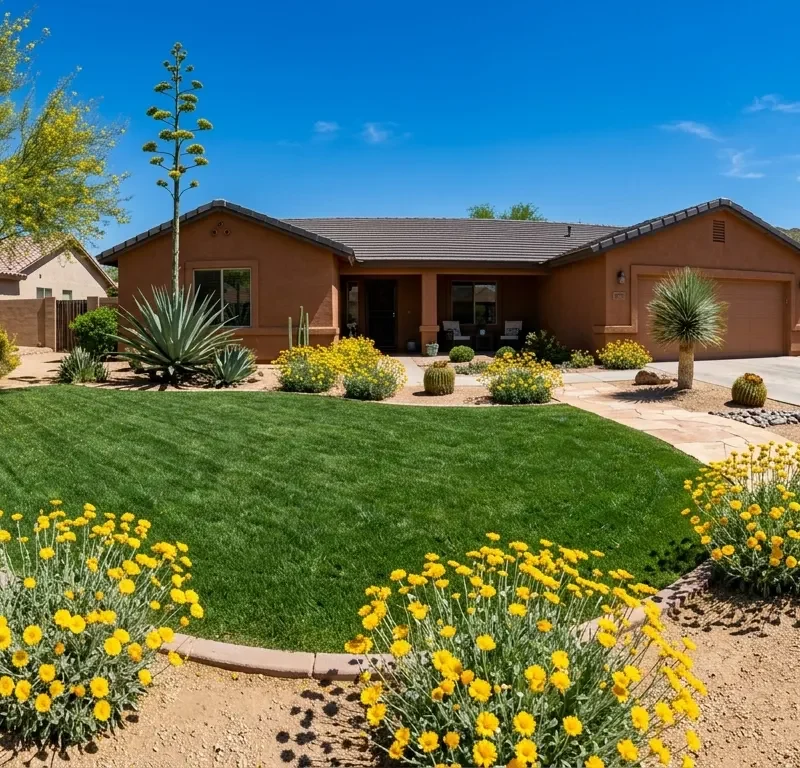
Phoenix Front Yard Desert Conversion Mix

SKU: BDL-PHOENIX

$448.99
  • Seeding rate: 6 lb per 1,000 sq ft
Total Price: $448.99
Estimated Delivery: 15-18 business days
Looking for more than 200 lbs?

What is the Phoenix Front Yard Desert Conversion Mix?

The Phoenix Front Yard Desert Conversion Mix is a Sonoran Desert-specific seed blend engineered for the extreme low-desert conditions of Maricopa County and greater Phoenix metro (Zone 9b–10). It combines Buffalograss, hulled Bermudagrass, and Desert Marigold into a front yard planting that handles Phoenix's 115°F+ summer temperatures, alkaline caliche soils, and dry-monsoon rainfall cycles.

The mix is designed for two audiences: Phoenix homeowners looking to convert a high-water cool-season or overseeded lawn to a permanent low-water yard, and SRP or AMWUA rebate recipients who need a qualifying seed-based replacement rather than a gravel-only conversion. Desert Marigold (Baileya multiradiata) is a Sonoran Desert native perennial that adds reliable yellow blooms and pollinator value while staying within the city's low-water plant requirements.

Specifications

Seeding Rate 6 lb per 1,000 sq ft
Sun Requirements Full Sun
Time to Germinate 45–75 days to visible establishment

Seeding Specs

Water Needs Very Low — once established
Soil Preference Well-drained, alkaline, sandy loam to clay
Soil pH 7.0–8.5
Planting Depth 1/8 to 1/4 inch — shallow seeding critical for Bermudagrass

Establishment Specs

Height 3–8 inches maintained; Desert Marigold to 24 inches if unpruned
Color Green lawn with yellow Desert Marigold blooms
Uses Front Yard Conversion, Desert Lawn, Rebate Programs, Zone 9b-10
Native/Introduced Buffalograss and Desert Marigold are North American natives; Bermudagrass is naturalized

Why Choose This Seed?

Engineered for 115°F

Phoenix summer temperatures routinely exceed 110°F and spike above 115°F during heat dome events. Buffalograss and Bermudagrass are two of the most heat-tolerant lawn grasses available — they were grown and selected under conditions approaching what Phoenix delivers. They do not just survive the heat; they grow actively through it once established.

Alkaline Caliche Adapted

Phoenix soils are some of the most alkaline in North America, with pH regularly measuring 7.5–8.5 and caliche hardpan layers common below 12 inches. All three species in this mix are adapted to high-pH alkaline conditions. No soil acidification is required — these plants evolved in soils like yours.

Bermudagrass Advantage

Hulled Bermudagrass germinates faster than Buffalograss in Phoenix's warm soil conditions — often showing visible growth within 7–10 days. This rapid establishment outcompetes summer weeds during the vulnerable early seeding window and provides erosion control while the slower-establishing Buffalograss takes hold. Hulled seed removes the outer coat for faster, more uniform germination compared to unhulled varieties.

SRP and AMWUA Compatible

Phoenix-area rebate programs (SRP, AMWUA municipalities including Tempe, Mesa, Scottsdale, Chandler, Glendale, and others) support turf-to-low-water-landscape conversions. The species in this mix are aligned with the plant requirements for these programs. Always verify your specific program's current approved plant list and documentation process before starting removal.

Desert Marigold Color

Desert Marigold (Baileya multiradiata) is a Sonoran Desert native that blooms bright yellow for most of the year in Phoenix conditions. It is drought-hardy to extremes, tolerates zero supplemental irrigation once established, and is one of the best pollinator plants available for the low desert. It fills the border and accent areas of your conversion yard with consistent color without adding any irrigation demand.

How to Use the Phoenix Front Yard Desert Conversion Mix

Site Prep

Remove existing turf completely. Solarization works exceptionally well in Phoenix — clear plastic sheeting over moist soil for 4–6 weeks in summer generates temperatures that kill existing vegetation and weed seed. Till the top 2–3 inches. If caliche is present within 12 inches, break it up or drill through it — caliche prevents drainage and stunts root development significantly.

Seeding

Broadcast at 6 lb per 1,000 sq ft. Bermudagrass seed is very small — mix with dry sand to improve distribution uniformity if needed. Rake very lightly: Bermudagrass germinates best at 1/8 inch depth. Do not bury seed. A thin weed-free straw mulch reduces moisture loss significantly in Phoenix's low-humidity conditions.

Establishment

Water twice daily (morning and late afternoon) for the first 3 weeks. Phoenix's heat and low humidity will dry exposed seed beds rapidly — consistent moisture during germination is the single most important success factor. Bermudagrass will show visible growth within 7–14 days. Buffalograss follows at 14–21 days. Desert Marigold may take 3–4 weeks. Reduce to deep, infrequent watering as the stand establishes over 45–75 days.

Rebate Documentation

Contact your local water district to confirm rebate requirements before beginning removal. Most programs require pre-approval photos.

Questions & Answers

Can I plant this in summer in Phoenix?
June through August is not recommended for seeding in Phoenix. Daytime air temperatures above 110°F and soil surface temperatures that can exceed 140°F will kill seedlings before they establish, regardless of irrigation. Spring planting (March–May) and fall planting (mid-September through October) are the two windows where establishment succeeds reliably. Both Bermudagrass and Buffalograss need soil temperatures above 65°F but below the extreme summer highs — the shoulder seasons provide that window.
Will Bermudagrass spread aggressively in Phoenix?
Bermudagrass is a vigorous spreader via stolons and rhizomes, which is why it establishes so quickly and outcompetes weeds in Phoenix's summer conditions. In a front yard conversion context, this spreading behavior is beneficial — it fills bare spots and creates dense coverage. The edge of your lawn should be maintained with edging or a physical barrier to prevent it from spreading into adjacent garden beds or hardscaped areas.
Will this qualify for an SRP or AMWUA rebate?
This mix was designed with Phoenix-area rebate programs in mind. Buffalograss and Bermudagrass are low-water grass species, and Desert Marigold is a Sonoran Desert native that appears on low-water plant lists for the region. However, SRP, AMWUA municipalities, and individual city programs each maintain their own approved species lists and documentation requirements. You must verify current eligibility with your specific program before removing existing turf. Call your water district or visit their website to confirm current requirements.
Does Bermudagrass go dormant in Phoenix winters?
Yes. Bermudagrass goes dormant and turns tan during Phoenix winters (roughly mid-November through February) when temperatures fall below 50°F consistently. It greens up rapidly in spring as temperatures rise. Phoenix homeowners who want green winter color traditionally overseed with annual ryegrass — this is your choice and does not affect the permanent drought-adapted status of the underlying lawn.
How often do I need to water once established?
Established Bermudagrass and Buffalograss in Phoenix typically need deep watering every 7–14 days during summer, and every 14–21 days during the cooler months. Desert Marigold needs no supplemental irrigation once established. The exact schedule depends on your soil, sun exposure, and microclimate, but the water reduction compared to cool-season overseeded bluegrass is typically 50–70%. Consult your local water district for their specific irrigation schedule recommendations.
What about HOA restrictions in the Phoenix metro?
Maricopa County municipalities have been actively updating HOA rules to allow and encourage turf replacement. However, individual HOA CC&Rs vary widely — some require specific plant palettes, minimum coverage percentages, or landscape architect approval for major changes. Check your HOA's current landscaping guidelines before beginning any turf removal project. Most Phoenix-area HOAs now have provisions specifically allowing drought-tolerant turf replacement under water rebate programs.

Still Have Questions?

Our seed experts are ready to help you find the perfect seed for your project.

1-866-322-7300 Ask a Seed Expert

Customer Reviews

No reviews yet. Be the first to share your experience.

You May Also Like

Cool-Season Xeric Lawn Builder

Year-Round Green Covers 3,000 Sq Ft

From $299.99

Zones 5–7, Deep Root System, Low Mow Frequency, Self-Fertilizing

See Details about Cool-Season Xeric Lawn Builder

HOA-Friendly Native Lawn Alternative

HOA Appearance Ready 60% Less Water

From $429.99

Covers 3,000 Sq Ft, 4-Season Coverage, Zones 4–9, Self-Fertilizing

See Details about HOA-Friendly Native Lawn Alternative

Fire-Wise Defensible Space Kit

Low Fuel Load Covers 2,500 Sq Ft

From $345.99

Zone 1 Ready, Stays Green Longer, Native Species, No Fillers

See Details about Fire-Wise Defensible Space Kit

Texas Drought-Defy Bundle

Texas Native Species Covers 3,000 Sq Ft

From $305.99

Heat to 110°F, Self-Fertilizing, Zones 5–10, No Fillers

See Details about Texas Drought-Defy Bundle