What Is Xeriscaping? The 7 Principles Explained
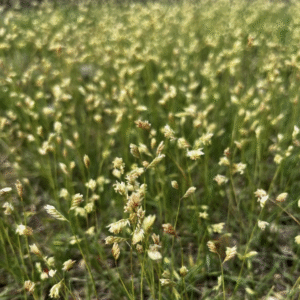
Your water bill jumped again last month. The bluegrass goes crispy by the Fourth of July no matter how often you run the sprinklers, and the dead spot near the driveway has been dead for three summers running. You spend most Saturday mornings either mowing or fighting whatever fungus came in with the last storm.
That isn’t a watering problem. It’s a design problem. You have a lawn that doesn’t want to live where you live, and you’ve been paying to keep it on life support.
Xeriscaping is the way out.
What xeriscaping actually is
Xeriscaping is a landscape design method that minimizes the need for supplemental irrigation by matching plants to the climate and soil they’re planted in. The term was coined by Denver Water in 1981, combining the Greek root xeros (dry) with landscaping. It is not a style. It does not mean rocks. It does not mean cactus. It does not mean a brown yard from May through October.
A well-designed xeriscape can look like a traditional lawn, a wildflower meadow, a clover groundcover, or any combination — depending on how you build it. What it has in common is one thing: the plants you choose actually want to grow in your yard with the rainfall your zip code already gets.
Xeriscaping is sometimes confused with zero-scaping. They are not the same. Zero-scaping replaces living plants with gravel, mulch, and hardscape. Xeriscaping replaces high-water plants with low-water plants — the yard stays alive, just with species that pull their own weight.
The 7 principles of xeriscaping
The framework Denver Water laid out in 1981 still holds up. Here are the seven principles, with what each one actually means when you’re standing in your front yard with a rake.
1. Planning and design
Map your yard before you buy a single seed packet. Walk it at 9 AM, noon, and 4 PM. Note where the sun hits, where shade lingers, where water pools after a storm, where it runs off in thirty seconds. Sketch the zones on graph paper. Decide what each zone needs to do — kid play space, dog run, view from the kitchen window, screen from the neighbor.
This is where most projects fail. Homeowners pick the seed first, then try to make it work. Pick the zones first.
2. Soil improvement
Healthy soil is the cheapest irrigation system you’ll ever install. Every 1% increase in soil organic matter lets your soil hold an additional 20,000 gallons of water per acre. Compacted, biologically dead soil sheds water; alive, well-aggregated soil drinks it and keeps it.
Before you seed, work compost into the top four inches of any zone you’re planting. If your soil is heavy clay, aerate first. If it’s sandy, you’ll need more compost than you think.
3. Appropriate plant selection
Pick species adapted to your climate, your soil, and the role each zone plays. A drought-tolerant turfgrass for the lawn area. A native bunchgrass for slopes. A wildflower mix for the strip the kids never walk on. The right plant in the right spot needs less water, less fertilizer, and less from you.
Sundancer Buffalograss Lawn Seed is a useful example. It’s a native North American prairie grass that uses up to 75% less water than Kentucky bluegrass, mows to 4–6 inches on its own, and stays alive on rainfall alone in most of the western US after establishment. Why this works: it evolved in the same climate that’s killing your bluegrass. You’re not fighting the species, you’re working with it. Order Sundancer Buffalograss Lawn Seed at Nature’s Seed.
4. Practical turf areas
Turf earns its keep in some places and not others. Where it earns its keep: kid play areas, dog runs, visible front-yard frames, the path from the gate to the door. Where it doesn’t: parkway strips between sidewalk and street, narrow side yards, slopes you mow by stretching a cord around a tree, decorative borders nobody walks on.
Cut the turf in places where it’s purely decorative. Replace those zones with groundcovers, native grasses, or mulched planting beds.
Clover Lawn Alternative Mix is the no-brainer replacement for unused turf. Why this works: clover is a nitrogen-fixer, so it feeds itself, and it stays green when nothing else will. It tolerates light foot traffic, never needs mowing, and looks nothing like a "xeric" yard — it looks like a maintained lawn that’s slightly more interesting up close. Order Clover Lawn Alternative Mix at Nature’s Seed.
5. Efficient irrigation
Deep and infrequent beats shallow and daily. Watering twenty minutes a day trains your roots to live in the top inch of soil, where the water always is and where the heat always is. Watering forty-five minutes twice a week pushes roots six inches down, where the soil stays cooler and holds moisture longer.
If you have an automatic sprinkler system, audit it. Catch cans on the lawn for fifteen minutes — if some zones are getting double what others are, you’ve got a fix to make. Drip irrigation for planting beds. Rotary nozzles for turf.
6. Mulching
A 3-inch layer of mulch on planting beds cuts soil moisture loss by 50 to 70%. It moderates soil temperature, suppresses weeds, and as it breaks down it adds organic matter back to the soil. Wood chips, shredded bark, or pine straw all work. Don’t pile it against the stems of plants — leave a one-inch gap.
For turf areas during seeding, a thin layer of rice hulls or straw protects germinating seed from sun, wind, and soil crust.
7. Appropriate maintenance
This is where the long-term savings show up. A xeriscape isn’t no-maintenance — year one still requires establishment watering, weeding, and patience. But starting in year two, the maintenance curve drops hard. Native and adapted plants want less fertilizer (often none), less water, and less mowing than a traditional lawn.
The mistake here is over-care. People who switched from a high-input lawn often keep applying fertilizer and water out of habit, and then wonder why their xeriscape looks rangy. Most native species look their best when you leave them alone.
Where natives fit: the low-water, no-mow zones
Some areas of your yard never needed turf in the first place. Slopes you can’t mow. The strip behind the fence. The far corner of the back yard. These are spots where a native erosion-control or pollinator mix outperforms turf on every metric.
Big Four Native Erosion Control Mix is built for this. It combines four native warm-season grasses with deep root systems that anchor soil, stop runoff, and pull water from layers turfgrass roots never reach. Why this works: these are the species that held the prairie together for ten thousand years before lawns existed. They don’t ask for fertilizer, they don’t ask for irrigation after year one, and they look right at home in a Western yard. Order Big Four Native Erosion Control Mix at Nature’s Seed.
Xeriscaping vs. zero-scaping vs. traditional landscaping
The difference matters. People throw these terms around interchangeably, but they describe three different things.
| Approach | What It Is | Water Use | Plant Coverage | Maintenance |
|---|---|---|---|---|
| Traditional | Conventional turf, ornamentals | High | High (mostly turf) | High (weekly mow, regular water, fertilizer) |
| Xeriscape | Climate-matched plants | Low–moderate | High (varied species) | Low (after year 1) |
| Zero-scape | Hardscape, gravel, minimal plants | Very low | Low | Very low |
A xeriscape is not a step toward a zero-scape. It’s the opposite direction — a way to keep a planted, living yard while cutting water use. Zero-scaping is a different aesthetic choice for a different homeowner.
What changes when you xeriscape
A homeowner switching from a 5,000 sq ft Kentucky bluegrass lawn to a xeriscape with Sundancer buffalograss in the high-traffic zone, clover in the parkway, and a native mix on the slope can expect to:
- Cut summer water use by 40–70%
- Drop mowing from weekly to every 2–3 weeks (or 4 times a year, with buffalograss)
- Eliminate fertilizer entirely on native zones
- Spend less time on the yard and more time in it
The first season is work. You’re amending soil, planning zones, killing old turf, seeding new grass, and watering establishment. By the second season, the math flips, and it stays flipped.
Common mistakes to avoid
Most xeriscape projects that fail follow the same script. Here’s what to skip:
- Skipping site analysis. Buying seed before walking the yard. The grass picks the spot, not the other way around.
- Treating year one like year two. New seed needs establishment watering for 6–12 weeks. Drought tolerance is for established plants. Water through year one, then taper.
- Mixing growth-cycle types. Cool-season fescues and warm-season buffalograss have opposite green-up calendars. Pick one and stick with it within a zone.
- Over-fertilizing native zones. Native plants evolved on lean soil. Fertilizer makes them rangy and weed-prone, not lush.
- Calling tan dormancy "dead." A buffalograss lawn in February looks tan because it’s a warm-season grass at rest. It greens up reliably in spring.
- Trying to xeriscape the wet spot. If your downspout dumps into the yard, that zone is high-water by definition. Match plants to that, or fix the drainage first.
A realistic timeline
You can xeriscape on whatever schedule fits your life. A rough breakdown:
- Weeks 1–2: Site analysis, plan, species selection, ordering seed and amendments
- Weeks 3–4: Kill or remove existing turf in target zones
- Week 5: Soil prep — compost, aeration, mycorrhizal inoculation
- Week 6: Seed
- Weeks 7–18: Establishment — daily watering tapering to weekly, light first mow
- Months 6–12: Settling in. Lawn looks like a lawn from 10 feet, less from 2 feet.
- Year 2: Full establishment. The schedule from year one is gone.
You don’t have to do the whole yard at once. Many homeowners start with the parkway or back corner — the lowest-stakes zone — and expand once they’ve seen what the new species do. That’s a perfectly reasonable plan.
Where to go from here
Xeriscaping rewards planning. The four most useful next reads:
- What xeriscaping isn’t — myths vs. facts clears up the rocks-and-cactus misconception before you talk to your neighbor or HOA.
- How to plan a xeriscape yard is the zone-mapping and hydrozoning guide — do this before you buy seed.
- How to replace your lawn with drought-tolerant grass covers killing old turf, choosing replacement grass, and getting it established.
- The full xeriscape guide ties the whole cluster together with product recommendations by region and use case.
The water bill won’t fix itself. But the yard can — once you stop trying to grow the wrong species in the wrong place.