
Nothing yet
Wildflower Seeds
Brittlebrush Seed
Jump to customer reviewsEncelia farinosa | SKU: W-ENFA
What are people saying about this product
Nothing yet
Read all reviews (scrolls to reviews section below)Planting Aids for your Seed
Quality Highlights
| Every Seed Grows We don't pad bags with dead seed or filler. What's in the bag is what grows in your yard. | |
| Independently Tested, Every Batch Each lot is tested by a third-party lab for germination and purity before it ships to you. | |
| Grown on American Farms Our seed comes direct from U.S. growers we know personally — not a middleman warehouse. | |
| Clean Seed, No Shortcuts No coatings to inflate weight, no GMOs, no cheap filler species. Just seed. |
Free shipping on all orders under 100 lbs!
What is Brittlebush?
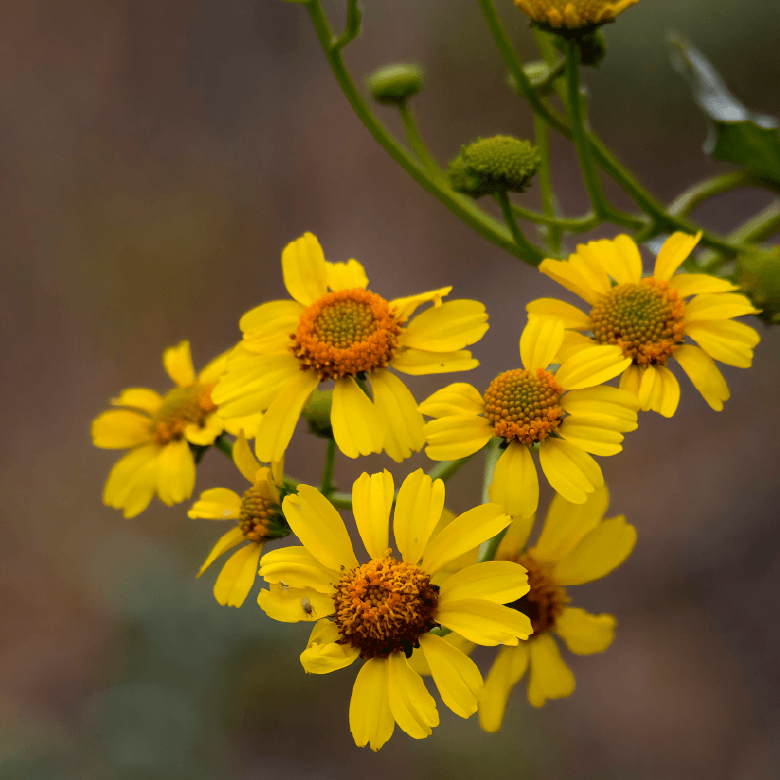
Brittlebush (Encelia farinosa) is a hardy desert shrub famed for bright yellow flowers and ash-gray foliage. Native to the Sonoran and Mojave Deserts, it grows 2–4 feet tall and wide. In spring and after rains, plants burst into golden blooms that draw bees and butterflies. Incredibly drought-tolerant, Brittlebush thrives in full sun with minimal water and prefers sandy or rocky, fast-draining soils—even bare gravel slopes. It may drop leaves during the driest times to conserve moisture. Excellent for desert landscapes, xeriscaping, and erosion control on arid slopes; low-maintenance and deer-resistant.
Specifications
Seeding Specs
Water Needs
Very Low
Soil Preference
Sandy, gravelly, or rocky soils with excellent drainage
Soil pH
Neutral to alkaline
Planting Depth
1/8 inch
Establishment Specs
Height
2–5 ft
Color
Bright yellow flowers; silvery gray-green foliage
Uses
Desert landscaping, xeriscaping, slope revegetation, pollinator gardens
Native/Introduced
Native to California
Why Choose This Seed?
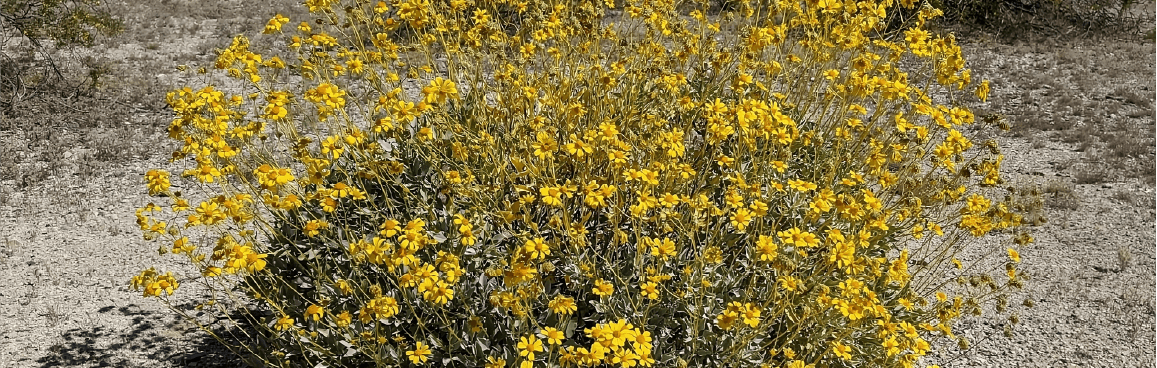
Desert Tough
Encelia can survive extreme heat and long dry periods, and springs to life with abundantly blooming desert wildflowers with just a little precipitation.
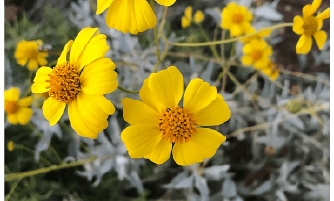
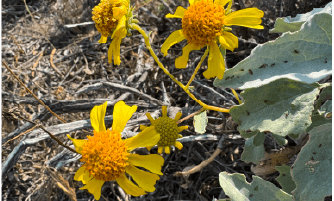
Brilliant Spring Flowers
Stunning yellow blooms transform desert landscapes. This shrub is highly aromatic, and the plant is traditionally used as incense in Mexico—it is commonly referred to as Incensio
Great for Desert Wildlife
This shrub provides important cover for reptiles, birds and small mammals, while hosting hundreds of pollinators drawn to its sweet nectar and pollen. Birds love to feast on the seed as well.
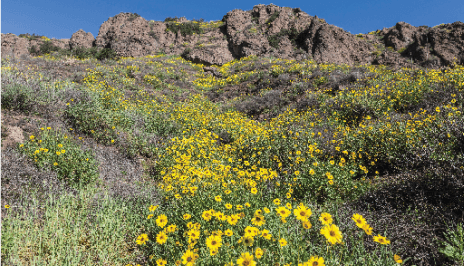
Erosion Control in Arid Areas
Encelia has a complex root system that stabilizes dry rocky slopes. This shrub can grow slowly at first from seed, so if using for erosion control, be sure to include it in a mix with faster-growing grasses to give it time to establish.
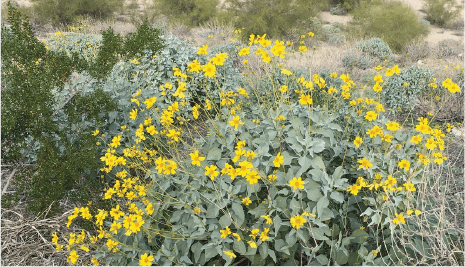
Silvery Foliage
While stunning in bloom, Encelia is also a gorgeous plant year-round. It has perennial, fuzzy silver leaves that add year-round contrast and texture.
Planting Guide
When to Start & Weed Control
Start prepping your planting area in fall, so that you are ready to seed between late September and early February, when temperatures cool and rain is on the horizon.
Weed your growing area BEFORE planting any native seeds. We recommend not only pulling visible weeds but also “flushing out” the weed seeds that are waiting in the soil.
Irrigate the area and wait for weed seeds to germinate, then remove them using your method of choice. Irrigate again, wait, and perform another round of weed control.
Repeat 2-3 times.
Soil Prep
Ensure your soil is as bare as possible for the maximum amount of seed-to-soil contact.
If the entire area can’t be completely cleared, rake out as much dead plant material from the area as you can to create bare patches of soil for the seed to make contact with. For best results, the soil should be easily crumbled and not heavily compacted.
Seeding
It is best to seed onto slightly damp soil. If necessary, water the top 1/4 inch of soil before seeding. Scatter seed directly on the soil surface and rake gently or lightly press the seed into the soil. Do not bury the seed deeper than 1/4 inch into the soil.
Water
After planting, keep the top 1/4 inch of soil consistently moist until the seeds have germinated and the first true leaves have emerged.
A good rule is to water lightly every day intul the seedlings are an inch high, then you can reduce watering to every 3 days. Skip days when it rains.
Within 6 weeks after germinating, your plants should need only occasional watering. Don’t over-water your plants, especially in summer.
Helpful Resources
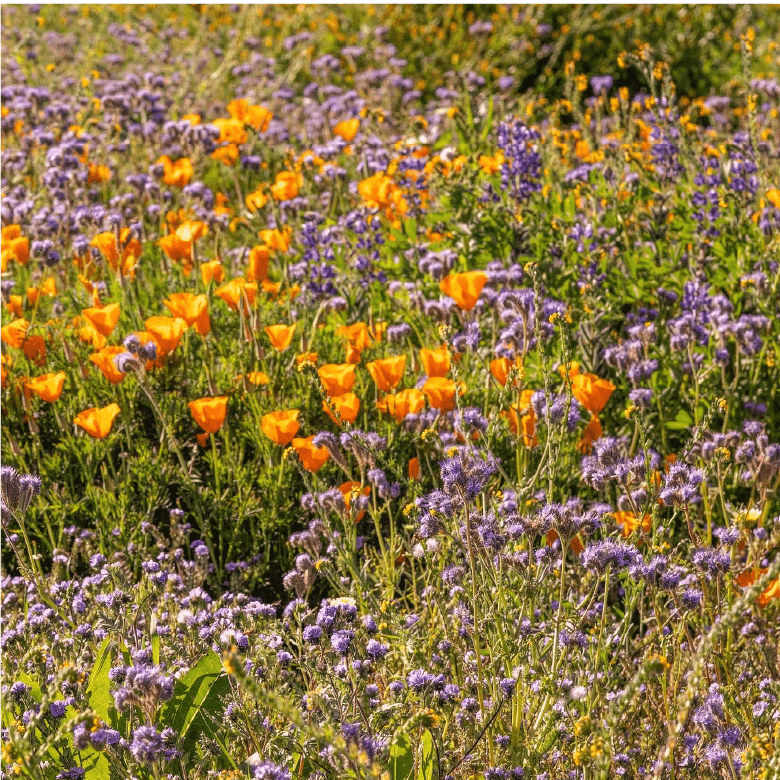
Wildflower Seed Planting Guide

How to Plant Wildflower Seeds: Our Ultimate Guide

The Ultimate Pollinator Seed Guide
Questions & Answers
Is Brittlebush native to the US?
Yes—native to the Southwestern U.S. (AZ, CA, NV, UT, NW NM) and NW Mexico; introduced in HI. It’s a rounded, drought-deciduous perennial shrub typically 2–3 ft tall (to ~5 ft in ideal sites).
When does Brittlebrush blooms, and what do the flowers look like?
Primary bloom is late winter–spring with bright yellow daisy-like heads on long stalks; a second, lighter flush can follow summer/fall rains.
How much water after establishment?
Keep evenly moist the first season; then water sparingly. Over-watering in summer risks root issues—err on the dry side.
How cold-hardy is it?
Generally hardy to about 24°F, tolerating the upper 20s°F with little damage; foliage may shed after frost or severe drought.
Is it good for wildlife and pollinators?
Yes—nectar attracts bees and butterflies; it provides seed/cover for birds and small fauna, and is browsed by desert mule deer and bighorn sheep in native range.
Any landscape uses beyond “pretty flowers”?
Planted for erosion control, disturbed-area/roadside restoration, and low-maintenance xeriscapes; it naturalizes well on slopes and bajadas.
Still Have Questions?
Our seed experts are ready to help you find the perfect seed for your project.
1-866-322-7300 Ask a Seed ExpertCustomer Reviews
3.7 out of 5 stars based on 3 reviews.
5
2
4
0
3
0
2
0
1
1
Seeds in the ground
Excellent!
You May Also Like
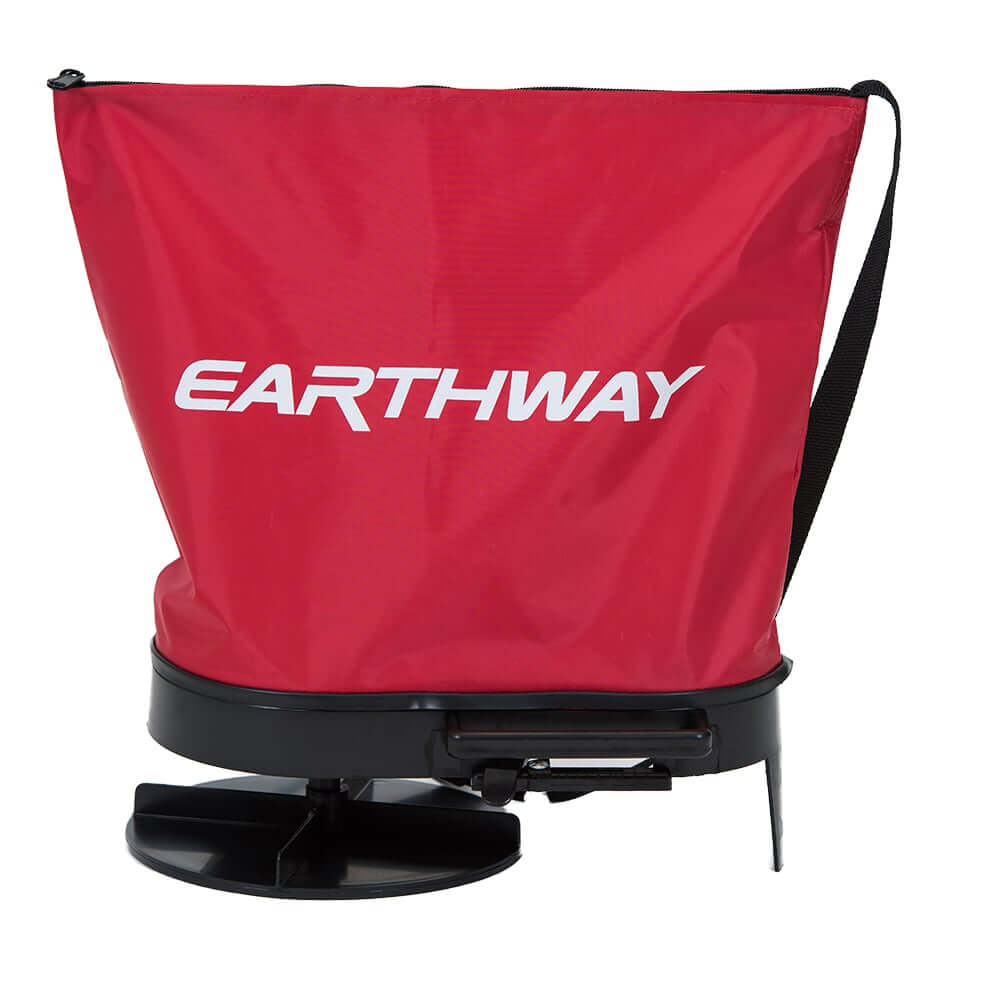
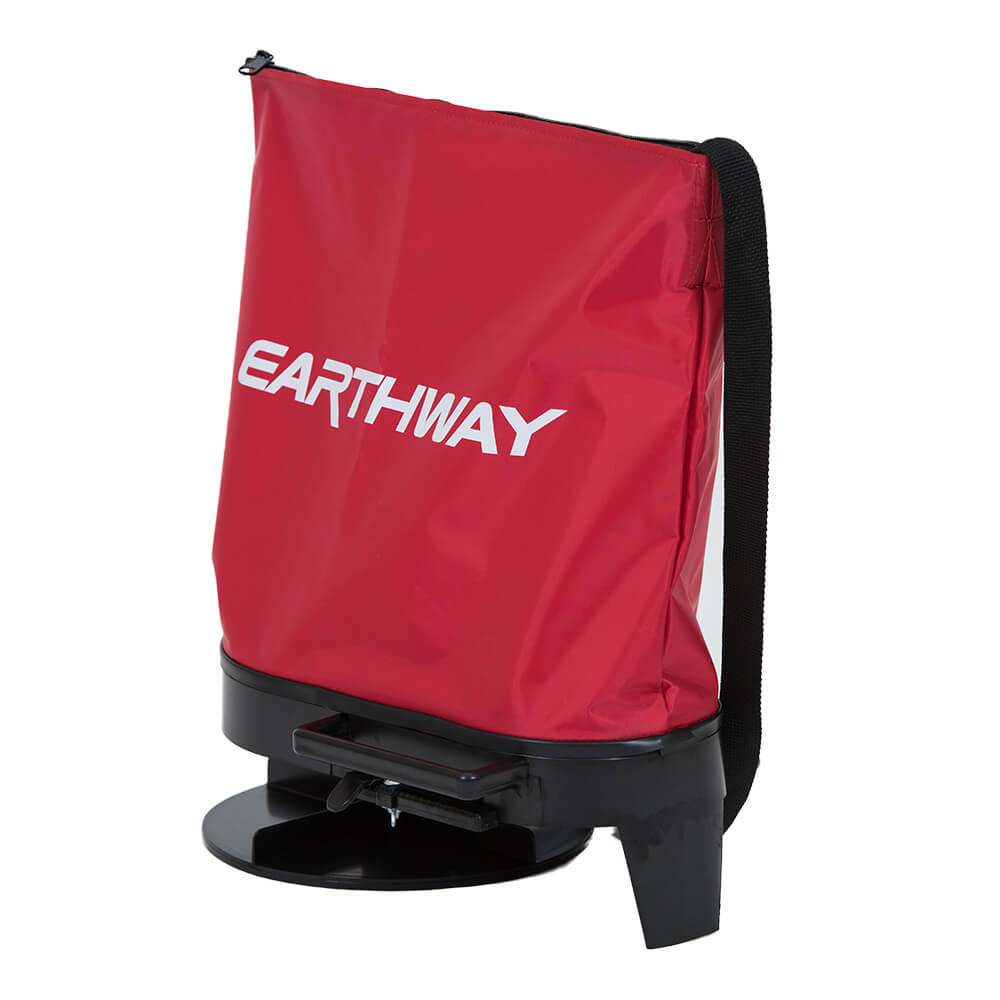
Go Anywhere
Even Coverage
From Original price was: $97.99.$89.99Current price is: $89.99.
25 lb Capacity, Slopes & Hills, Seed & Fertilizer, Stores Flat
See Details about Shoulder Bag Seeder/Spreader