
Quality Highlights
| Every Seed Grows We don't pad bags with dead seed or filler. What's in the bag is what grows in your yard. | |
| Independently Tested, Every Batch Each lot is tested by a third-party lab for germination and purity before it ships to you. | |
| Grown on American Farms Our seed comes direct from U.S. growers we know personally — not a middleman warehouse. | |
| Clean Seed, No Shortcuts No coatings to inflate weight, no GMOs, no cheap filler species. Just seed. |
Free shipping on all orders under 125 lbs!
White Clover Seed
Trifolium repens | SKU: PG-TRRE
Planting Aids for your Seed
What is the White Clover?
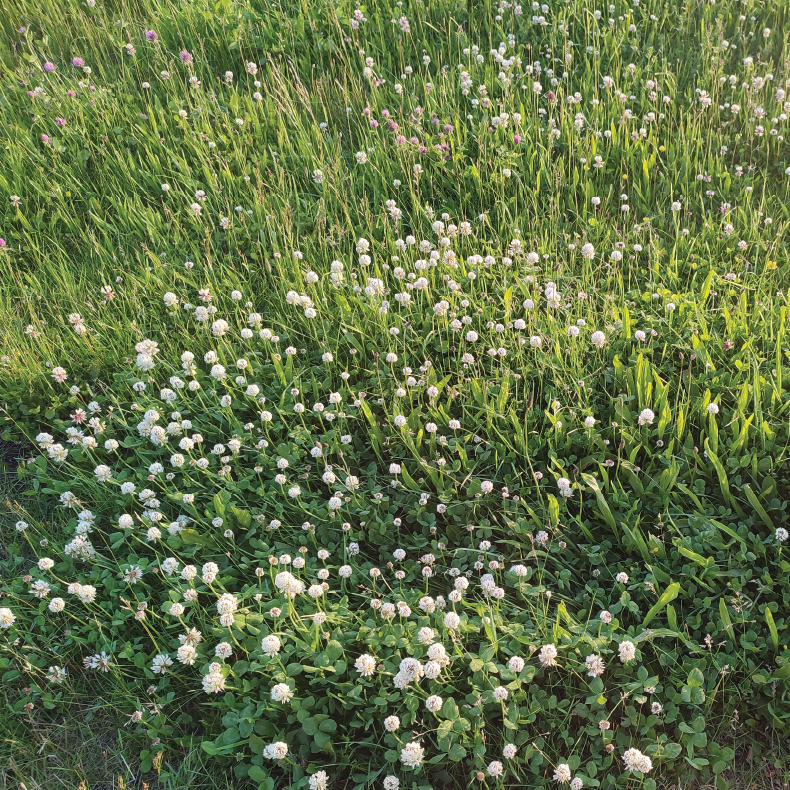
White clover (Trifolium repens) is one of the most valuable and versatile plants you can add to your pasture, lawn, or food plot. This low-growing perennial legume is prized worldwide for its ability to naturally enrich soil through nitrogen fixation, reducing the need for synthetic fertilizer and boosting the growth of surrounding grasses. White clover forms a dense, spreading mat of foliage that can reach up to 12 inches in height, making it an ideal ground cover for erosion control, weed suppression, and improving soil health over time. White clover is an excellent choice for anyone seeking a low-maintenance, eco-friendly solution for pasture improvement, wildlife habitat, or living mulch.
Specifications
Seeding Specs
Establishment Specs
Why Choose This Seed?
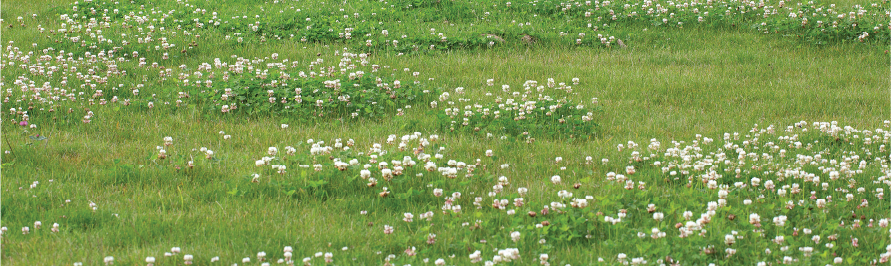
Natural Soil Fertilizer
White clover fixes atmospheric nitrogen into the soil, reducing or even eliminating the need for synthetic nitrogen fertilizer. This means lower input costs and healthier, more balanced pastures for years to come. A good stand can contribute 50–150 lbs of nitrogen per acre annually, feeding companion grasses and improving forage quality.
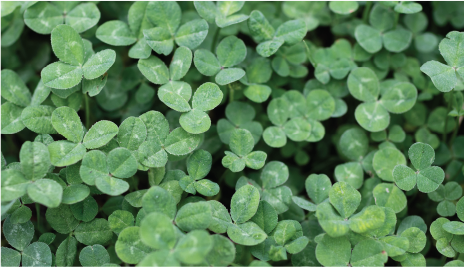
High-Protein Forage
Livestock love white clover. Its leaves are tender, sweet, and packed with protein—typically 20–25% crude protein on a dry-matter basis. This makes it ideal for improving daily weight gains in cattle, sheep, and goats while balancing the energy content of grass-dominant pastures.
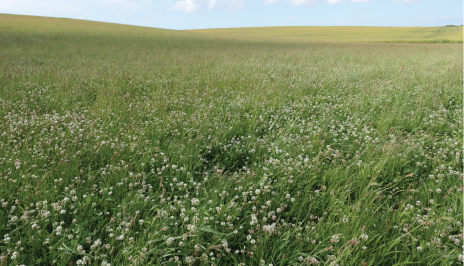
Spreading, Self-Sustaining Growth
Unlike many forage species, white clover spreads by stolons (above-ground runners), allowing it to fill bare spots and create a thick, living mat over time. This reduces weed pressure, stabilizes soil, and gives you a pasture that repairs itself naturally.
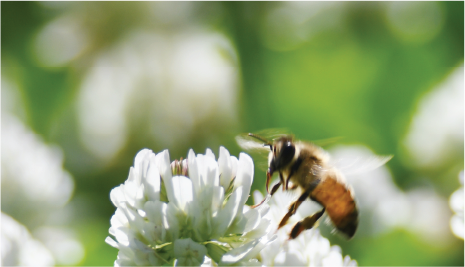
Bee and Wildlife Magnet
Its long blooming season produces abundant nectar that attracts honey bees and native pollinators—great for honey production and overall farm biodiversity. Game animals like deer and wild turkey also graze clover readily, making it a solid choice for food plots.
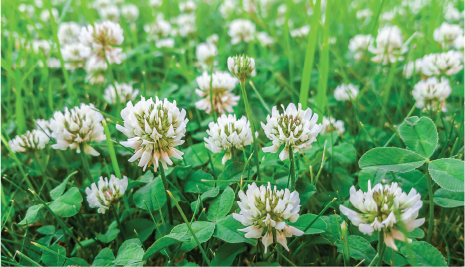
Cold-Tolerant and Resilient
White clover thrives in cool, moist climates but also bounces back well from grazing, mowing, and foot traffic. It stays green later into fall and greens up earlier in spring, extending the grazing season and providing dependable ground cover when grasses slow down.
Planting Guide for the White Clover
Prepare a Firm Seedbed
Start by mowing or grazing existing vegetation short and removing excess debris. For new plantings, lightly till or harrow the soil to create a fine, smooth seedbed. White clover seed is tiny and needs close seed-to-soil contact to germinate, so avoid deep tillage or leaving clods. The goal is a firm surface — if you leave a bootprint deeper than ½ inch, pack it down.
Seed at the Right Rate and Depth
Broadcast or drill white clover seed at 1-3 lbs per acre in a mix, or around 4 lbs per acre for a pure stand. Seed depth should be very shallow — no more than ¼ inch — since small seeds lose vigor if buried too deep. When broadcasting, follow with a cultipacker, drag, or even light animal traffic to press seed into the soil.
Plant at the Right Time
Choose early spring or early fall when soil moisture is good and temperatures are cool. White clover can also be frost-seeded in late winter, using natural freeze-thaw cycles to work the seed into the ground. Avoid planting during hot, dry periods when seedlings are likely to stress before they establish.
Manage Moisture and Competition
Keep soil moist until seedlings are well established (typically 2-3 weeks). Mow or lightly graze companion grasses as seedlings emerge so clover isn’t shaded out. Avoid heavy grazing until plants are well rooted and stolons start spreading. After establishment, manage grazing or mowing to maintain a balance between clover and grasses.
Helpful Resources

Clover Seed Planting Guide
Questions & Answers
Ideal sowing times are late winter to early spring, or fall (e.g. October-November), depending on your region. Soil needs to be moist and temperature cool but not frozen. In colder climates, waiting until soil warms enough avoids seed loss; in warmer climates, fall planting can give plants a head start before summer heat.
Yes, there can be a risk of bloat when grazing highly clover-dense pastures (especially >40-45% clover content), in wet or dewy mornings, or when animals are introduced to clover pastures from dry diets. But with good management—gradual introduction, feeding dry roughage ahead of turnout, maintaining grass to clover balance, using strip grazing or small allocations—this risk can be substantially reduced.
Dutch White Clover is a perennial in many temperate zones (e.g. USDA zones 2-8), but its longevity depends on grazing pressure, competition from grasses, soil fertility, and climate. Under well-managed conditions (correct soil pH, moisture, avoiding overgrazing, protecting stolons), a stand can persist for multiple years. You may need to reseed parts of pasture after several seasons, especially if clover content drops significantly
Tomato-clover (just kidding) — Dutch White needs consistent moisture during establishment (seedling stage), but once established it is moderately drought tolerant. It prefers soils with good moisture-holding capacity. If rainfall is low, supplemental watering (or irrigation) helps. Well-drained soils are important to avoid waterlogging. Soil type (loam, clay, silt) will influence how drought or moisture stress affects the plant.
Dutch White tolerates relatively close grazing, but it’s crucial to avoid damaging stolons (the above ground runners) excessively. Maintaining residual plant height after grazing or cutting helps protect these. A short post-graze height (but not “scalp”) is good. Also rotating grazing, keeping grass companion species from overshadowing the clover, and avoiding poaching (soil damage) helps persistence.
Yes, though they are usually manageable and rare if properly managed. Two big ones are bloat (as mentioned above) and cyanogenesis. Some Dutch White populations are cyanogenic — meaning they have compounds that can release hydrogen cyanide if the plant tissue is damaged (e.g. by wilting, frost, grazing when wet). Under extreme cases or poor management, this could stress animals, interfere with mineral metabolism (like selenium or interactions with thyroid-related minerals), etc. But with mixed forage, proper grazing, and avoiding letting animals overconsume fresh, damaged clover, the risk is small.
Still Have Questions?
Our seed experts are ready to help you find the perfect seed for your project.
1-866-322-7300 Ask a Seed ExpertCustomer Reviews
This worked well. I bought a pound just to see how it grew. I am over-seeding a small urban lawn in Milwaukee (now zone 6a). I like the results and I also like that there are more flowers for bees. I tend to mow it a little lower that it would like but it is thriving.
I was hoping the clover seed might take root a bit better than it has thus far. I will know more when it has been put down across the entire front and rear yards.
Will buy again
Works for me as I slowly convert my backyard to a clover lawn
Will sow before the next snow. Natures Seed did everything right, but when their carrier handed it off to UPS, ups made a new label with the wrong road number. Next time use USPS
The zip lock on the bag had opened in shipping and the seed was everywhere. Try tape.
Turnaround on this order was quick: can't plant for six weeks, so can't attest to the quality of the product yet.
Great price for the amount of seed you get, will definitely buy again!
fine
Both properties I planted these seeds were in zone 4. Would not recommend clover especially in high walk areas. It grows so slowly that any amount of walking on it will damage it, it doesn't spread and it's not drought tolerant at all. I started having my suspicions when my mom said that dad would put clover in the lawn seed. There was never any clover in the yard at home in any large amount. Started watching my own lawn especially in areas we don't walk and the plants are barely half an inch tall and I planted in late April. We had very good rainfall in May, June has been drier but I’ve been watering. The grass on the lawn is going great, the clover looks awful, it’s still very small and starting to dry out and die. I don’t think clover is the way to go. Also, after buying a significant amount for both properties, Natures seed had a 20% off sale the very next day. I emailed and asked if I could receive that discount as I missed it by 12 hours but they didn’t bother to get back to me. Also, one bag of clover seed was open in the box when I received it. Not a huge deal, but combined with the fact that they blew me off I’m not super thrilled with this place.
You May Also Like
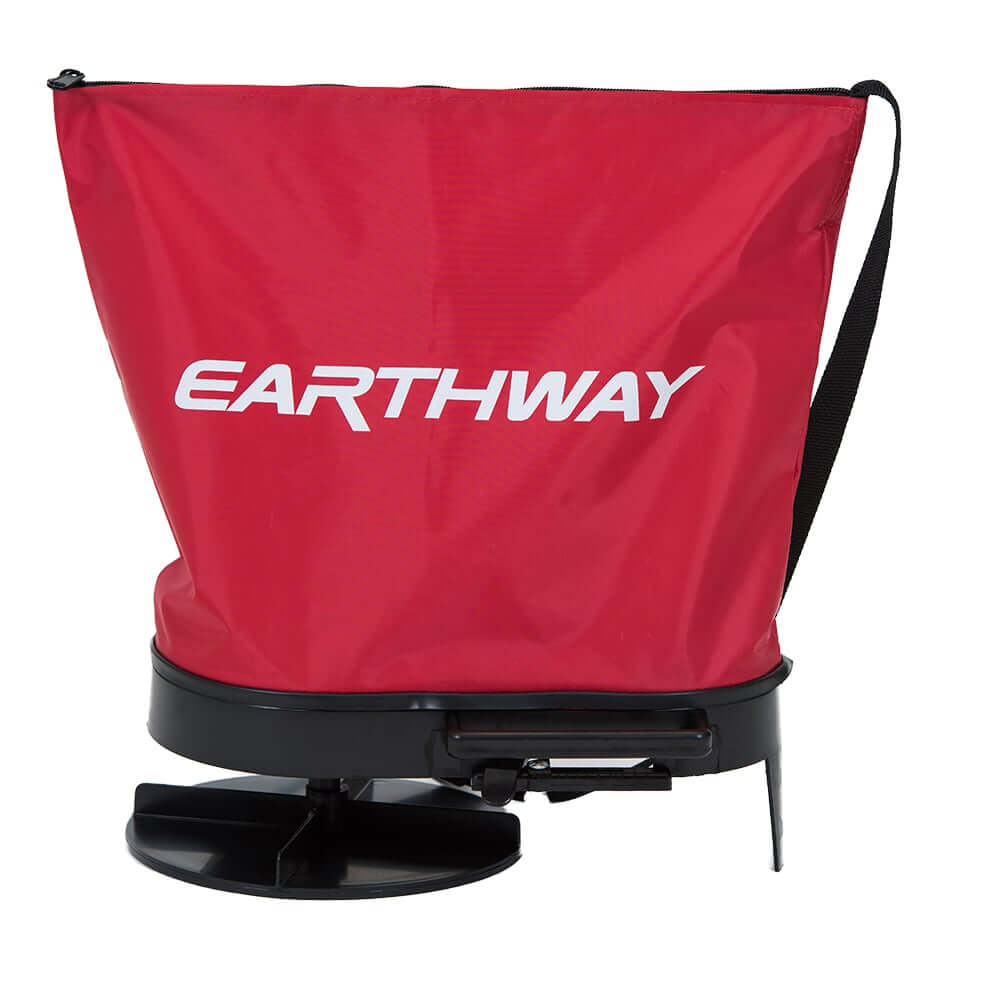
From Original price was: $97.99.$89.99Current price is: $89.99.
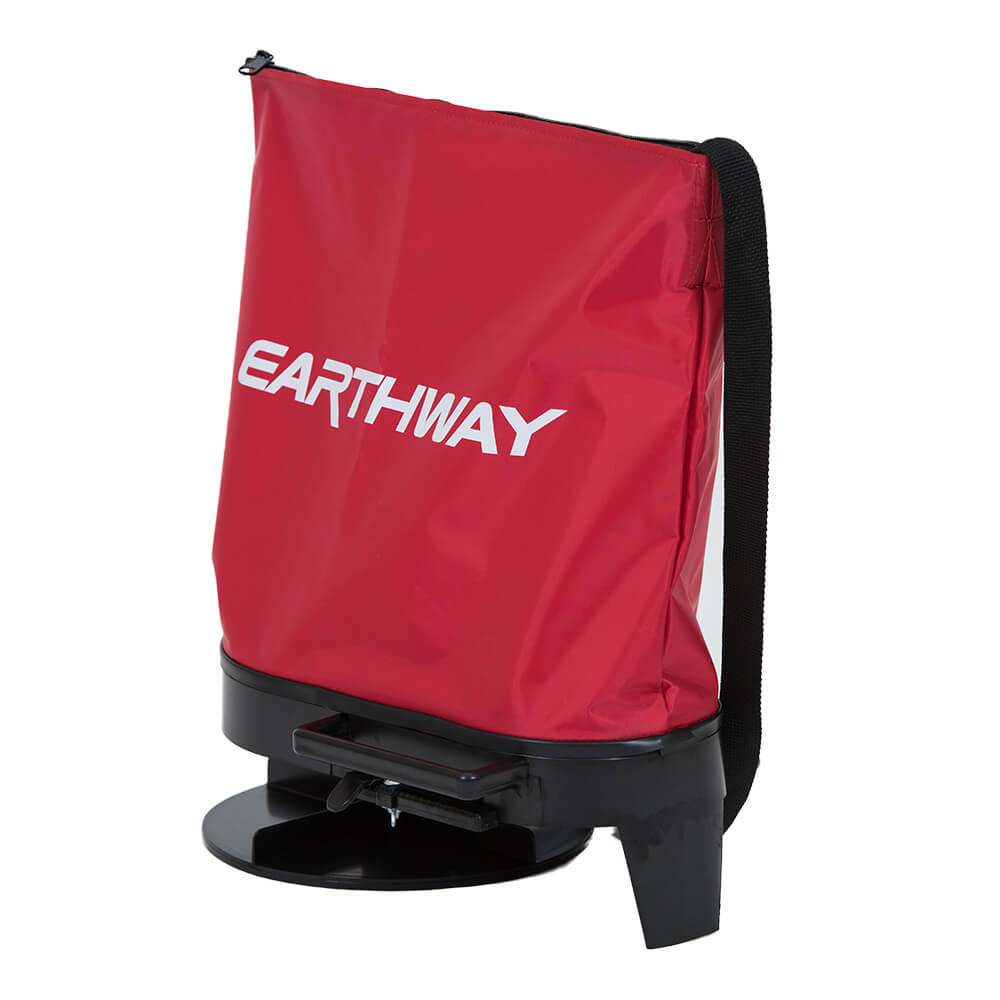
25 lb Capacity, Slopes & Hills, Seed & Fertilizer, Stores Flat
See Details about Shoulder Bag Seeder/Spreader