How to Re Seed your Perennial Ryegrass Lawn
Table of Contents
What is the best time to reseed a perennial ryegrass lawn? The optimal time to reseed perennial ryegrass is in the early fall when soil temperatures are between $55^\circ\text{F}$ and $65^\circ\text{F}$. This allows the grass more time to establish a robust root system before the stresses of winter and the following summer heat. Early spring is also a viable option, but fall generally yields better long-term results.
Understanding Why You Need to Reseed Perennial Ryegrass
For one reason or another, you might need to reseed your lawn. It could be that this year’s foot traffic was too much for the lawn to repair fully. Or, the lawn could have suffered from a drought, disease, or pest damage. You may even be trying to overseed a warm-season lawn with perennial ryegrass seeds so that you have a green lawn throughout the winter months. Whatever the reason, it is very likely that you will need to reseed your lawn at some point.
It is especially important not to leave bare spots in your perennial ryegrass lawn because opportunistic weeds will quickly take hold and thrive in the exposed soil. Reseeding is a key maintenance technique for maintaining a dense, lush turf. By introducing new seeds, you help increase the overall density of the grass, which naturally outcompetes weeds and improves the lawn’s resilience to environmental stress.
The first and most critical step in successful reseeding is proper preparation of the existing site. This foundation work ensures the new seeds have the best possible environment to germinate and establish. Simply spreading seed over unprepared ground often results in poor germination rates and a wasted effort.
Soil Preparation: The Foundation for Successful Reseeding
First, you should prepare your soil as you would for any other successful planting. This initial phase is crucial for ensuring seed-to-soil contact and minimizing competition. Your goal is to give the new seeds the best possible chance of germinating and surviving. Follow these steps:
- Weed Removal: Pull out or treat any existing weeds that would compete with the new ryegrass seedlings for light, water, and nutrients.
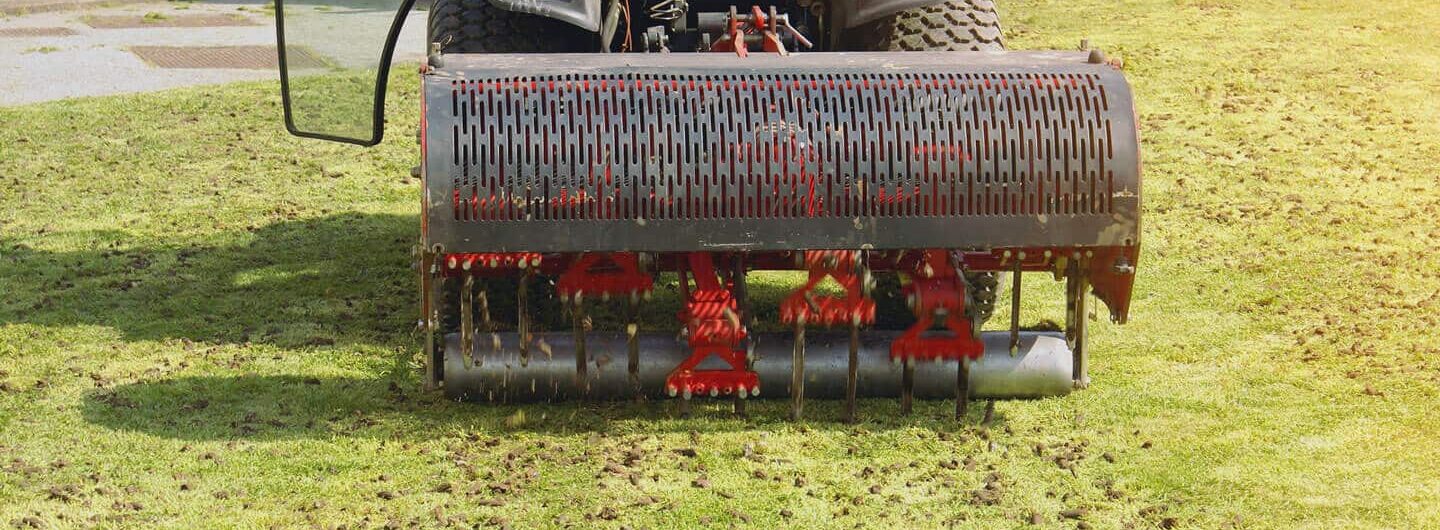
- Aeration: If the soil is compacted—which often happens in high-traffic areas—aerate the lawn to allow air, water, and nutrients to penetrate the root zone.
- Dethatching: De-thatch if the thatch layer (the layer of dead and living shoots, stems, and roots that forms between the soil surface and the grass blades) is greater than $1/2$ inch thick. Excessive thatch can block water and prevent seeds from reaching the soil.
All of this preparation should ideally be done when your perennial ryegrass lawn is actively growing, typically in the early fall. Remember that a properly prepared seedbed is the most important factor in achieving high seed germination rates.
Proper Soil Amendments and Fertilization
After preparing the physical structure of the soil, consider its nutritional profile. If possible, add soil amendments based on a soil test to correct any pH or nutrient deficiencies. For example, if your soil is too acidic, you may need to apply lime. You should also apply a pre-plant fertilizer to the soil. This fertilizer is typically high in phosphorus to encourage strong root development in the young seedlings.
For more detailed information on turfgrass nutrition, you can consult research from an authoritative source like the Penn State Extension on Turfgrass Fertilization. Using a starter fertilizer provides the necessary boost to the perennial ryegrass seeds during their critical germination and establishment phase.
Selecting Seed and Optimal Planting Time
Speaking of germination, pick a grass seed product that has a high Pure Live Seed (PLS) percentage. This percentage indicates the amount of perennial ryegrass seeds in your product that are expected to germinate and grow into healthy plants. Always prioritize high-quality seed to ensure a successful outcome. Check the seed tag for the test date, purity, and germination rate.
Wait to sow the seeds until the soil temperatures are consistently between $55^\circ\text{F}$ and $65^\circ\text{F}$. The optimal time for perennial ryegrass seeds to germinate is either in the early spring or, more preferably, early fall. Early fall tends to be better because the grass has more time to prepare itself for the stress of the following summer. Seeds planted in the fall benefit from warm soil for quick germination and cool, moist air for establishment.
If you live in a region that experiences harsh winters, ensure your fall planting is done at least 45 days before the first anticipated hard frost. This gives the delicate seedlings enough time to mature slightly before the deep freeze.
Reseeding Techniques for Even Coverage
When it is time to sow the seeds, mow the lawn slightly shorter than usual (to about 1.5 to 2 inches). This ensures that the new seeds do not have to compete for sunlight with tall grass. Use a drop spreader or a rotary spreader to help distribute the seed evenly across the lawn. This is a crucial step for avoiding patchy growth.
Look on the bag of your seed product for reseeding rates, not seeding rates, as reseeding requires less product than establishing a new lawn. Any reseeding rates for perennial ryegrass should be less than 9 lbs. per 1,000 sq. ft. To achieve maximum evenness, employ a cross-hatch pattern:
- Take half of the total seed you will be using, and spread it in a horizontal direction across the lawn.
- Then, take the other half of the seed and spread it in a vertical direction across the lawn.
You can apply a very light topdressing (no more than $1/8$ inch) of compost or peat moss to the lawn to keep the seeds in place, protect them from birds, and retain moisture, but it is not strictly necessary for germination. Proper seed application techniques apply to all grass varieties and are key to a successful outcome.

Post-Seeding Care: Watering and Mowing
After you have sown the seeds, the most critical element for the next few weeks is consistent moisture. You should water as briefly and frequently as possible to keep the seeds lightly moist until they germinate. The goal is to keep the top $1/2$ inch of soil damp without pooling water, which can wash the seeds away.
Perennial ryegrass seeds are known for their very quick germination rate. If the temperatures are right and the water and seed-soil contact are adequate, the seeds should begin to germinate within 5 to 10 days. Once germination has occurred and the seedlings are established:
- Watering: Gradually transition to watering as deeply and infrequently as possible. This encourages the new seedlings to grow deep, strong roots.
- Mowing: Begin mowing the lawn when the new seedlings are $1/3$ higher than the optimal cutting height. Never remove more than $1/3$ of the leaf blade in a single mowing session.
- Fertilizing: Apply a light, balanced fertilizer to the soil a few weeks after planting (once the seedlings have had their first mowing) to provide a nutritional boost for continued growth.
Reseeding your perennial ryegrass should not be a fix-all for every lawn problem that arises, but it is an essential general maintenance technique for keeping your turf thick, healthy, and resistant to weeds and dama.
Shop Related Products
Premium seed mixes for your project