


Go Anywhere
Even Coverage
From Original price was: $97.99.$89.99Current price is: $89.99.
25 lb Capacity, Slopes & Hills, Seed & Fertilizer, Stores Flat
See Details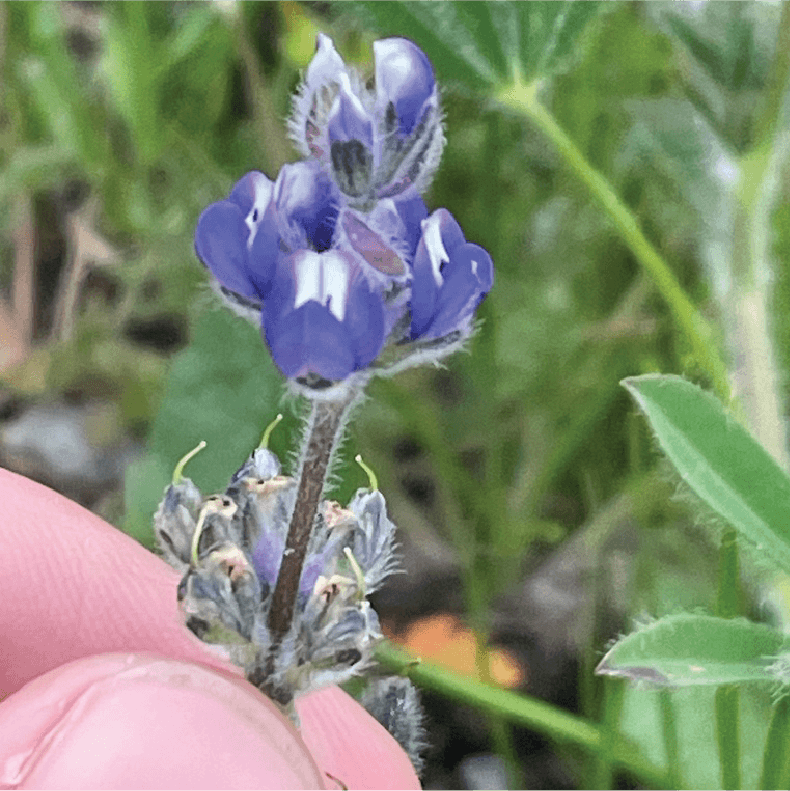
| Every Seed Grows We don't pad bags with dead seed or filler. What's in the bag is what grows in your yard. | |
| Independently Tested, Every Batch Each lot is tested by a third-party lab for germination and purity before it ships to you. | |
| Grown on American Farms Our seed comes direct from U.S. growers we know personally — not a middleman warehouse. | |
| Clean Seed, No Shortcuts No coatings to inflate weight, no GMOs, no cheap filler species. Just seed. |
Free shipping on all orders under 125 lbs!
Lupinus bicolor | SKU: W-LUBI
This seed was collected in San Mateo County, CA, and grown at Hedgerow Farms in Yolo County, CA.
Miniature Lupine (Lupinus bicolor) is a petite, low-growing California wildflower that packs charm into a small package. Often only 3-8 inches tall, this annual produces delicate spikes of blue and white flowers. It spreads easily in open grassy areas and blooms in spring, adding splashes of blue color to meadows. Adapted to winter rains and dry summers, it completes its life cycle by early summer and reseeds. As a legume, it enriches soil by fixing nitrogen. Ideal for creating a low-growing floral carpet in native meadows or garden edges.
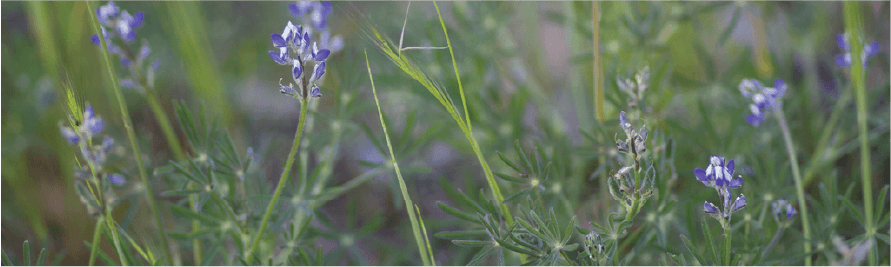
Bicolor Lupine is a beautiful, low-growing wildflower. Plant with native bunchgrasses such as Purple Needlegrass and other native wildflowers such as Arroyo Lupine for a beautiful native meadow. Plant this lupine as a garden border or tuck it into tight spaces for a brilliant pop of color in the spring.

Bicolor Lupine is is a fast-growing annual. Plant anytime from September to early March. It blooms about two months from seed for fast spring color.
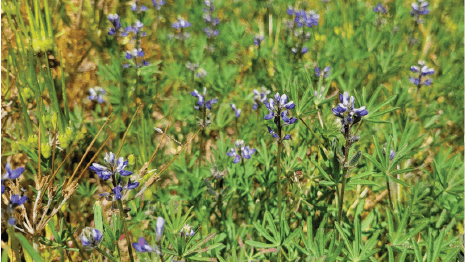
Bicolor Lupine easily reseeds and goes dormant in the summer, starting its life cycle again in the late fall.
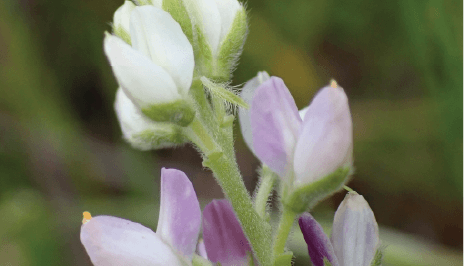
Like all legumes, Bicolor lupine fixes nitrogen through its roots, enriching soil and creating better conditions for companion plants over time.
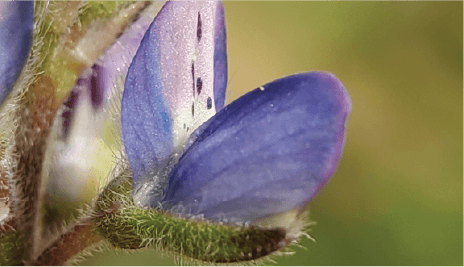
Whether you are adding this species to a restoration mix or a small container garden, this species is a perfect choice due to its small size, quick blooms, and reliable reseeding.
Start prepping your planting area in fall, so that you are ready to seed between late September and early February, when temperatures cool and rain is on the horizon.
Weed your growing area BEFORE planting any native seeds. We recommend not only pulling visible weeds but also “flushing out” the weed seeds that are waiting in the soil. Irrigate the area and wait for weed seeds to germinate, then remove them using your method of choice. Irrigate again, wait, and perform another round of weed control. Repeat 2-3 times.
Ensure your soil is as bare as possible for the maximum amount of seed-to-soil contact. If the entire area can’t be completely cleared, rake out as much dead plant material from the area as you can to create bare patches of soil for the seed to make contact with. For best results, the soil should be easily crumbled and not heavily compacted.
It is best to seed onto slightly damp soil. If necessary, water the top 1/4 inch of soil before seeding. Scatter seed directly on the soil surface and rake gently or lightly press the seed into the soil. Do not bury the seed deeper than 1/4 inch into the soil.
After planting, keep the top 1/4 inch of soil consistently moist until the seeds have germinated and the first true leaves have emerged. A good rule is to water lightly every day intul the seedlings are an inch high, then you can reduce watering to every 3 days. Skip days when it rains. Within 6 weeks after germinating, your plants should need only occasional watering. Don’t over-water your plants, especially in summer.
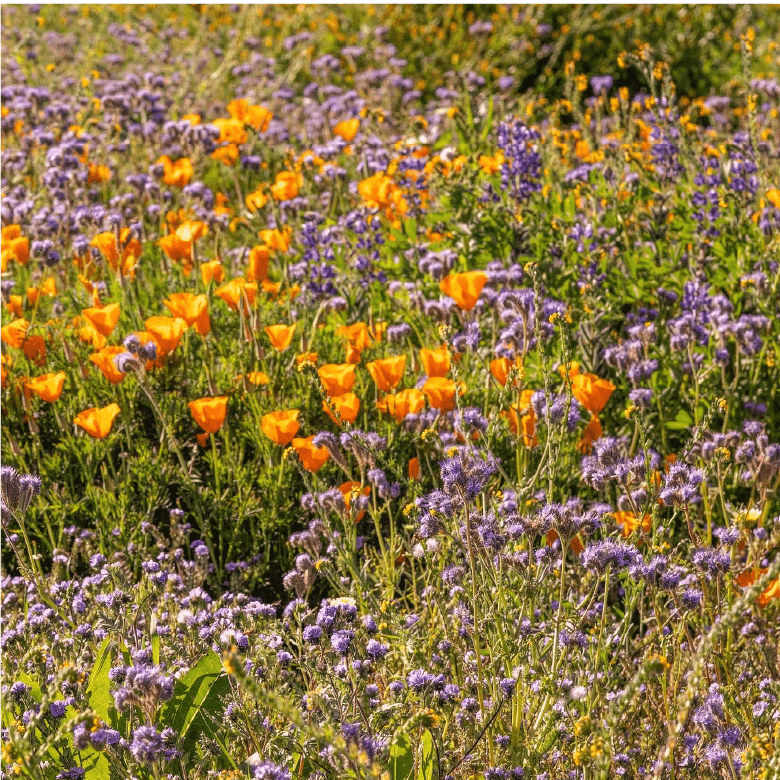
Miniature Lupine is native across western North America—British Columbia to Baja California—with a strong California presence.
Direct-seed in the cool wet season so rain does the work: fall through mid-winter (roughly October–February in Mediterranean climates). Expect spring bloom after winter growth.
Keep the seedbed evenly moist until rains take over. Once established, let it ride on seasonal rainfall; it goes summer-dormant and doesn’t want irrigation in dry heat.
Yes—this annual readily self-seeds. Let some pods mature; mow high or leave stalks until seed drop to help it naturalize.
Absolutely. Miniature Lupine feeds native bees (including bumble bees). Lupines signal “pollinated” by the banner spot changing color, which helps bees forage efficiently.
Use caution with grazing animals. Many lupines contain alkaloids; toxicity varies by species, and risk is higher in seed/pod stages. Keep livestock off stands—especially pregnant cattle—during seed set. For pets, avoid ingestion.
Our seed experts are ready to help you find the perfect seed for your project.
1-866-322-7300 Ask a Seed ExpertSee what real customers are saying. All reviews are collected and verified by Shopper Approved, an independent third party.
From Original price was: $97.99.$89.99Current price is: $89.99.
25 lb Capacity, Slopes & Hills, Seed & Fertilizer, Stores Flat
See Details