Native
Wildlife Habitat
| Every Seed Grows We don't pad bags with dead seed or filler. What's in the bag is what grows in your yard. | |
| Independently Tested, Every Batch Each lot is tested by a third-party lab for germination and purity before it ships to you. | |
| Grown on American Farms Our seed comes direct from U.S. growers we know personally — not a middleman warehouse. | |
| Clean Seed, No Shortcuts No coatings to inflate weight, no GMOs, no cheap filler species. Just seed. |
Free shipping on all orders under 125 lbs!
Coreopsis lanceolata | SKU: W-COLA
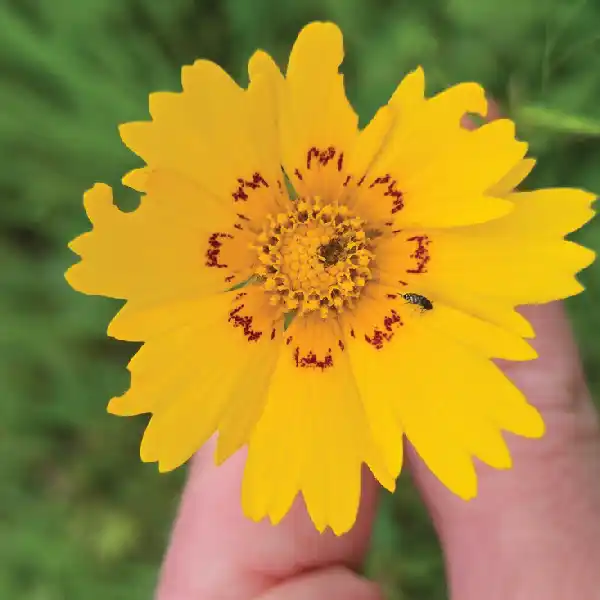
Lanceleaf Coreopsis (Coreopsis lanceolata) is a perennial wildflower in the genus designated as Florida’s official state wildflower. It produces bright yellow, daisy-like blooms from spring through summer and thrives in the sandy, nutrient-poor soils that define much of Florida. Drought-tolerant, deer-resistant, and low-maintenance once established.
The genus Coreopsis was designated Florida’s official state wildflower in 1991 (Florida Statute 15.0345). Lanceleaf Coreopsis is the most widely recognized species in the genus and is native to north and north-central Florida. It is used extensively in roadside plantings and Florida-Friendly Landscaping programs statewide.
Unlike annual Coreopsis species (such as Plains Coreopsis), Lanceleaf Coreopsis is a true perennial that returns for 3-7 years from the same root system. It also self-seeds readily, so even after individual plants decline, new plants fill in. You get years of blooms from a single planting — not a one-season display.
Most garden flowers struggle in Florida’s deep sandy soils. Lanceleaf Coreopsis evolved in them. It thrives in nutrient-poor, fast-draining sand without amendment or fertilizer. In fact, rich soil and excess nitrogen reduce flowering. This is one of the few ornamental perennials that actually performs better in bad soil.
Once established (8-12 weeks), Lanceleaf Coreopsis needs almost no supplemental water. It survives Florida’s dry season without irrigation and tolerates the heat and humidity of summer without disease issues. Deadhead spent flowers to extend blooming into fall, or let them go to seed for natural spreading. No fertilizer, no pesticides, minimal intervention.
The bright yellow blooms attract bees, butterflies, and other pollinators throughout the spring and summer. Lanceleaf Coreopsis is a top-tier nectar source for native bee populations and an excellent addition to pollinator gardens, Florida-Friendly landscapes, and roadside restoration plantings.
Choose a full-sun site with well-drained soil. Sandy Florida soil is ideal without amendment. Remove weeds and debris, then create a firm seedbed by raking smooth. Do not add fertilizer — Coreopsis lanceolata blooms best in lean, nutrient-poor soil. If your soil is heavy clay (uncommon in FL), mix in sand to improve drainage.
Scatter seed on the soil surface or cover to a maximum depth of 1/8 inch. Lanceleaf Coreopsis seeds require light to germinate — do not bury them. Press seeds firmly into the soil using a roller or by walking over the area. For even distribution, mix seed with dry sand at a 4:1 ratio before broadcasting. Seed count is approximately 220,000 seeds per pound, so a little goes a long way.
Keep the seedbed moist (not wet) for the first 4-6 weeks until germination is complete. Seeds typically germinate in 10-28 days at soil temperatures of 60-70 degrees F. Once seedlings are established and actively growing, reduce watering frequency. Overwatering causes root rot — the most common failure point. Cold stratification (30 days refrigerated in damp medium) improves germination if planting in spring.
Once established, water only during severe drought. Deadhead spent flower stalks regularly to extend blooming from spring into fall. In mid-summer when flowering slows, cut plants back by 25-50% to stimulate a second flush of fall blooms. Divide clumps every 2-3 years in early spring to maintain vigor. Allow some seed heads to mature if you want plants to self-seed and spread naturally.
The genus Coreopsis (all species) was designated Florida’s official state wildflower in 1991 under Florida Statute 15.0345. The law recognizes the genus broadly because 14 native Coreopsis species grow in Florida. Lanceleaf Coreopsis (C. lanceolata) is the most widely recognized and commonly planted species in the genus.
Lanceleaf Coreopsis (C. lanceolata) is a true perennial that returns for 3-7 years. Plains Coreopsis (C. tinctoria) is an annual that dies after one season. Lanceleaf produces solid yellow flowers with distinctively notched petal tips. Plains Coreopsis has bicolor yellow-and-red flowers. Lanceleaf is native to Florida; Plains Coreopsis is native to the Great Plains and central US.
Lanceleaf Coreopsis is native to north and north-central Florida (Panhandle to approximately Lake County). It can be grown in central Florida with good results. In South Florida (Zone 10b and below), performance is less reliable due to reduced winter chill and higher year-round temperatures. For South Florida, consider Leavenworth’s Coreopsis (C. leavenworthii), which is a Florida endemic adapted to warmer, wetter conditions.
October through January for direct seeding in Florida. Fall and early winter planting allows seeds to undergo natural cold stratification in the ground and germinate as soil warms in spring. Spring planting is possible if seeds are cold-stratified for 30 days in a refrigerator before sowing. Expect first blooms approximately 85-100 days from germination.
Rarely. Once established (after 8-12 weeks), Lanceleaf Coreopsis is highly drought-tolerant and prefers dry conditions. Water only during severe drought or extended dry periods. Overwatering is the primary killer — it causes root rot in the well-drained sandy soils this species prefers. In most of Florida, natural rainfall is sufficient.
Yes. The bright yellow daisy-like flowers are a top-tier nectar source for bees, butterflies, and other pollinating insects. Lanceleaf Coreopsis blooms from late spring through summer, providing sustained forage during peak pollinator activity. It is one of the most recommended species for Florida pollinator gardens and Florida-Friendly Landscaping programs.
Our seed experts are ready to help you find the perfect seed for your project.
1-866-322-7300 Ask a Seed ExpertSee what real customers are saying. All reviews are collected and verified by Shopper Approved, an independent third party.