
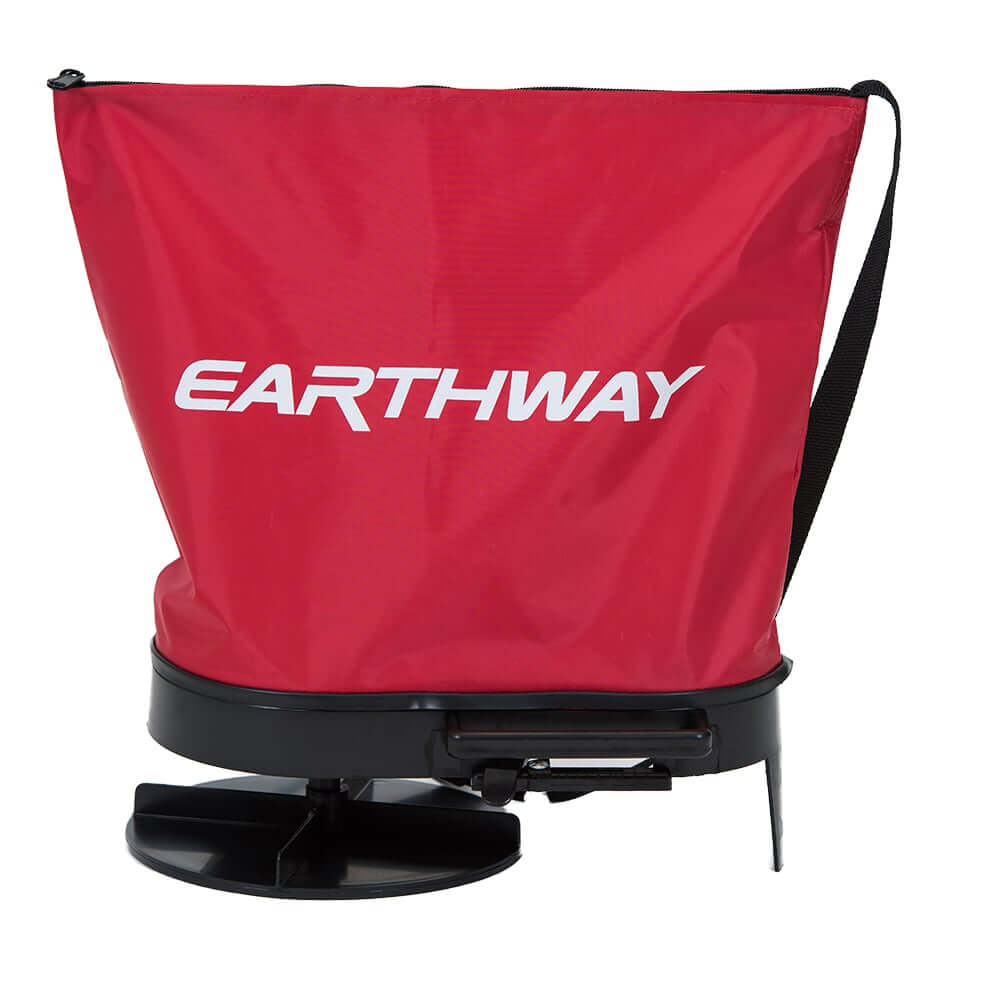
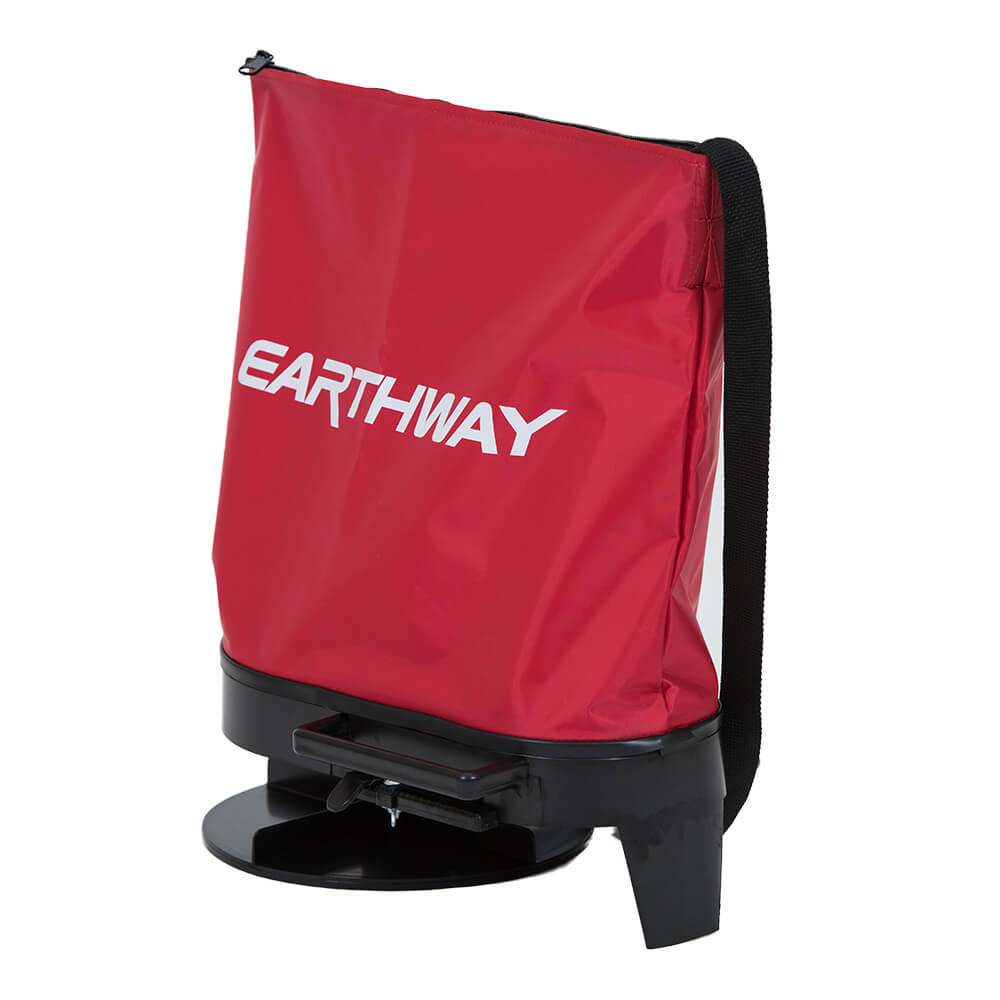
Go Anywhere
Even Coverage
From Original price was: $97.99.$89.99Current price is: $89.99.
25 lb Capacity, Slopes & Hills, Seed & Fertilizer, Stores Flat
See Details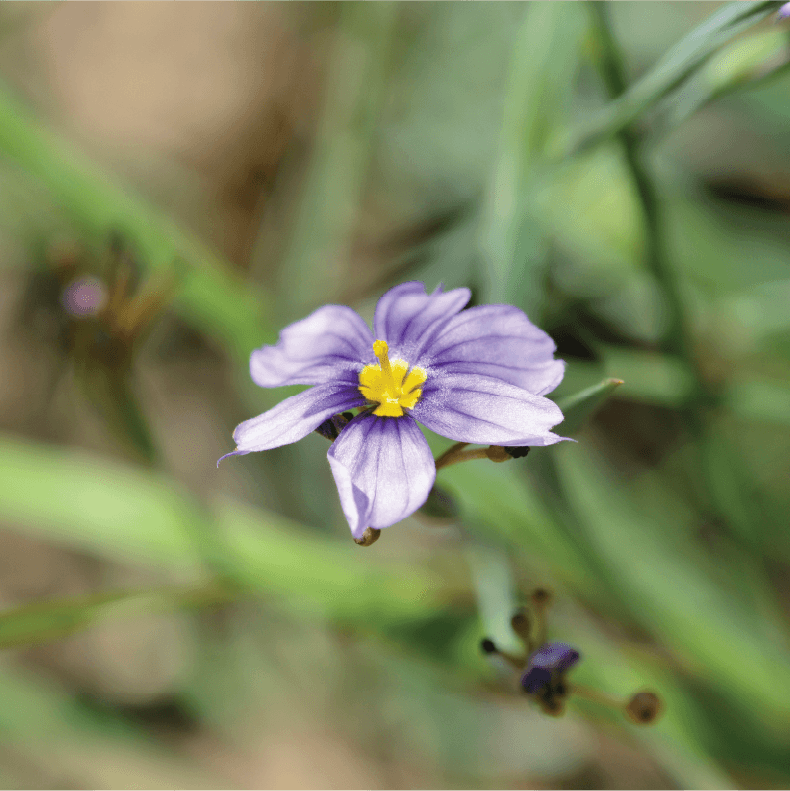
| Every Seed Grows We don't pad bags with dead seed or filler. What's in the bag is what grows in your yard. | |
| Independently Tested, Every Batch Each lot is tested by a third-party lab for germination and purity before it ships to you. | |
| Grown on American Farms Our seed comes direct from U.S. growers we know personally — not a middleman warehouse. | |
| Clean Seed, No Shortcuts No coatings to inflate weight, no GMOs, no cheap filler species. Just seed. |
Free shipping on all orders under 125 lbs!
Sisyrinchium bellum | SKU: W-SIBE
This Blue Eyed Grass seed was collected in San Mateo County and grown at Hedgerow Farms in Yolo County, CA.
Blue-eyed Grass (Sisyrinchium bellum) is not a grass, but a charming perennial wildflower—actually an iris relative. In spring it produces abundant star-shaped violet-blue flowers with a bright yellow center. It thrives in sun to partial shade and prefers moist winter/spring soil that dries in summer, when it goes semi-dormant. It can spread by both rhizomes and seed, forming larger patches over time without becoming to aggressive. Perfect for meadow plantings, rain garden edges, or mixed native borders; generally deer-resistant and attractive to native bees.
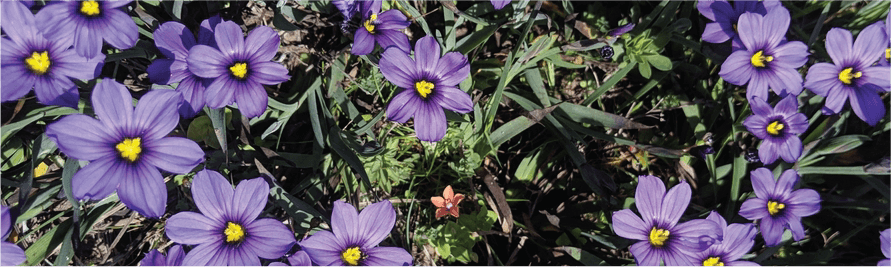
This plant is loved for both its slender green leaves and dainty blue-purple flowers, which add soft color each spring. Like many irises, without irrigation, Blue-eyed Grass will go dormant in the late summer and fall, almost disappearing until the bright green shoots pop back up with the winter rains.
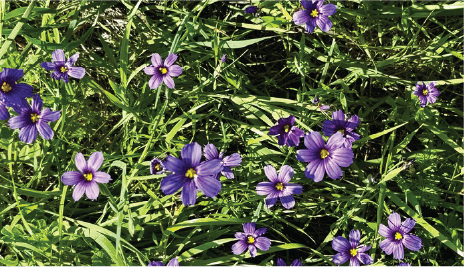
Blue-eyed grass is a wonderful addition to a native meadow. It spreads over time to form attractive patches of color, without taking over and crowding out other species. The foliage of this wildflower is often mistaken for grass, due to its long slender blades. Plant with native bunchgrasses such as Purple Needlegrass and other native wildflowers such as Arroyo Lupine for a beautiful native meadow.
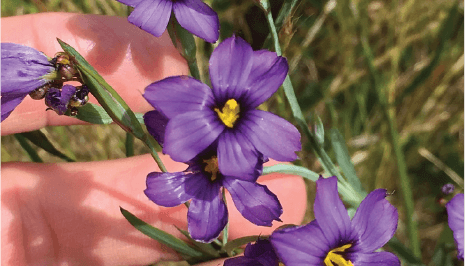
Blue-eyed grass is one of the easiest species to care for. It is low-growing and goes dormant during the dry months, requiring no mowing. It reseeds easily and also spreads by rhizomes. A little extra irrigation in the spring will help this species thrive, but it is not required—Blue eyed grass can survive as a summer dormant and through prolonged drought, and will sprout back up when rainy conditions return. This species is also deer-resistant.
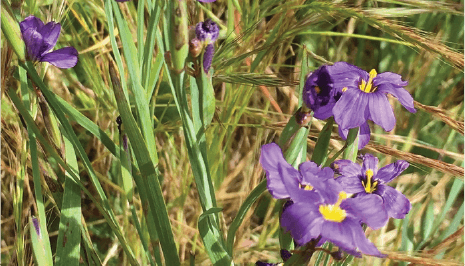
This species is attractive to native bees, butterflies, moths, and other pollinators. Its grass-like foliage provides refuge for small mammals and reptiles. It has very limited value for forage, but is compatible with grazing systems and is deer-resistant.
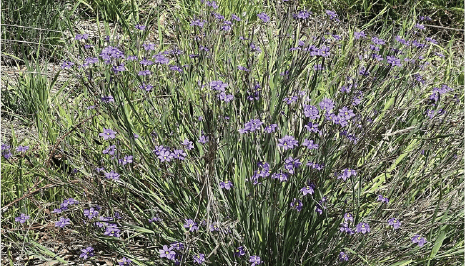
This is a perfect plant to add to your garden. Small, low-statured, and dainty, Blue-eyed grass works well in meadows, rain gardens, rock gardens, and light shade. Plant Blue-eyed grass as a garden border or in tuck it in to tight spaces for a brilliant pop of color in the spring.
Start prepping your planting area in fall, so that you are ready to seed between late September and early February, when temperatures cool and rain is on the horizon.
Weed your growing area BEFORE planting any native seeds. We recommend not only pulling visible weeds but also “flushing out” the weed seeds that are waiting in the soil. Irrigate the area and wait for weed seeds to germinate, then remove them using your method of choice. Irrigate again, wait, and perform another round of weed control. Repeat 2-3 times.
Ensure your soil is as bare as possible for the maximum amount of seed-to-soil contact. If the entire area can’t be completely cleared, rake out as much dead plant material from the area as you can to create bare patches of soil for the seed to make contact with. For best results, the soil should be easily crumbled and not heavily compacted.
It is best to seed onto slightly damp soil. If necessary, water the top 1/4 inch of soil before seeding. Scatter seed directly on the soil surface and rake gently or lightly press the seed into the soil. Do not bury the seed deeper than 1/4 inch into the soil.
After planting, keep the top 1/4 inch of soil consistently moist until the seeds have germinated and the first true leaves have emerged. A good rule is to water lightly every day intul the seedlings are an inch high, then you can reduce watering to every 3 days. Skip days when it rains. Within 6 weeks after germinating, your plants should need only occasional watering. Don’t over-water your plants, especially in summer.
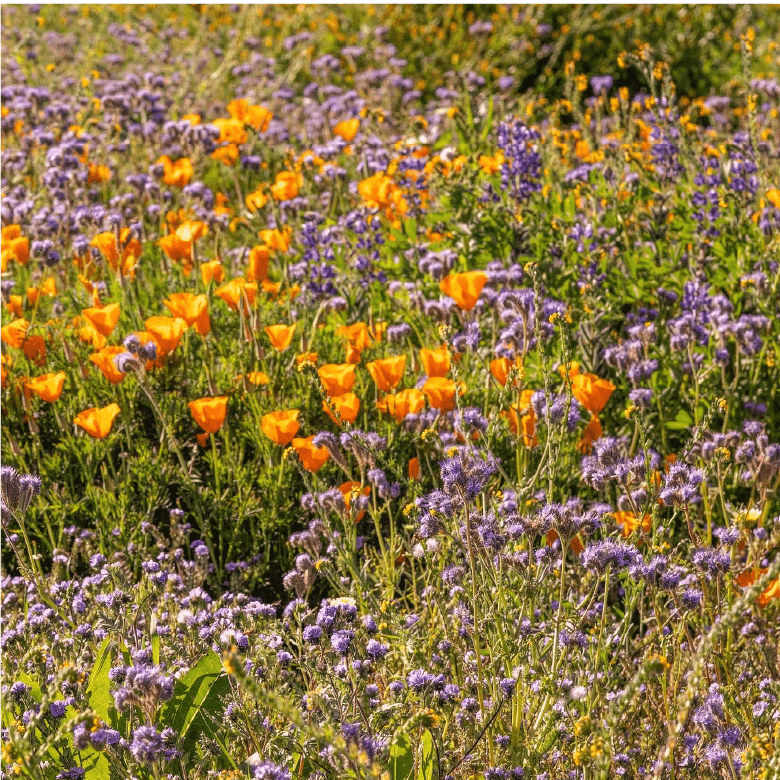
S. bellum is native to California, Oregon, and Baja California; clumps are typically 6–12″ tall (sometimes to ~18″ with moisture).
Direct-seed late fall–winter so cool temps and seasonal moisture drive germination; spring sowing works if you pre-chill (stratify) the seed.
After cold stratification, seed can pop in 1–2 weeks at cool temps; un-stratified seed may take weeks to months. Expect spring bloom (often Mar–Jun, climate-dependent).
Yes—it’s a perennial that often self-sows lightly. It commonly goes summer-dormant, then returns with cool-season moisture. Clumps can be divided in early spring or fall.
Yes—flowers are used by native bees and other beneficials; multiple native plant resources flag high wildlife value.
Often listed as deer-resistant, especially once established. Great for meadow mixes, borders, rock gardens, and containers; pairs nicely with bunchgrasses and spring wildflowers.
Our seed experts are ready to help you find the perfect seed for your project.
1-866-322-7300 Ask a Seed ExpertSee what real customers are saying. All reviews are collected and verified by Shopper Approved, an independent third party.
From Original price was: $97.99.$89.99Current price is: $89.99.
25 lb Capacity, Slopes & Hills, Seed & Fertilizer, Stores Flat
See Details