
Quality Highlights
| Every Seed Grows We don't pad bags with dead seed or filler. What's in the bag is what grows in your yard. | |
| Independently Tested, Every Batch Each lot is tested by a third-party lab for germination and purity before it ships to you. | |
| Grown on American Farms Our seed comes direct from U.S. growers we know personally — not a middleman warehouse. | |
| Clean Seed, No Shortcuts No coatings to inflate weight, no GMOs, no cheap filler species. Just seed. |
Free shipping on all orders under 125 lbs!
Texas Bluebonnet Seeds
Lupinus texensis | SKU: W-LUTE
What is Texas Bluebonnet?
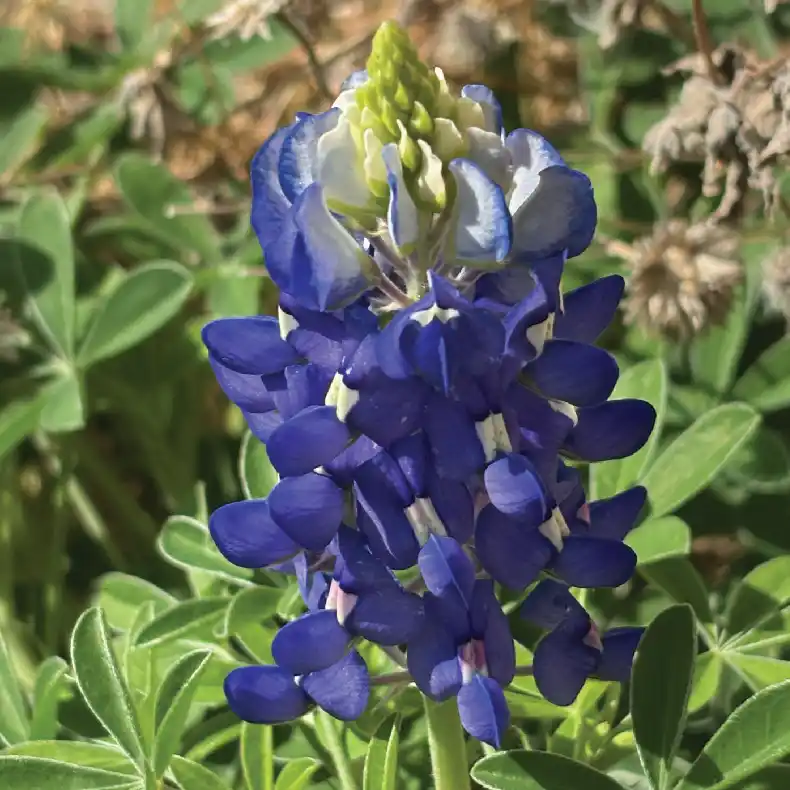
Texas Bluebonnet (Lupinus texensis) is the official state flower of Texas and one of the most recognized wildflowers in North America. This winter annual germinates in fall, forms low rosettes through winter, then erupts in iconic blue flower spikes each spring. It thrives in poor, rocky, well-drained soil and reseeds itself year after year once established.
What's in This Mix
The beloved Texas state flower — a nitrogen-fixing legume that carpets fields and roadsides in brilliant blue each spring and enriches the soil for companion plants.
Specifications
Seeding Specs
Establishment Specs
Why Choose This Seed?
The Texas Icon
Lupinus texensis is the official state flower of Texas and the centerpiece of the state’s legendary spring wildflower season. From Hill Country roadsides to backyard gardens, bluebonnets are deeply woven into Texas identity. Plant them and you’re planting a piece of Texas heritage that returns every spring.
Plant Once, Enjoy for Years
Bluebonnets are self-reseeding winter annuals. After the first year’s bloom, allow 6–8 weeks for seed pods to mature before mowing. The seeds drop into the soil and germinate the following fall on their own. Established patches grow denser each year with zero replanting required.
Built for Texas Soil
Unlike most garden flowers, bluebonnets actually prefer poor, rocky, alkaline soil — the exact conditions found across Central Texas limestone country. They fix their own nitrogen through root bacteria, so they don’t need fertilizer. Well-drained soil and full sun are the only real requirements.
Pollinator and Wildlife Value
Bluebonnets attract bees and butterflies throughout their spring bloom period. Each flower spike produces up to 50 individual blossoms, providing sustained forage for pollinators. Pair with Indian Paintbrush (Castilleja indivisa) for the classic Texas wildflower combination that supports even more pollinator diversity.
Pre-Scarified for Reliable Germination
Bluebonnet seeds have a hard coat that can block germination — unscarified seeds often germinate at rates below 20%. Our seed is pre-scarified, meaning the seed coat has been mechanically treated for rapid water uptake. Expect 85–95% emergence within 10 days of planting in moist soil.
How to Plant Texas Bluebonnet Seeds
Soil Prep
Choose a south or west-facing location with full sun and well-drained soil. Clear existing vegetation to reduce competition — bluebonnets need open ground and direct sunlight. Lightly rake the soil surface to loosen the top ¼ inch. Do not amend with nitrogen fertilizer; bluebonnets fix their own nitrogen through root bacteria. If your soil has never grown bluebonnets or other legumes, apply a Rhizobium inoculant to ensure the bacteria are present for proper blooming.
Seeding
Broadcast pre-scarified seed at 0.5 lb per 1,000 sq ft. Rake seeds into the soil to a depth of ⅛ to ¼ inch — shallow enough for light but deep enough to protect from birds. Press or roll the area firmly to ensure solid seed-to-soil contact. Water lightly after seeding. Planting window: September 1 through early November, with early October being optimal for most of Texas.
Establishing
Water lightly every 3 days for approximately 3 weeks if there is no rainfall. Allow the top inch of soil to dry between waterings — overwatering is the #1 cause of failure (root rot). Seeds germinate in 4–10 days under good conditions. By late fall, small green rosettes will form at ground level. These rosettes persist through winter while the taproot develops underground. Do not mow or disturb the rosettes during winter.
Ongoing Care
Once rosettes are established, bluebonnets need almost no care through winter. Growth accelerates in early spring as temperatures warm. Blooming occurs February through May depending on your Texas region (South TX earliest, North TX latest). After flowers fade, allow 6–8 weeks for seed pods to fully dry and shatter before mowing. This ensures natural reseeding for next year’s crop. Established plantings return stronger each season.
Helpful Resources
Best Grass Seed for Texas
Wildflower Buffer Strips for Water Quality
Questions & Answers
Plant seeds in fall, from September through early November. October is optimal for most of Texas. Seeds germinate in late fall, form rosettes over winter, and bloom the following spring. Timing varies by region: plant by September 15 in Central and South Texas, by October 1 in North Texas. Spring planting will not produce flowers that same season because bluebonnets require a winter chill period to trigger blooming.
Yes. Bluebonnet seeds have a hard coat that blocks water absorption. Unscarified seeds germinate at rates below 20%, while properly scarified seeds achieve 85–95% emergence within 10 days. Our seed is pre-scarified — the seed coat has been mechanically treated so you can plant directly without any additional preparation.
The most common cause is missing Rhizobium bacteria in the soil. Bluebonnets are legumes that require nitrogen-fixing bacteria on their roots to produce flowers. If your soil has never grown bluebonnets or other legumes, apply a Rhizobium inoculant at planting time. Other causes include overwatering (causes root rot), insufficient sunlight (need 6–8+ hours of full sun), excess nitrogen fertilizer (promotes foliage over flowers), or planting in spring without a winter chill period.
Lupinus texensis can grow in USDA Zones 7–9 and as an annual in Zone 6. However, it performs best in Texas-like conditions: alkaline, well-drained soil, mild winters with some cold (weeks below 45°F), and hot springs. Outside Texas, results are less predictable and the plants may not reseed as reliably. If you’re in a humid climate with acidic soil, you’ll need to amend with lime and ensure excellent drainage.
Bluebonnets thrive in poor, rocky, well-drained soil with pH 6.0–8.0. They actually prefer what most gardeners would call bad soil — decomposed granite, sandy loam, or limestone-based soil. The critical requirement is drainage. Waterlogged or heavy clay soil causes root rot, which is the most common cause of bluebonnet failure. Do not amend with nitrogen fertilizer. Bluebonnets fix their own nitrogen through symbiotic root bacteria.
Allow 6–8 weeks after flowering ends before mowing. Seed pods need time to fully dry and shatter, dropping seeds into the soil for next year’s crop. Do not disturb the soil where seeds have fallen. Established bluebonnet patches reseed annually with no replanting needed. Over several years, a single planting can naturalize into a dense, self-sustaining stand that returns stronger each spring.
Still Have Questions?
Our seed experts are ready to help you find the perfect seed for your project.
1-866-322-7300 Ask a Seed ExpertCustomer Reviews
See what real customers are saying. All reviews are collected and verified by Shopper Approved, an independent third party.
