Slow Release
Organic Base
| Every Seed Grows We don't pad bags with dead seed or filler. What's in the bag is what grows in your yard. | |
| Independently Tested, Every Batch Each lot is tested by a third-party lab for germination and purity before it ships to you. | |
| Grown on American Farms Our seed comes direct from U.S. growers we know personally — not a middleman warehouse. | |
| Clean Seed, No Shortcuts No coatings to inflate weight, no GMOs, no cheap filler species. Just seed. |
Free shipping on all orders under 125 lbs!
Trifolium pratense | SKU: PG-TRPR
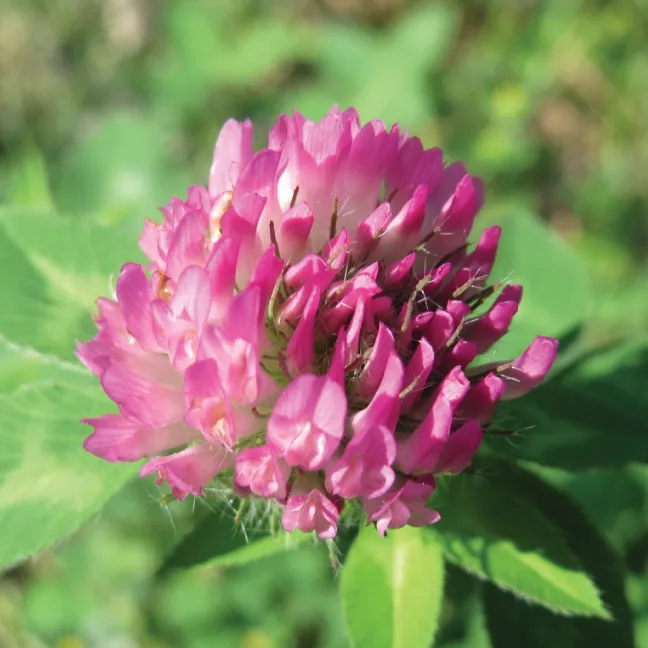
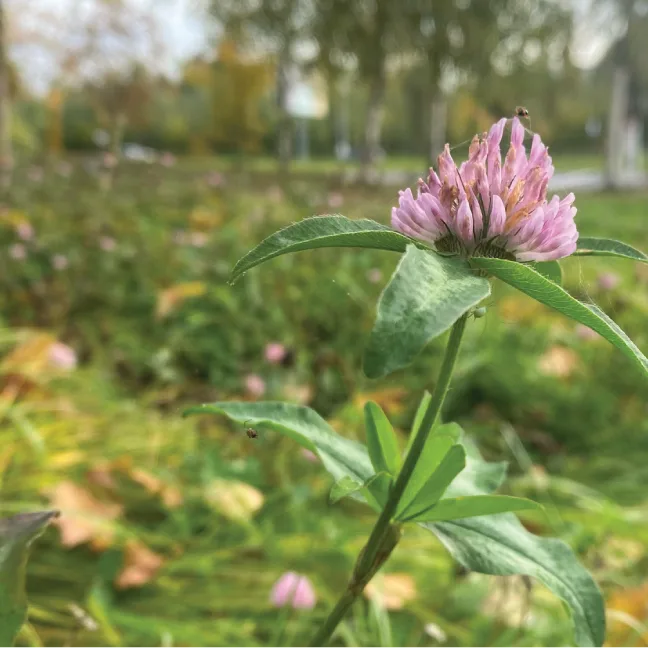
Red Clover (Trifolium pratense) is a short-lived perennial legume that fixes 70-150 lbs of nitrogen per acre, produces high-protein forage (16-22% crude protein), and is the single most important nectar plant for bumble bees in North America. It persists 2-3 years, frost-seeds well in spring, and works as a cover crop, hay crop, pasture legume, or pollinator planting. It is the most versatile clover for agricultural use.
Red clover fixes 70-150 lbs of nitrogen per acre per year in well-established stands. Thin stands fix 40-50 lbs/acre. University corn nitrogen trials show red clover cover crops reduce the optimal nitrogen rate for following corn by 70-120 lbs N/acre. The nitrogen is stored in root and leaf tissue and becomes available as the plant decomposes after termination. Inoculation with Rhizobium leguminosarum is required for fixation — do not skip it.
Red clover is predominantly pollinated by bumble bees, not honeybees. The flower tube depth (~7.5 mm) exceeds the tongue length of most honeybees (5.9-6.25 mm), making red clover nectar accessible primarily to long-tongued bumble bees. If you are planting for bumble bee habitat specifically, red clover is the single most effective species you can grow. For honeybee pasture, crimson clover or white clover are better choices — be honest about this with yourself before planting.
Red clover produces 16-22% crude protein forage (declining with maturity). TDN runs 55-70%. First-year yields of 3-4 tons dry matter per acre are comparable to alfalfa. It makes better silage than hay — the thick stems dry slowly, so baleage or silage preserves more quality than dry hay. Two cuts per year is standard for medium red clover. Mammoth varieties produce one heavy cut plus aftermath.
Red clover is one of the few legumes that frost-seeds reliably. Broadcast seed onto frozen ground in late winter (February-March) during freeze-thaw cycles. The expanding and contracting soil surface works seed into the ground naturally. Frost-seeding rate: 8-12 lbs/acre. This is the lowest-cost establishment method — no tillage, no equipment, just broadcast and walk away. Success rates are highest when seeded into thin pasture or small grain stubble.
Red clover is a short-lived perennial — not a permanent stand crop. Expect 2-3 years of productive life. Year 1 is typically the best. Year 2 often shows thinning from winterkill and disease pressure (southern anthracnose, clover rot). Year 3 stands are usually too thin to be productive. Plan for re-establishment every 2-3 years. Use disease-resistant varieties (Kenland, Marathon, Freedom!) to extend stand life, especially in warm-climate regions where anthracnose pressure is highest.
Red clover requires inoculation with Rhizobium leguminosarum for nitrogen fixation. Pre-inoculated seed is the easiest option. If using untreated seed, apply fresh inoculant immediately before planting. Fields that have grown inoculated clover recently may have residual bacteria, but fresh inoculant is cheap insurance. Without inoculation, red clover grows but does not fix nitrogen — you get the cover but not the fertility benefit.
Broadcast at 12-15 lbs per acre (0.4-0.5 lb per 1,000 sq ft). Drill at 6-12 lbs/acre. In seed mixes with grass, use 2-5 lbs/acre. For frost-seeding, broadcast 8-12 lbs/acre onto frozen ground during freeze-thaw cycles. Plant no deeper than 1/4 inch — red clover seed is small (~756,000 seeds per pound) and shallower is better than deeper. Firm seed-to-soil contact is critical.
Seeds germinate in 5-7 days at soil temperatures of 59-77°F. Seedlings develop trifoliate leaves within 2-4 weeks. For spring or fall seedings, keep soil moist during the first 2-3 weeks. Red clover establishes relatively fast — faster than alfalfa. First-year stands can be lightly grazed or cut within 60-90 days of planting. Full vigor is reached in the first full growing season.
For hay/silage: cut at early bloom for highest quality (20%+ protein). Allow 35-42 days regrowth between cuts. Two cuts per year is standard for medium red clover. For cover crop: terminate at bloom for maximum nitrogen credit. Mow, roll/crimp, or incorporate. For pasture: manage grazing pressure — do not graze below 3-4 inches. Avoid pure red clover stands for cattle due to moderate bloat risk; mix with grass to dilute.
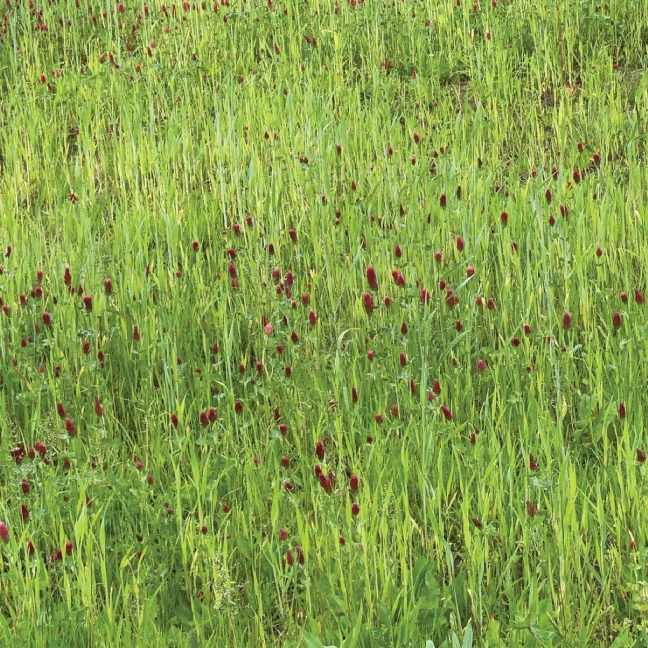
70-150 lbs per acre per year in well-established stands. Thin stands: 40-50 lbs/acre. University corn trials show red clover reduces optimal nitrogen for following corn by 70-120 lbs N/acre. Nitrogen becomes available gradually as clover residue decomposes — not instantly after termination. Allow 4-8 weeks for N release.
Red clover is primarily a bumble bee plant, not a honeybee plant. The flower tube depth (~7.5 mm) exceeds honeybee tongue length (5.9-6.25 mm). Bumble bees with longer tongues can access the nectar easily. For honeybee pasture, crimson clover, white clover, or alsike clover are better choices. Red clover is excellent for supporting wild bumble bee populations.
Typically 2-3 productive years. Year 1 is usually the best. Year 2 often shows thinning from winterkill and disease. Year 3 stands are typically too thin for productive harvest. Use disease-resistant varieties (Kenland, Marathon, Freedom!) to maximize stand life. In warm, humid regions, southern anthracnose can kill stands in a single season without resistant varieties.
Yes, with management. Red clover carries moderate bloat risk — less than alfalfa or ladino white clover, but significant. Do not turn hungry cattle onto pure, lush red clover stands (especially in spring). Mix red clover with grass to dilute bloat risk. Offer hay or straw before grazing high-clover pastures. Sheep note: red clover contains isoflavones that can cause fertility issues in ewes with prolonged, heavy consumption.
Medium red clover regrows quickly after cutting and can be cut twice per year. Mammoth red clover is taller, produces one heavy hay cut plus aftermath, and blooms later. Medium types are more common for cover crop, pasture, and multi-cut hay systems. Mammoth types are used for single-cut hay or green manure where maximum biomass is desired. Most commercial seed is medium red clover.
Yes — red clover is one of the best legumes for frost-seeding. Broadcast 8-12 lbs/acre onto frozen ground during February-March freeze-thaw cycles. The expanding soil surface works seed into contact naturally. Best results into thin pasture or small grain stubble. No tillage needed. This is the lowest-cost clover establishment method.
Our seed experts are ready to help you find the perfect seed for your project.
1-866-322-7300 Ask a Seed ExpertSee what real customers are saying. All reviews are collected and verified by Shopper Approved, an independent third party.