Native
Wildlife Habitat
| Every Seed Grows We don't pad bags with dead seed or filler. What's in the bag is what grows in your yard. | |
| Independently Tested, Every Batch Each lot is tested by a third-party lab for germination and purity before it ships to you. | |
| Grown on American Farms Our seed comes direct from U.S. growers we know personally — not a middleman warehouse. | |
| Clean Seed, No Shortcuts No coatings to inflate weight, no GMOs, no cheap filler species. Just seed. |
Free shipping on all orders under 125 lbs!
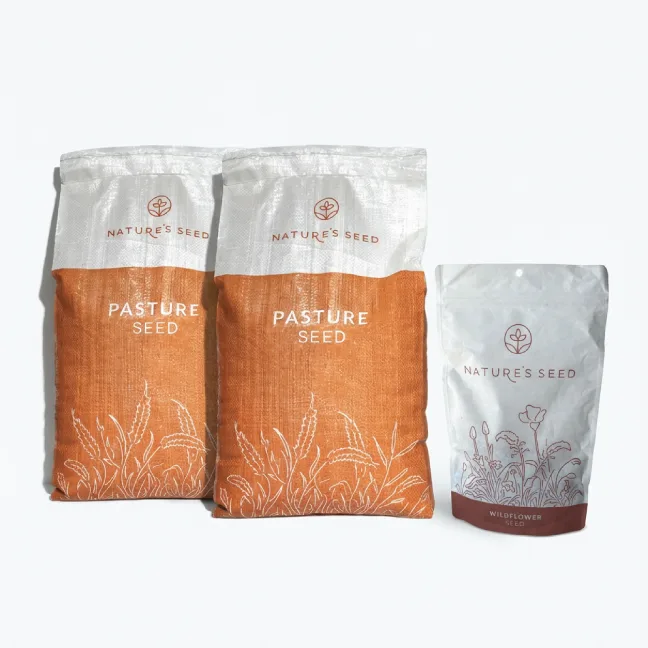
A 3-species cover crop kit that attacks soil health from three angles: Winter Cereal Rye builds organic matter and suppresses weeds, White Clover fixes nitrogen, and Mustard Biofumigant kills soilborne pathogens and nematodes. Ships as three separate bags for fall or spring planting.
Each species in this kit targets a different soil problem. Cereal Rye builds organic matter and suppresses weeds — its roots exude allelopathic compounds that inhibit weed seed germination. White Clover fixes atmospheric nitrogen and converts it to plant-available form in the soil. Mustard Biofumigant kills soilborne pathogens through glucosinolate-mediated biofumigation when incorporated. Together, they address fertility, structure, and disease in a single planting.
The White Clover component fixes atmospheric nitrogen through symbiotic Rhizobium bacteria in root nodules. In a cover crop rotation, this nitrogen becomes available to the following cash crop as clover residue decomposes. At 75-200 lbs N/acre annually, clover can replace 1-3 applications of synthetic nitrogen fertilizer. Inoculation is recommended if your soil has not had clover recently.
Mustard biofumigant works by a specific mechanism: when chopped and immediately incorporated into moist soil, glucosinolates in the plant tissue convert to isothiocyanates — the same compounds found in commercial soil fumigants. These compounds suppress Verticillium, Rhizoctonia, Pythium, root-knot nematodes, and some weed seeds. Timing is critical — chop at early flower and incorporate within 15 minutes for maximum effect. Tarp the soil surface for 2-3 weeks after incorporation to trap gases.
The full 20 lb kit covers approximately 5,000 sq ft (roughly 1/8 acre) when all three components are applied together at recommended rates. The mustard component sets the coverage area at 5,000 sq ft. The rye and clover will be at moderate rates on this area, which is appropriate in a multi-species cover crop where you want diversity rather than maximum individual density.
This kit is flexible. For fall planting (September-October in Zones 5-7): the cereal rye and clover establish before winter; add the mustard in early spring when soil warms to 45°F. For spring planting (March-May): broadcast all three together. The rye will produce less biomass from spring planting but still contributes organic matter. In the Deep South, plant October-November for winter growth.
Mow or clear existing vegetation short. Light tillage or disking helps but is not required — cover crops establish well with no-till broadcasting into short stubble. Remove crop residue only if it is thick enough to prevent seed-to-soil contact. Do not fertilize — the whole point of this kit is to build soil fertility naturally.
Broadcast all three bags evenly across the target area. The cereal rye and mustard are large seeds that spread easily; the clover is smaller and benefits from mixing with dry sand (4:1 sand to seed) for even distribution. After broadcasting, press or roll the soil surface for seed-to-soil contact. A cultipacker, lawn roller, or driving over the area with an ATV works. Do not bury deeper than 1/2 inch.
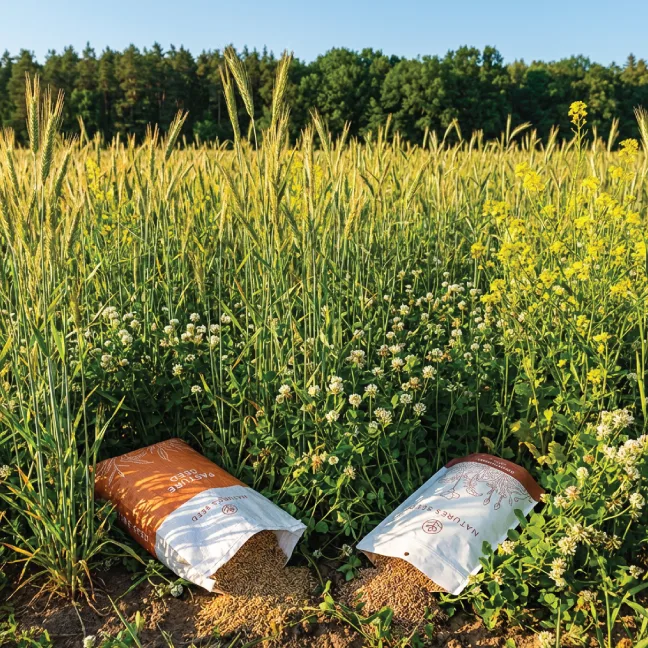
Once germinated, cover crops require almost no management. No irrigation needed in most climates — rainfall is sufficient. No fertilizer. No mowing. The rye will grow fastest and tallest, the mustard will produce yellow flowers, and the clover will spread low along the ground. Allow 90-120 days of growth for maximum soil benefit before termination.
For biofumigation: chop the mustard at early flower stage, incorporate into moist soil within 15 minutes, and tarp for 2-3 weeks. For rye: mow or roll/crimp at boot stage (just before seed heads emerge) for maximum weed suppression mulch. The clover can be left as a living mulch or incorporated with the others. Wait 2-3 weeks after termination before planting cash crops to allow decomposition.
In Zones 5-7, fall planting (September-October) is ideal for cereal rye and clover. The mustard can be added in early spring when soil reaches 45°F. In warmer zones (8-9), plant October-November. Spring planting (March-May) works for all three species simultaneously but produces less total biomass than fall-planted rye.
When mustard tissue is chopped and incorporated into moist soil, glucosinolates in the plant cells break down into isothiocyanate gases. These gases kill soilborne fungi (Verticillium, Pythium, Rhizoctonia), suppress nematodes, and inhibit some weed seeds. The key is fast incorporation — within 15 minutes of chopping — and sealing the soil surface (tarp or irrigation) to trap the gases for 2-3 weeks.
Yes, for maximum nitrogen fixation. White Clover requires Rhizobium trifolii bacteria. If your field has not grown clover in the past 3-5 years, the bacteria population may be too low. Inoculant is inexpensive — apply to moistened seed just before planting. Without inoculation, the clover will grow but fix significantly less nitrogen.
Wait 2-3 weeks minimum. Cereal rye releases allelopathic compounds during decomposition that can inhibit seed germination of small-seeded crops. The mustard biofumigation gases also need time to dissipate. After 2-3 weeks, the residue is partially decomposed and safe for planting. Large-seeded crops (corn, beans) are less sensitive than small-seeded crops (lettuce, carrots).
Depleted, compacted, or disease-prone soils benefit most. If you have had yield declines, visible soil crusting, poor water infiltration, or recurring soilborne disease, this kit addresses those problems directly. Even healthy soils benefit from cover cropping — it maintains organic matter and prevents degradation between cash crop seasons.
Yes. All three species are standard tools in organic agriculture. Cereal rye for weed suppression, clover for nitrogen, and mustard biofumigant for disease control — all without synthetic inputs. Verify that your seed source meets organic certification requirements if you are a certified organic operation. Our seed is not certified organic but is untreated.
Our seed experts are ready to help you find the perfect seed for your project.
1-866-322-7300 Ask a Seed ExpertSee what real customers are saying. All reviews are collected and verified by Shopper Approved, an independent third party.