
Quality Highlights
| Every Seed Grows We don't pad bags with dead seed or filler. What's in the bag is what grows in your yard. | |
| Independently Tested, Every Batch Each lot is tested by a third-party lab for germination and purity before it ships to you. | |
| Grown on American Farms Our seed comes direct from U.S. growers we know personally — not a middleman warehouse. | |
| Clean Seed, No Shortcuts No coatings to inflate weight, no GMOs, no cheap filler species. Just seed. |
Free shipping on all orders under 125 lbs!
Premium Irrigated Pasture Mix
SKU: PB-IR
What is the Premium Irrigated Pasture Mix
What's in This Mix
Chosen for rapid germination and fast establishment to provide high-quality, highly digestible forage for early-season grazing or cutting. It performs well under irrigated, cool-season conditions and tolerates frequent defoliation, boosting short-term yield.
Included for strong summer productivity and persistence under irrigation, producing leafy, palatable forage with good regrowth after grazing. It complements ryegrass by extending productive grazing into warmer periods and adding structural diversity to the sward.
Selected for deep roots, drought tolerance, and long-term persistence, helping the stand endure dry spells and heavy use. The endophyte-free variety avoids animal health and performance issues linked to toxic endophytes while providing robust late-season growth and winter hardiness.
Chosen for its stoloniferous, low-growing habit that forms a persistent, highly palatable sward under grazing; it fixes atmospheric nitrogen to boost pasture fertility and provides high-protein forage that complements grasses.
Included for its high-yielding, quick-establishing upright growth that produces abundant, nutritious forage and strong nitrogen fixation; its deeper roots and tolerance of heavier, irrigated soils extend seasonal production where white clover may be less competitive.
Specifications
Seeding Specs
Establishment Specs
Why Choose This Seed?
More Feed From Every Irrigated Acre
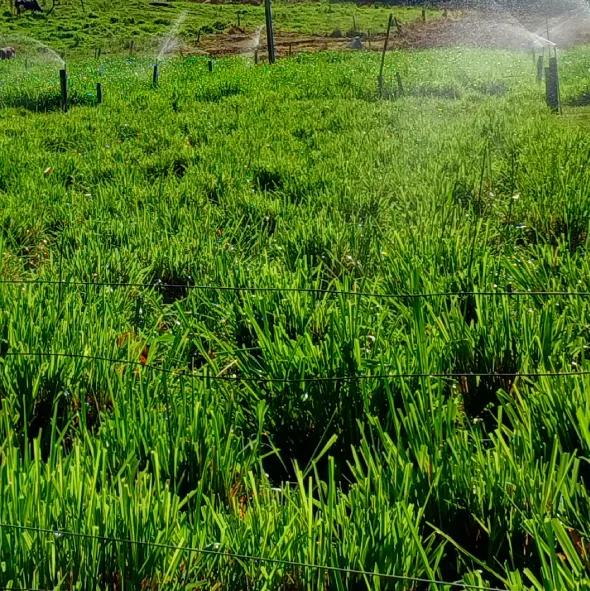
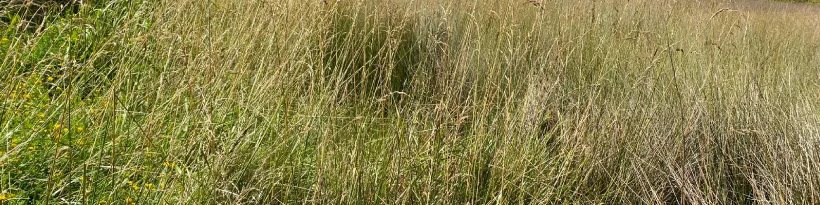
Irrigated acres should be some of the most productive ground on the place, but thin stands and bare patches can still eat up your feed budget. Premium Irrigated Pasture Mix is built to fill in thick and stay leafy under water, so you’re harvesting more tonnes per acre instead of patching the gaps with bought-in hay. The paddock gets grazed down evenly, regrowth comes back strong, and your forage bill stops feeling like a leak you can’t plug.
Steady, High-Quality Feed All Season
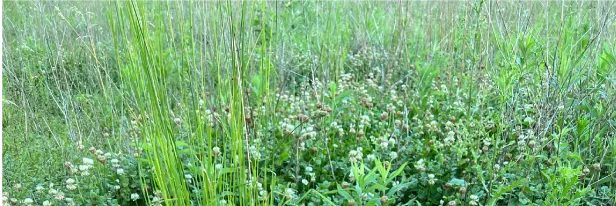
Your grazing plan works a lot better when the pasture doesn’t swing from “lush” to “stemmy” in a week. Premium Irrigated Pasture Mix is designed for steady, palatable growth with regular watering, so horses and cattle stay on a consistent, nutrient-dense diet through the season. That stability makes rotations easier to manage, helps avoid abrupt feed changes, and takes a lot of the guesswork out of how the next paddock will perform.
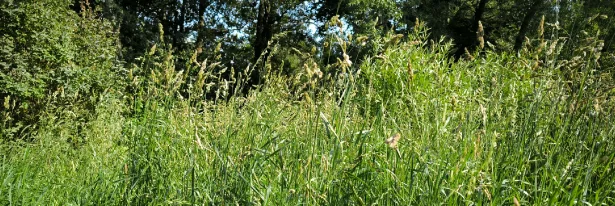
Fuel Your Hard-Working Herd Properly
High stocking pressure exposes weak pasture fast—if it can’t bounce back, your whole system gets tight. Premium Irrigated Pasture Mix is meant to recover quickly after a graze and keep pushing leaf, giving you the kind of feed that supports gain, milk, and condition when you’re rotating hard. Whether you’re managing performance horses or intensive cattle grazing, it’s the vigorous, high-quality stand that keeps animals doing well instead of slowly slipping behind your targets.
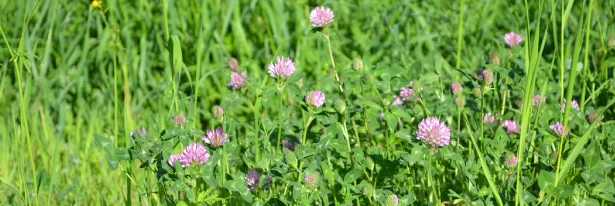
Get More Gain From Every Gallon
More animal performance from the same water is the goal, especially when irrigation costs are what they are. Premium Irrigated Pasture Mix turns that water into dense, leafy feed that holds quality, so you’re getting better gain per acre and better return on every inch you apply. It establishes quickly, stays competitive in the sward, and keeps stock grazing high-value pasture longer before you have to lean on supplements.
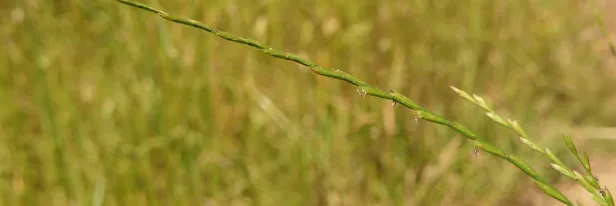
Pasture So Good It Replaces Hay
Unlike an irrigated paddock that looks green from the gate but opens up into thin cover, this mix is aimed at a uniform, high-feed stand you can actually graze hard. Premium Irrigated Pasture Mix delivers dense, leafy forage with strong regrowth, which is what lets pasture do more of the heavy lifting in the ration. With good management, you’ll lean less on purchased hay and bagged feed while keeping horses and cattle in the kind of condition you’re trying to maintain.
Planting Guide
Prepare the Soil
Test your soil 62 months before seeding to find pH, phosphorus (P), potassium (K), and organic matter levels.
Aim for a soil pH between 6.0 and 7.0 for best pasture growth.
Apply lime and fertilizer based on the soil test, not guesswork.
Incorporate lime and fertilizer into the top 4-6 inches of soil using a disk or field cultivator.
Remove existing sod, weeds, and trash with tillage or a non-selective herbicide.
Wait 2 weeks after spraying herbicide, then control any green regrowth before final seedbed prep.
Work the soil until you have a fine, smooth seedbed with no large clods.
Firm the seedbed so your footprints are no deeper than 0.5 inch when you walk across it.
Fill low spots and level rough areas so water does not pool and equipment and animals can move safely.
Avoid leaving freshly tilled soil bare for more than a few days if wind or erosion is a concern.
Plan your final tillage and planting close together so you can irrigate soon after seeding.
Know you are ready to plant when the soil surface is smooth, firm, and weed-free for at least a few days.
Sow the Seeds
Calculate your seeding rate at 1-82 pounds of seed per acre when using a drill for irrigated pasture.
Use the higher end of the drilled range (closer to 22 pounds per acre) for horse paddocks or heavy grazing.
Set your no-till drill or grain drill to place seed 1/4-1/2 inch deep; aim closer to 1/4 inch for small pasture seeds.
Avoid planting deeper than 1/2 inch; deep planting is a common cause of poor stands.
If broadcasting seed, increase the seeding rate by about 253% to a total of 2-50 pounds per acre to make up for less precise placement.
After broadcasting, pull a cultipacker or roller over the field to press seed into firm soil contact.
Divide your total seed amount in half and seed the field in two passes at right angles to each other.
Avoid leaving seed mixed with fertilizer in the hopper for more than a short time to prevent seed damage and bridging.
Plant when soil temperature at 1-2 inches deep is consistently above 50f in the morning.
Plan to irrigate immediately after seeding so the top 1 inch of soil stays moist but not muddy.
Know you planted at the right depth when you can gently scrape the soil surface and see seed just under the top layer, not sitting on top and not buried too deep.
Establishment
Irrigate lightly right after seeding to settle soil around the seed without causing runoff.
In the first 2 weeks, water frequently with small amounts to keep the top 1-2 inches of soil consistently moist.
Check moisture by digging with your fingers; the top inch should feel damp but not soupy.
Reduce irrigation frequency once seedlings reach 2-3 inches tall, but water deeper so moisture reaches 4-6 inches.
Watch for weeds during the first month; expect a flush of annual weeds in many fields.
Mow annual weeds when they are just above the pasture seedlings, usually at 4-5 inches tall.
Set your mower high enough so you cut weeds but leave the pasture seedlings with plenty of leaf.
Avoid mowing so low that you scalp or bruise the young pasture; this is a common mistake.
Do not graze at all until most plants are 8-10 inches tall.
Test readiness for grazing by grabbing a handful of grass and pulling; if plants pull out easily, wait longer.
For the first grazing, stock the pasture lightly with fewer animals than normal.
Allow animals to graze down only to about 4 inches of height, then remove them.
Rest the pasture for a full 3-5 weeks after the first grazing, depending on growth and season.
Know the stand is well established when plants regrow quickly after grazing and resist being pulled out by hand.
Maintenance Long Term
Irrigate deeply enough to wet the top 8-1-2 inches of soil, then allow a light dry-down before the next irrigation.
Adjust how often you irrigate based on weather and soil type; water more often on sandy soils and in hot, windy weather.
Start grazing when most forage is 8-1-2 inches tall.
Remove cattle when the pasture is grazed down to 3-4 inches to protect crowns and allow fast regrowth.
Remove horses when the pasture is grazed down to 4-5 inches, since horses graze more tightly.
Rotate animals to a new paddock instead of letting them stay on one area too long.
Soil test at least once a year and follow recommendations for nitrogen, phosphorus, and potassium.
Split nitrogen into several smaller applications during the main growing season instead of one large dose.
Mow or clip ungrazed patches and early seedheads to keep the pasture even and prevent rank, unpalatable clumps.
Walk your pasture regularly to look for weeds, bare spots, and compacted, hard areas.
Spot-spray problem weeds rather than spraying the whole field when possible.
Overseed thin or bare areas in late summer or early fall when soil moisture and temperatures are favorable.
Aerate compacted areas if hoof traffic has created a hard, sealed surface and water is not soaking in.
Record grazing dates, irrigation amounts, and fertilizer applications in a simple notebook or spreadsheet.
Review your records each season and adjust stocking rate, irrigation, and fertilizer to match how your pasture actually performs.
Know your management is working when regrowth is quick, weeds are limited, and animals maintain good condition on the forage produced.
Helpful Resources
Pasture Establishment: Seeding Methods
The Importance of Legumes in Pastures
Questions & Answers
A top-performing irrigated pasture mix pairs high-yield grasses with persistent legumes to match your soil, water, and stocking rate.. Look for a mix that grows thick, leafy grass, recovers quickly after grazing, and is labeled as high in nutrition and palatability (animals like to eat it). For best results, prepare a clean seedbed, seed at the recommended rate, and use even, consistent irrigation. Rotate animals between paddocks so grass can regrow to 6-8 inches before grazing againthis helps keep your pasture productive and reduces how much hay you need to buy.
With good water and fertilizer, a premium irrigated pasture mix can often give you about 200% more usable grazing than a basic pasture blend. In practical terms, that can mean more animals per acre or several extra weeks of grazing each year. To see this benefit, keep your soil fertility up, avoid overgrazing, and let grass regrow to the proper height before putting animals back on. If you manage it well, you’ll likely notice less time feeding hay and better body condition on your animals.
For intensive rotational grazing with steady irrigation, choose a premium irrigated pasture mix that clearly states its built for fast regrowth and heavy grazing. These mixes are bred to bounce back quickly between rotations and handle hoof traffic, making it easier to move animals often without hurting the pasture. Plan your rotations based on grass height (for example, graze at 8-10 inches and pull animals off at about 3-4 inches) instead of using a fixed calendar schedule. When you match your rotations to plant regrowth, you protect your pasture and get more high-quality feed from every acre.
A good irrigated horse pasture mix should focus on soft, leafy grasses like improved perennial ryegrass and orchardgrass, with support from timothy or meadow fescue to stretch the grazing season. Adding a small amount of safe legumes like white clover or birdsfoot trefoil boosts protein and overall nutrition and can reduce how much fertilizer you need. If included, deeper-rooted grasses like smooth brome or horse-safe tall fescue help the pasture recover from close grazing and heavy hoof traffic. For horses, always choose endophyte-free or horse-safe varieties and avoid mixes that are not clearly labeled as suitable for equine use.
Choose a premium irrigated pasture mix that is clearly labeled for beef and dairy and highlights high yield, high energy, and good protein levels. Look for descriptions like highly palatable, fast regrowth, and handles intensive grazing, as these traits support better milk production and steady weight gain. Match the mix to your soil (for example, heavy clay vs. sandy) and your irrigation capacity, and test your soil so you can apply the right fertilizer. With the right seed and good rotational grazing, you can keep cows on lush, young grass longer and cut back on purchased feed.
Yes, a premium irrigated pasture mix can noticeably lower your hay and grain costs during the growing season if its managed well. Because these mixes are bred to be thick, leafy, and fast-growing under irrigation, they can provide more of your animals daily feed right from the pasture. To get the most savings, keep up with irrigation, avoid overgrazing, and rotate animals so grass can regrow between grazings. Many producers find that a well-managed irrigated pasture lets them feed less hay in summer and rely on grain only when animals need extra calories or nutrients.
Still Have Questions?
Our seed experts are ready to help you find the perfect seed for your project.
1-866-322-7300 Ask a Seed ExpertCustomer Reviews
See what real customers are saying. All reviews are collected and verified by Shopper Approved, an independent third party.
