

13 Species
Bloat-Safe
Goat Pasture Seed Blends for Every Region
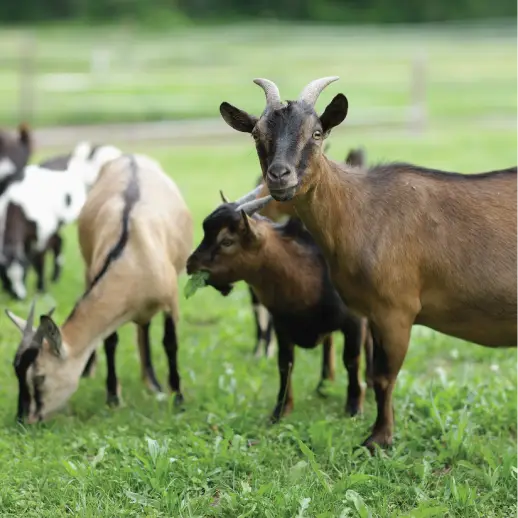
Despite popular belief, goats won’t eat everything in sight. They actually prefer to browse on shrub-like, broadleaf forbs over traditional pasture grasses. That’s why our goat blends are formulated with the right balance of forbs, legumes, and grasses to match their natural grazing behavior.
• Regionally designed — our rangeland experts formulated a blend for every region of the US, considering soil conditions, sun/shade preferences, heat tolerance, and water requirements
• Parasite-fighting forbs — includes birdsfoot trefoil and chicory, which studies have shown help control internal parasites in goats
• Natural soil fertilization — legumes in every blend provide protein for your goats and nitrogen for your soil
• Maximum variety — goats prefer to wander from plant to plant, so our blends offer a wide assortment of grasses, forbs, and legumes
• Genetic attributes — species selected for nutrient content, grazing tolerance, and disease resistance
Whether you’re raising goats for meat, milk, or companionship, our USDA-tested seed delivers the nutrition and variety your animals need to thrive. No fillers, no GMOs. Browse our full pasture seed collection for blends designed for horses, cattle, and sheep.
———
Frequently Asked Questions
Q: Why do goats need different pasture seed than cattle or horses?
A: Goats are natural browsers, not grazers. They prefer broadleaf forbs and shrub-like plants over pure grass pastures. Our goat blends include a high proportion of forbs and legumes to match this natural feeding behavior, which improves intake and nutrition.
Q: How does pasture help control parasites in goats?
A: Our blends include birdsfoot trefoil and chicory, which contain condensed tannins shown in studies to reduce internal parasite loads. Rotational grazing on diverse pasture also breaks parasite life cycles by keeping goats off recently grazed areas.
Q: How much pasture do I need per goat?
A: A general guideline is 2-4 goats per acre of well-managed pasture, depending on forage productivity and rainfall. Rotational grazing with rest periods of 30-60 days per paddock helps maintain stand density and forage quality.
Q: Can I use the same seed blend for meat goats and dairy goats?
A: Yes. Our goat pasture blends provide the protein and energy needed for both meat and dairy production. Lactating does may benefit from additional legume content, which our blends already include for natural protein and soil nitrogen.
Q: When is the best time to plant goat pasture seed?
A: For cool-season species, plant in early fall or early spring. For warm-season species, plant in late spring when soil temperatures are consistently above 60 degrees F. Your regional blend will include the appropriate species for your climate.
