
Quality Highlights
| Every Seed Grows We don't pad bags with dead seed or filler. What's in the bag is what grows in your yard. | |
| Independently Tested, Every Batch Each lot is tested by a third-party lab for germination and purity before it ships to you. | |
| Grown on American Farms Our seed comes direct from U.S. growers we know personally — not a middleman warehouse. | |
| Clean Seed, No Shortcuts No coatings to inflate weight, no GMOs, no cheap filler species. Just seed. |
Free shipping on all orders under 125 lbs!
Pasture Seed
Check your ZIP code to know if this seed works for you
Goat Pasture & Forage Mix
SKU: PB-GOAT-TR
Supported Species:
- Goats
Planting Aids for your Seed
What is the Goat Pasture & Forage Mix?
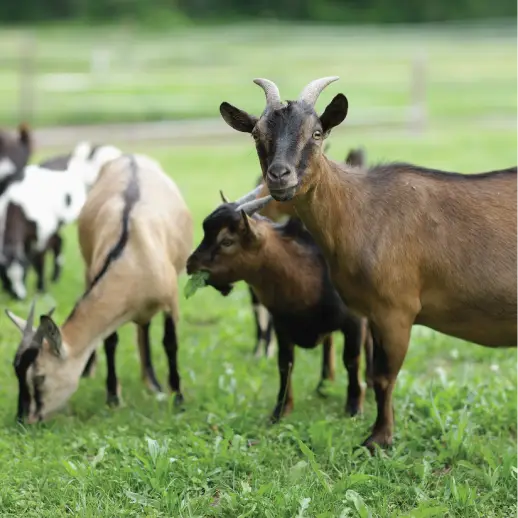
A premium 13-species goat pasture seed blend designed to work across most U.S. regions — from the cool-season North through the Transition Zone and into the upper South. This mix combines deep-rooted chicory, alfalfa, and birdsfoot trefoil with hardy grasses like tall fescue, orchardgrass, and perennial ryegrass. Bermuda grass extends the grazing season through summer heat. Formulated for nutritious, bloat-safe grazing that supports healthy weight gain, milk production, and natural internal parasite control.
What's in This Mix
Durable, drought-tolerant base grass that holds up to goats' aggressive grazing habits.
Premium protein and calcium source that supports doe milk production and kid growth.
High-yielding legume that boosts pasture protein and nitrogen content for the transitional zone.
Non-bloating legume that's safe for goats and thrives in variable transitional-zone soils.
Highly productive and palatable grass that pairs well with legumes in a goat pasture.
A quick-establishing, high-protein legume that adds early-season forage for browsing goats.
Extremely fast to germinate, which protects the stand early on. It adds density to the sward and improves overall palatability. Not the most drought-tolerant, but it pulls its weight in temperate conditions.
Another non-bloating legume, which matters a lot in a goat-heavy operation. High in protein and digestibility, and it tolerates alkaline soils where other legumes underperform.
Built for heat and drought. In southern climates it anchors the stand through summer when cool-season species go dormant, keeping goats on fresh forage through the hardest months.
Low-growing and persistent, it fills gaps in the canopy and resists heavy hoof traffic well. Goats are highly attracted to it, and it consistently delivers quality protein across the grazing season.
Specifications
Seeding Specs
Water Needs
Medium — prefers consistent moisture; tolerates periodic drought once established
Soil Preference
Prefers well-drained soils; adaptable from sandy loam to clay loam
Soil pH
5.5–8.0
Planting Depth
1/4 inch
Establishment Specs
Height
1–4 feet without grazing
Color
Green foliage; blooms of yellow, purple, pink, blue, white across species
Uses
Goat & sheep pasture, cattle grazing, erosion control, land reclamation, wildlife food plots, pollinator habitat
Native/Introduced
Introduced and naturalized species — adapted across USDA Zones 3-10
Why Choose This Seed?
Drought & Heat Tolerance
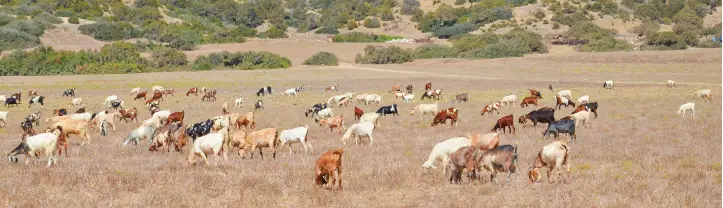
Deep taproots of chicory and alfalfa dive for moisture, keeping the pasture greener through summer dry spells. Tall fescue (Fawn variety) withstands heat and stays green into winter dormancy. Bermuda grass activates during peak summer when cool-season species slow down. This mix is built from species proven across Zones 3-10 — from northern winters to southern heat.
Grazing Resilience & Regrowth
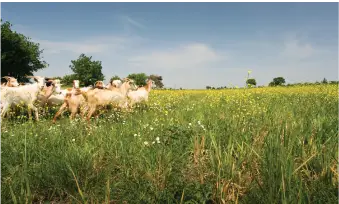
Designed for intensive grazing systems, these 13 species bounce back after being nibbled. Tall fescue and orchardgrass (Potomac + Paiute varieties) provide a durable grass base that regrows vigorously when rotationally grazed. Perennial ryegrass (Linn) establishes fast for quick ground cover. Birdsfoot trefoil and white clover (Ladino) fill low gaps between bunch grasses, creating a dense, resilient sward.
Extended Grazing Season
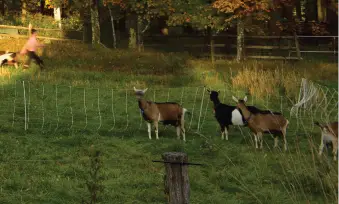
Cool-season grasses (tall fescue, orchardgrass, perennial ryegrass) kick into gear early in spring and again in fall. Bermuda grass fills the summer gap when cool-season species go dormant. Tall fescue can be stockpiled for late fall and winter grazing. Austrian peas provide fast annual forage during establishment. With proper rotational management, expect 8-10 months of productive grazing across most regions.
Soil Health & Erosion Control
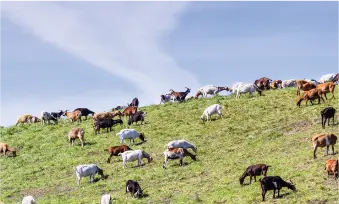
Five nitrogen-fixing legumes (alfalfa, red clover, birdsfoot trefoil, cicer milkvetch, and white clover) naturally fertilize the soil — reducing or eliminating the need for commercial fertilizer. Fibrous grass root systems bind topsoil while deep taproots from chicory and alfalfa break up compaction. Dense ground cover protects hillsides and heavy-rain areas from erosion and runoff.
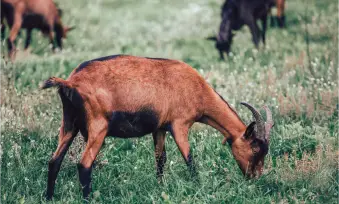
Non-Bloating, Goat-Safe Nutrition
Unlike pure clover or alfalfa stands, this blend is formulated to be safe for ruminants. Birdsfoot trefoil (8.9% of the mix) is a non-bloating legume — goats gain protein without the bloat risk. Trefoil and chicory contain condensed tannins linked to natural internal parasite control in small ruminants. Cicer milkvetch adds another non-bloating, non-toxic legume for protein diversity. The grass-to-legume ratio is balanced to minimize digestive issues.
Product Uses
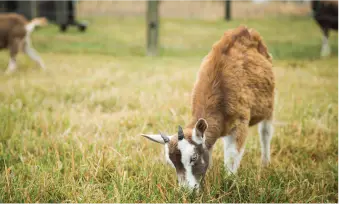
Balanced, Bloat-Safe Pasture Blend for Goats, Sheep, and Cattle
Goat Pasture & Forage Mix offers a nutritious, balanced pasture for goats, sheep, and other livestock. It combines energy-rich grasses like orchardgrass, tall fescue, perennial ryegrass, and bermuda grass with protein-packed legumes such as alfalfa, red and white clover, birdsfoot trefoil, cicer milkvetch, and chicory — plants goats naturally prefer and that support parasite control through condensed tannins.
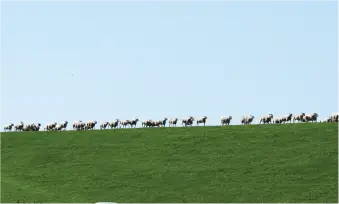
Great for Hillsides: Controls Erosion, Reduces Runoff, and Stabilizes Slopes
If you have hilly or sloped land, this mix works as natural erosion control. Perennial grasses form a dense sod that anchors soil, while deep-rooted chicory and alfalfa improve infiltration and break up compaction. Bermuda grass adds tough, traffic-resistant coverage in warm zones. Ideal for runoff-prone or overgrazed areas.

Low-Maintenance, Self-Sustaining Pasture for Long-Term Grazing
This low-input, mostly perennial mix returns each year with minimal care. Five nitrogen-fixing legumes feed the grasses naturally, reducing or eliminating the need for commercial fertilizer. Designed to handle a range of soil types (sandy loam to clay loam, pH 5.5-8.0) and climates from Zone 3 through Zone 10.
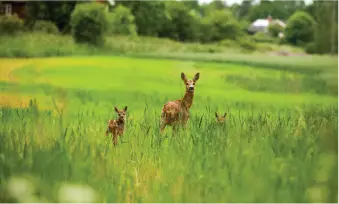
Dual-Purpose Mix: Nourish Livestock and Attract Wildlife with One Planting
Goat Pasture & Forage Mix supports more than just livestock — it attracts deer, rabbits, and pollinators too. High-protein plants like clover, trefoil, and chicory make it ideal for dual use as a grazing pasture and wildlife food plot. Flowering species boost pollinator activity, while the diverse plant structure provides cover and habitat.
Helpful Resources
Pasture Seed Planting Guide
Tips for Keeping a Healthy Pasture
Questions & Answers
When and how should I plant the Goat Pasture & Forage Mix?
Timing depends on your region. In northern and transitional zones, plant in early fall (Aug-Oct) or early spring (Feb-Apr). Fall seeding is generally best for strong root establishment. In southern zones, plant cool-season components in fall and bermuda grass will fill in naturally during summer. Prepare a firm seedbed, broadcast or drill at 20 lbs per acre, plant 1/4 to 1/2 inch deep, and press firmly for seed-to-soil contact.
What kind of forage quality can I expect? Is this mix really nutritious for goats and other livestock?
Yes. This mix reaches 14-22% crude protein in spring depending on management and species proportion. Alfalfa and red clover boost protein and calcium. Chicory adds key minerals like zinc, potassium, and copper. Birdsfoot trefoil provides condensed tannins that research links to reduced internal parasite loads in goats. The 13-species diversity means goats can self-select the nutrition they need.
How do I manage grazing on this pasture mix? Can goats be left to graze it continuously?
Rotational grazing is strongly recommended. Goats overgraze favorites like chicory and clover if left in one spot, weakening those plants. Rotate paddocks: graze for a few days to a week, then rest each area for 3-4 weeks. Move goats off when pasture is grazed down to 3-4 inches. This lets forbs and legumes recover while grasses tiller and thicken. Avoid continuous grazing — it will thin the stand within 1-2 seasons.
Does this mix require a lot of water? How drought-tolerant is it?
Moderate water needs overall. Consistent moisture is important during establishment (first 4-6 weeks), but once established, the mix is fairly drought-tolerant. Deep-rooted plants like alfalfa and chicory stay green longer in dry spells. Tall fescue can go dormant and bounce back with rain. Bermuda grass is highly drought-tolerant during summer. Supplemental irrigation during extreme drought will maintain forage quality.
Will this pasture mix look good on my property? Can I use it in an ornamental or “meadow” context?
While designed as forage, this mix creates a beautiful meadow-like landscape. Grasses form a lush green base, and if allowed to bloom you will see splashes of blue (chicory), pink (red clover), yellow (birdsfoot trefoil), purple (alfalfa), and white (white clover). The bermuda grass provides a dense green base through summer. Well-suited for properties where aesthetics and function both matter.
I like wildflowers – can I mix wildflower seeds with this, or will they compete?
Yes, you can add wildflowers to this mix, but it takes some planning. The forage species are vigorous and may outcompete slower wildflower seedlings. For best results, plant wildflowers in adjacent borders or reserve certain areas for a native blend. You can also try overseeding hardy species like black-eyed Susan or asters after the forage is established—but expect some trial and error.
Goats may eagerly eat wildflowers, so choose non-toxic varieties and understand some may not last. Letting the pasture bloom in summer or planting wildflower strips between paddocks can also support pollinators. Overall, it’s doable—just give wildflowers space to thrive.
Still Have Questions?
Our seed experts are ready to help you find the perfect seed for your project.
1-866-322-7300 Ask a Seed ExpertCustomer Reviews
See what real customers are saying. All reviews are collected and verified by Shopper Approved, an independent third party.