
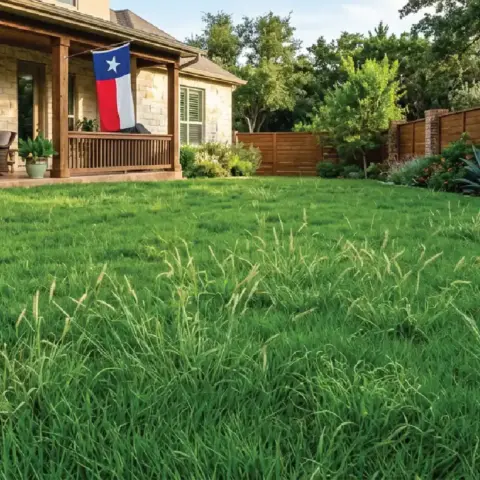
3 TX Natives
30-40% Less Water
| Every Seed Grows We don't pad bags with dead seed or filler. What's in the bag is what grows in your yard. | |
| Independently Tested, Every Batch Each lot is tested by a third-party lab for germination and purity before it ships to you. | |
| Grown on American Farms Our seed comes direct from U.S. growers we know personally — not a middleman warehouse. | |
| Clean Seed, No Shortcuts No coatings to inflate weight, no GMOs, no cheap filler species. Just seed. |
Free shipping on all orders under 125 lbs!
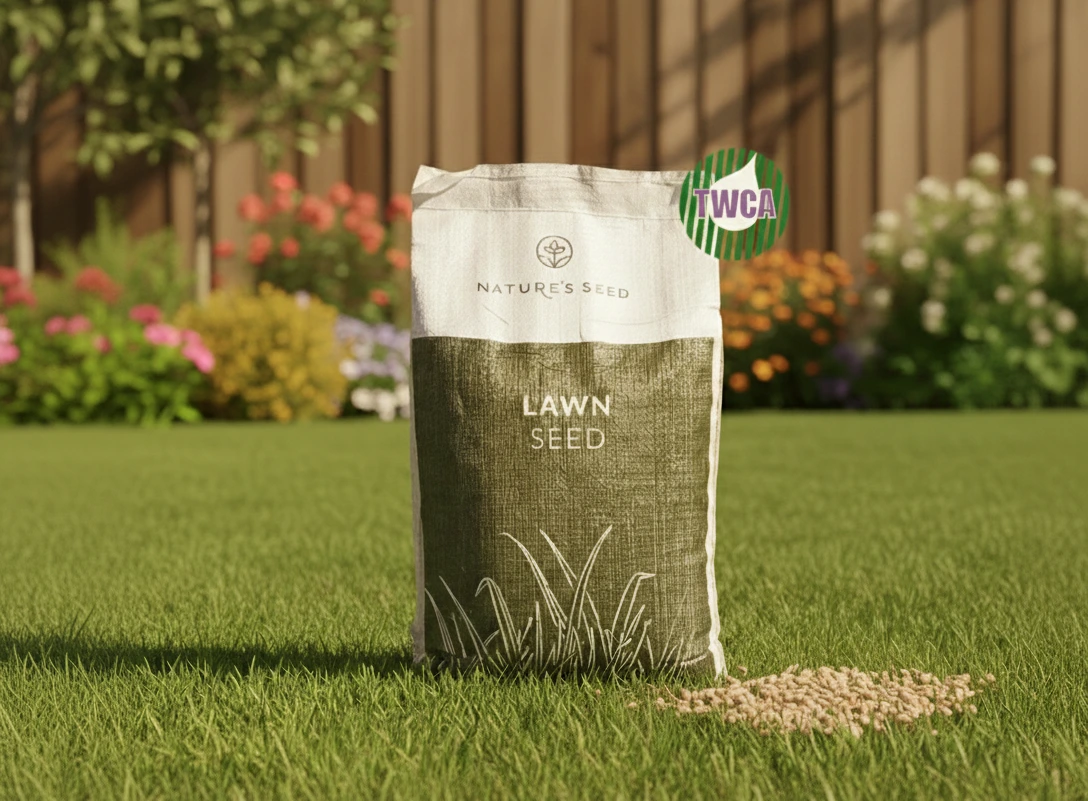
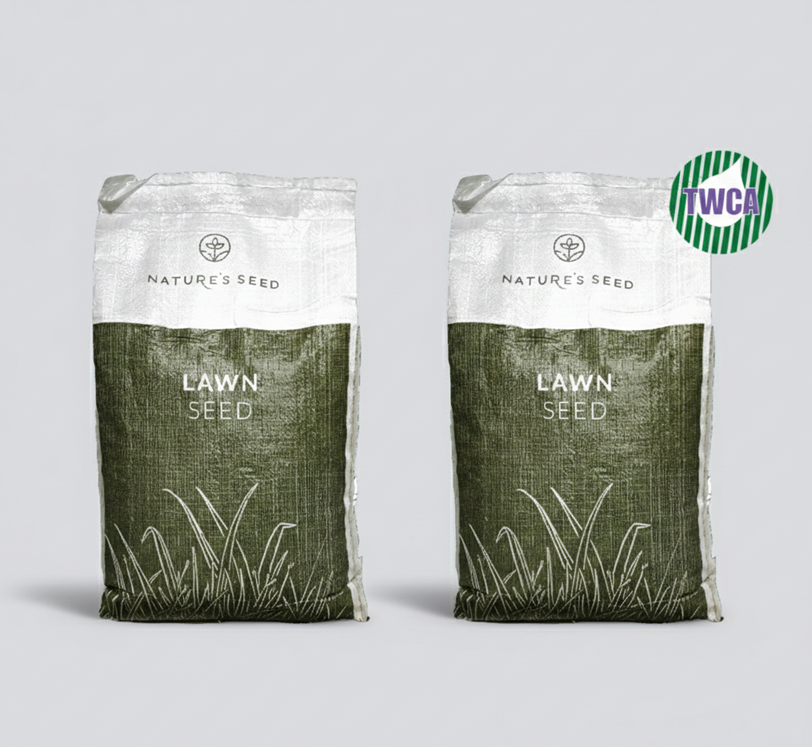
A 2-species lawn repair kit that pairs fast-germinating Perennial Ryegrass with deep-rooted Triblade Elite Tall Fescue. The ryegrass gives you visible green in 5-10 days while the fescue fills in behind it for a dense, drought-tolerant, permanent lawn. Ships as two separate 5 lb bags.
The Perennial Ryegrass in this kit germinates in as little as 5 days — you will see green sprouts within a week. This fast cover protects against erosion and fills the visual gap immediately. Behind it, the Triblade Elite Tall Fescue germinates in 10-21 days and develops a dense, deep root system over the next 6-8 weeks. By day 60, you have a fully established, multi-species lawn that is both fast-covering and long-lasting.
The tall fescue in this kit is Triblade Elite, a 3-cultivar blend selected for fine leaf texture, dark green color, and disease resistance. This is not the coarse, clumpy tall fescue of decades past. Modern turf-type tall fescue has leaf blades comparable to Kentucky Bluegrass in width, with significantly better heat and drought tolerance. Roots grow up to 3 feet deep, pulling moisture from soil layers that other grasses cannot reach.
We ship the kit as two separate bags intentionally. For general overseeding, mix both bags and broadcast together. For targeted repair, use the ryegrass on the worst bare spots first (for fast cover), then overseed the whole area with fescue. If you have specific areas with heavy shade, use more fescue (better shade tolerance). For high-traffic areas, lean heavier on the ryegrass (better wear recovery).
The full 10 lb kit covers approximately 2,000 sq ft at standard overseeding rates when both bags are applied together. This is enough for a typical front or back yard. For new lawn establishment from bare soil, the same 10 lbs covers approximately 1,000 sq ft at the heavier new-seeding rate. Adjust based on how thin your existing lawn is — thinner areas need heavier rates.
Both species in this kit are cool-season grasses that perform best in USDA Zones 3-7 and the upper transition zone (Zone 8 with adequate irrigation). The tall fescue component provides better heat tolerance than most cool-season species, making this kit a strong choice for the transition zone where both warm and cool-season grasses are grown.
Mow your existing lawn as short as possible — 1.5 to 2 inches. Bag the clippings. If thatch is heavy (over 1/2 inch), dethatch or core aerate first. The goal is exposing soil so seed makes direct contact with the ground. Bare spots should be lightly raked to loosen the top 1/4 inch of soil. Do not add topsoil or fill — seed needs to contact the existing soil surface.
Combine both bags in a bucket and mix, or load into a broadcast or drop spreader. Apply evenly across the target area. Make two passes in perpendicular directions for the most uniform coverage. For targeted bare spot repair, apply seed more heavily in bare areas and lightly in thin areas. Do not exceed 2x the recommended rate — too much seed causes crowding and weak seedlings.
Water lightly 1-2 times per day for the first 14-21 days. Keep the top 1/2 inch of soil consistently moist — not saturated. Ryegrass will sprout in 5-10 days; fescue in 10-21 days. Once both species have germinated and seedlings are 1-2 inches tall, reduce watering to deeper, less frequent sessions (2-3 times per week). Over-watering after germination promotes shallow roots and disease.
Allow new seedlings to reach 3.5-4 inches before the first mowing. Mow to 3 inches. Never remove more than 1/3 of the blade length in a single mowing. Use a sharp mower blade — dull blades tear young seedlings and invite disease. Resume normal mowing frequency (weekly) after the second mowing. Avoid heavy foot traffic on new seedlings for the first 4-6 weeks.
Late August through mid-September is ideal for most cool-season zones. Soil is warm enough for fast germination, air temperatures are dropping, and weed pressure is declining. Spring overseeding (March-May) works but faces more crabgrass and broadleaf weed competition. Avoid summer and winter seeding entirely.
At overseeding rates (applying over an existing lawn), the 10 lb kit covers approximately 2,000 sq ft. For new lawn establishment from bare soil, the same kit covers approximately 1,000 sq ft because new seeding requires a heavier application rate.
Both. For bare soil (new lawn), apply at the heavier rate — the full 10 lb kit covers about 1,000 sq ft. Prepare a smooth, firm seedbed by raking and rolling before seeding. For existing lawns, the same kit covers about 2,000 sq ft at the lighter overseeding rate.
Modern turf-type tall fescue (like Triblade Elite) has a fine leaf texture that blends well with turf-type perennial ryegrass. Both are dark green with similar leaf width. The result is a uniform-looking lawn, not a patchy mix. Over time, the tall fescue will become dominant due to its deeper roots and better persistence.
Core aeration before overseeding significantly improves seed-to-soil contact and germination rates. It is strongly recommended but not absolutely required. If your soil is compacted (standing water after rain, hard to push a screwdriver in), aerate first. If your lawn is thin but soil is loose, you can skip aeration and just mow low and broadcast.
Wait until new seedlings reach 3.5-4 inches tall, typically 3-4 weeks after seeding. Mow to 3 inches. Use a sharp blade. Do not mow when soil is wet — mower wheels will rut soft soil and damage young plants. Resume normal weekly mowing after the second cut.
Our seed experts are ready to help you find the perfect seed for your project.
1-866-322-7300 Ask a Seed ExpertSee what real customers are saying. All reviews are collected and verified by Shopper Approved, an independent third party.
From $4.03/lb
Keep Birds On Your Side Of, Turn Problem Spots Into Bird, Pack More Birds Into Every
See Details