Native
Wildlife Habitat
| Every Seed Grows We don't pad bags with dead seed or filler. What's in the bag is what grows in your yard. | |
| Independently Tested, Every Batch Each lot is tested by a third-party lab for germination and purity before it ships to you. | |
| Grown on American Farms Our seed comes direct from U.S. growers we know personally — not a middleman warehouse. | |
| Clean Seed, No Shortcuts No coatings to inflate weight, no GMOs, no cheap filler species. Just seed. |
Free shipping on all orders under 125 lbs!
SKU: TURF-FLN
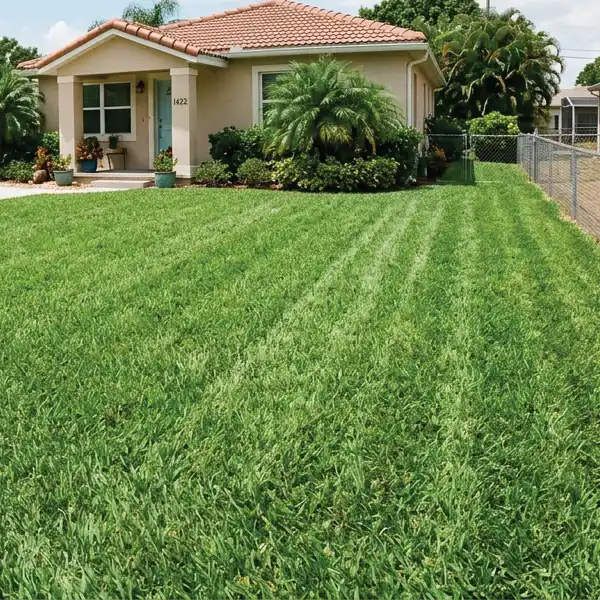
A Bahia-Bermuda lawn seed blend for Florida homeowners who want to seed their own lawn instead of paying for expensive St. Augustine sod. Bahiagrass at 50% provides deep-rooted drought tolerance. Bermudagrass at 30% fills in quickly and adds density. Together they create a tougher, lower-input lawn than St. Augustine at a fraction of the cost.
The backbone of low-maintenance Florida lawns. Bahiagrass forms a deep-rooted, drought-resistant turf that thrives in sandy soils with minimal irrigation or fertilization. Excellent heat tolerance and naturally pest-resistant.
Adds density and wear-tolerance to the blend. Bermudagrass fills in quickly, handles heavy foot traffic, and maintains a fine texture that complements the Bahiagrass base for a fuller, more uniform lawn appearance.
St. Augustine sod installation in Florida runs $2-5 per square foot installed. A 5,000 sq ft lawn costs $10,000-$25,000 professionally sodded. This seed mix covers the same area for a fraction of that — planted by you, on your schedule. Bahiagrass and Bermudagrass are the two major Florida lawn grasses available as seed, making this a true DIY lawn option.
Bahia brings deep roots and drought tolerance — it survives on natural Florida rainfall in most years. Bermuda brings density and fast establishment — it fills bare spots and creates a tighter turf surface. The combination addresses the two biggest complaints about each grass grown alone: Bahia by itself is thin and slow to fill; Bermuda by itself needs more water in dry spells. Together they compensate for each other’s weaknesses.
Compared to St. Augustine, this blend uses significantly less water once established. Bahia’s deep root system and Bermuda’s drought avoidance through dormancy mean less irrigation year-round. Annual fertilizer drops from 4-6 applications (St. Augustine) to 2-3 applications. Chinch bugs — the #1 pest destroying Florida St. Augustine lawns — are far less of a problem with both Bahia and Bermuda.
This is not St. Augustine and we will not pretend it is. Bahia has a coarser blade texture. Distinctive Y-shaped seed heads appear in summer. Bermuda goes dormant and turns tan in North Florida winters (December through February). The mixed texture will not look as uniform as a monoculture sod lawn. Establishment takes 60-90 days vs instant sod. If fine texture and year-round green are non-negotiable, this mix is not right for you. If lower cost, lower water, and lower maintenance matter more, it delivers.
Neither grass is native to Florida. Bahiagrass was introduced from South America in 1913 and is now planted on over 2 million acres in the state. Bermudagrass has been in the southeastern US for centuries. Both are thoroughly naturalized — part of Florida’s landscape for generations. We are upfront about this because accuracy matters. What these grasses ARE: proven, low-input turf species that have performed in Florida’s heat, sand, and drought for 100+ years.
Remove existing vegetation — scalp existing lawn to bare soil, or remove old sod. Rake or till the top 1-2 inches to create a loose seedbed. Grade for drainage — both grasses tolerate dry conditions but neither tolerates standing water. A soil test is helpful but not required for Florida’s typically acidic sandy soils. Do NOT add lime unless pH is below 5.0. For overseeding thin lawns, mow as short as possible and rough up bare spots with a rake.
Broadcast seed at 5-10 lb per 1,000 sq ft for new lawns. For even coverage, split total seed into two halves and make two perpendicular passes with a drop or broadcast spreader. Rake lightly to cover seed to 1/4 to 1/2 inch depth. Roll or tamp firmly for good seed-to-soil contact. Water immediately after seeding. For overseeding existing thin lawns, use 2.5-5 lb per 1,000 sq ft.
Water daily for the first 2-3 weeks to keep the top inch of soil consistently moist. Both grasses germinate in 7-21 days — Bermuda typically emerges first, followed by Bahia. After seedlings are 1-2 inches tall, reduce watering to every other day for 2 weeks, then twice weekly, then once weekly. First mowing at 3-4 inches height, approximately 4 weeks after germination. Full establishment takes 60-90 days. Weed pressure is highest during this period — hand-pull weeds rather than using herbicide on young seedlings.
Mow to 3-4 inches every 7-14 days during active growth (April through October). Fertilize 2-3 times per year (spring, summer, early fall) with a balanced fertilizer at 1 lb nitrogen per 1,000 sq ft per application. Do not over-fertilize — excess nitrogen promotes weed invasion. Water only when grass shows signs of stress (blades folding, blue-gray color, footprints remaining). Winter dormancy in North FL (December-February) is normal for the Bermuda component — do not water or fertilize during dormancy.
Yes, if you accept the trade-offs. This mix costs far less to install (seed vs sod), uses less water, needs less fertilizer, and has far fewer pest problems. The trade-offs: coarser blade texture (Bahia), mixed aesthetic, summer seed heads, slower establishment (60-90 days vs instant sod), and partial winter dormancy in North Florida. For budget-conscious, low-maintenance lawns, this is the practical Florida choice.
April through July, with May and June optimal. Both Bahia and Bermuda need warm soil temperatures for germination (minimum 65 degrees F). Do not plant in winter — seeds will not germinate in cold soil. Spring planting gives the lawn a full growing season to establish deep roots before winter dormancy.
Significantly less once established. Water only when blades fold, turn blue-gray, or footprints remain visible. In most years, natural Florida rainfall is sufficient for an established Bahia-Bermuda lawn. St. Augustine needs approximately 1 inch per week on a regular schedule. During establishment (first 60-90 days), daily watering is needed for both.
In Central and South Florida, Bahia stays mostly green year-round with brief dormancy during cold snaps. Bermuda goes dormant sooner and turns tan earlier. In North Florida (Jacksonville area and north), expect mixed green/tan appearance from December through February as the Bermuda component goes fully dormant while Bahia holds some green longer. If year-round green is non-negotiable, this mix is not the right choice for North Florida.
They occupy slightly different niches. Bahia dominates in the driest, poorest areas with its deep root system. Bermuda fills in better in moderate soil and high-traffic areas with its dense growth habit. Over time, each grass naturally dominates where it performs best. The result is a lawn that is more resilient across varying conditions than either grass alone.
Neither grass is native to Florida in the strict botanical sense. Bahiagrass was introduced from South America in 1913 and Bermudagrass has been in the southeastern US for centuries. Both are thoroughly naturalized. We use ‘lawn alternative’ in the product name — the ‘native’ refers to the broader product line (Florida Natives collection), not a botanical nativity claim for these specific grasses. We are transparent about origins.
Our seed experts are ready to help you find the perfect seed for your project.
1-866-322-7300 Ask a Seed ExpertSee what real customers are saying. All reviews are collected and verified by Shopper Approved, an independent third party.