
Quality Highlights
| Every Seed Grows We don't pad bags with dead seed or filler. What's in the bag is what grows in your yard. | |
| Independently Tested, Every Batch Each lot is tested by a third-party lab for germination and purity before it ships to you. | |
| Grown on American Farms Our seed comes direct from U.S. growers we know personally — not a middleman warehouse. | |
| Clean Seed, No Shortcuts No coatings to inflate weight, no GMOs, no cheap filler species. Just seed. |
Free shipping on all orders under 125 lbs!
Alsike Clover Seed
Trifolium hybridum | SKU: PG-TRHY
What is Alsike Clover?
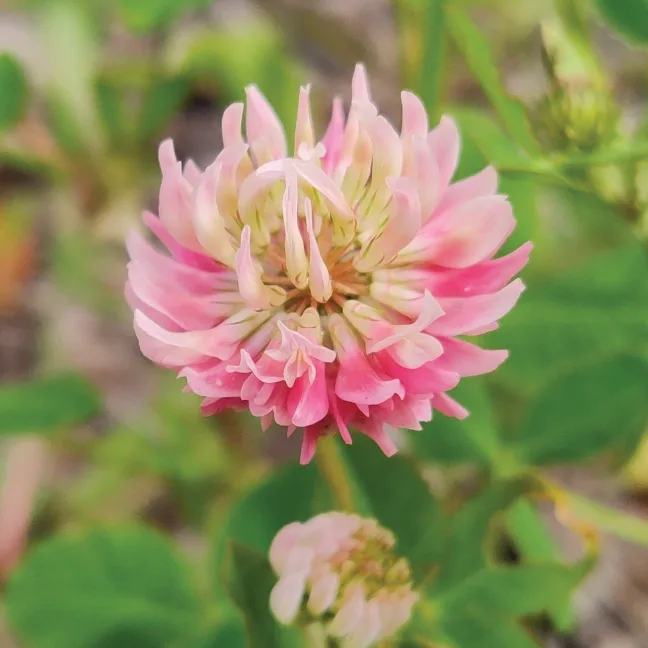
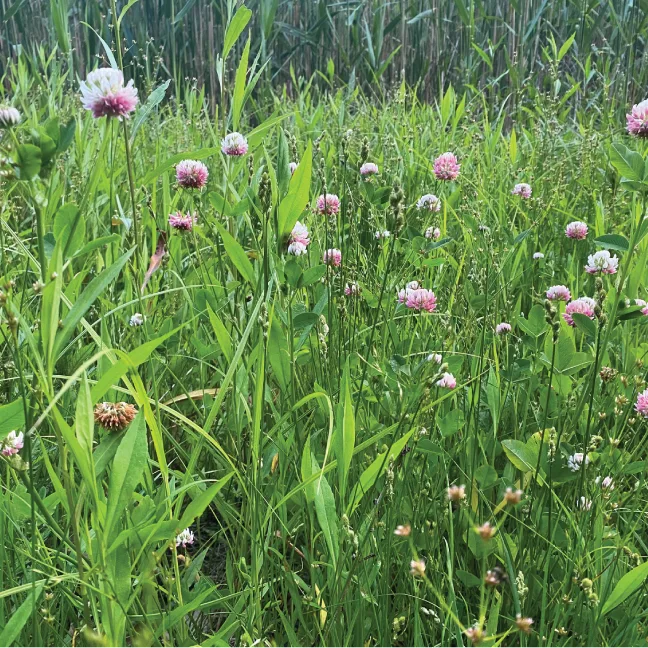
Alsike Clover (Trifolium hybridum) is a short-lived perennial legume that thrives where other clovers cannot — wet soils, acidic soils (pH as low as 5.0), poorly drained fields, and cool northern climates. It fixes 60-120 lbs of nitrogen per acre, produces some of the highest-quality honey of any clover species, and tolerates flooding for up to 6 weeks. It is the problem-solver clover for difficult sites. WARNING: Alsike clover is TOXIC TO HORSES and must not be grazed by or fed to horses.
Specifications
Seeding Specs
Establishment Specs
Why Choose This Seed?
The Wet Soil and Acidic Soil Clover
Alsike clover is the only commercially available clover that performs well in wet, poorly drained soils AND acidic conditions down to pH 5.0. Red clover needs pH 6.0+. White clover needs good drainage. Alsike tolerates seasonal flooding for up to 6 weeks and grows in heavy clay, muck, and peat soils that would kill other legumes. If you have a wet corner, a drainage ditch edge, a low-lying field, or acidic ground that other clovers fail in — alsike is the answer.
Premier Honey Plant
Alsike clover produces some of the finest-quality honey in North America. The white to pale pink flowers have short, open corollas accessible to both honeybees and native bees — unlike red clover which excludes honeybees. A well-established stand can support 500+ lbs of honey per acre in good years. Alsike honey is light-colored with mild flavor and commands premium prices. Beekeepers in northern states and Canada consider alsike one of the most dependable honey plants available. At least 57 native bee species visit alsike clover flowers.
60-120 lbs Nitrogen Per Acre
Alsike clover fixes 60-120 lbs of nitrogen per acre per year in productive stands. That is less than red clover’s 70-150 lbs, but the difference is context: alsike fixes that nitrogen in soils where red clover cannot survive. In wet, acidic fields where your only other option is no legume at all, alsike’s nitrogen contribution is the difference between fertilizer-dependent ground and self-improving pasture. Requires inoculation with Rhizobium leguminosarum — the same inoculant used for red and white clover.
Cool Climate Performance
Alsike clover is adapted to cool, humid climates and is winter-hardy through Zone 3. It is widely grown in the upper Midwest, New England, Pacific Northwest, and across Canada. It performs poorly in hot, dry conditions — do not expect good results south of Zone 6 or in arid climates. In its adapted range, alsike handles late-spring frosts, cool summers, and heavy winter snow cover without issue. It is the go-to clover for northern pastures with difficult soil conditions.
TOXIC TO HORSES — Mandatory Warning
Alsike clover causes two distinct toxicity syndromes in horses. Acute photosensitization: unpigmented (white/pink) skin develops severe sunburn-like lesions after consuming alsike clover and exposure to sunlight. Big liver syndrome: chronic consumption (typically >20% of diet over weeks to months) causes progressive liver damage that can be fatal. Both syndromes are well-documented in veterinary literature. DO NOT plant alsike clover in horse pastures or feed alsike clover hay to horses. Cattle, sheep, and goats are not affected at normal consumption levels. If you have horses, plant red clover or white clover instead.
How to Plant Alsike Clover
Inoculation
Alsike clover requires inoculation with Rhizobium leguminosarum — the same inoculant group used for red clover and white clover. Pre-inoculated seed is the easiest option. If using untreated seed, apply fresh inoculant immediately before planting. Without inoculation, alsike grows but does not fix nitrogen. If the field has recently grown inoculated clover of any type, residual bacteria may be present, but fresh inoculant is cheap insurance.
Seeding
Broadcast at 4-8 lbs per acre (0.15-0.25 lb per 1,000 sq ft). Drill at 2-4 lbs per acre. In grass mixtures, use 1-3 lbs/acre. Alsike clover seed is very small (~700,000 seeds per pound — smaller than red clover) so shallow planting is critical. Plant 1/8 to 1/4 inch deep. Do not bury seed. Firm seed-to-soil contact with a roller or cultipacker greatly improves establishment. Mix seed with a carrier (sand or fertilizer) for even broadcast distribution.
Establishing
Seeds germinate in 7-14 days at soil temperatures of 50-77°F. Alsike establishes more slowly than red clover but is competitive once rooted. First-year growth is primarily vegetative — a low rosette of trifoliate leaves. Full bloom begins in the second year. In wet sites, alsike’s tolerance of saturated soil gives it a strong competitive advantage over grasses that struggle in waterlogged conditions. Weed competition is the main establishment challenge.
Management
For hay: cut at early to mid-bloom for best quality (14-18% crude protein). Allow 5-6 weeks regrowth between cuts. One to two cuts per year is typical — alsike does not regrow as aggressively as red clover after cutting. For pasture: mix with grass to dilute and improve stand persistence. Alsike is less tolerant of close, frequent grazing than white clover. Maintain 3-4 inch stubble height. For honey production: allow full bloom — do not mow during peak flowering. NEVER graze with horses.
Helpful Resources
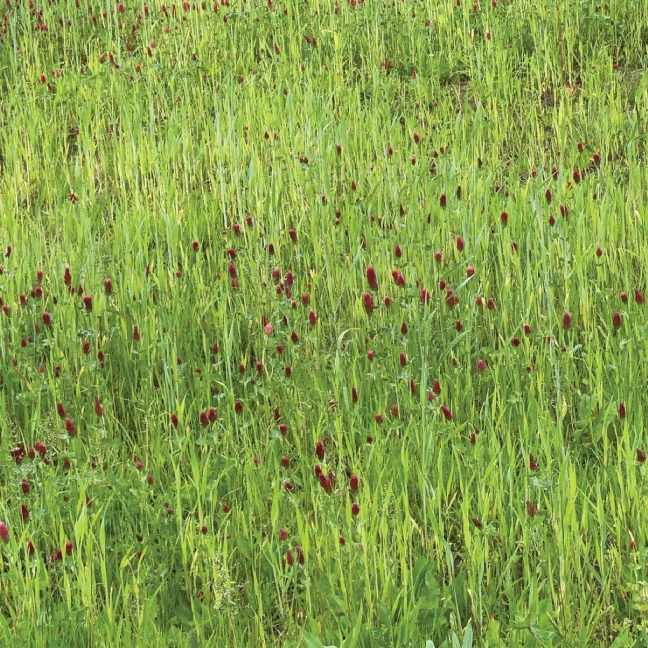
Clover Planting Guide
Questions & Answers
Alsike clover fills a specific niche: wet, poorly drained, acidic soils where red and white clover fail. Red clover needs pH 6.0+ and good drainage. White clover needs well-drained soil. Alsike tolerates pH as low as 5.0 and seasonal flooding for up to 6 weeks. If your site is well-drained with neutral pH, red or white clover will outperform alsike. Choose alsike specifically for problem sites.
Yes. Cattle, sheep, and goats graze alsike clover without the toxicity issues seen in horses. Alsike has lower bloat risk than red clover or alfalfa, making it a relatively safe pasture legume for ruminants. The horse toxicity (photosensitization and big liver syndrome) is specific to equines. Always mix alsike with grass for balanced grazing.
Alsike clover is a short-lived perennial lasting 2-4 years under favorable conditions. In wet, cool environments it often persists longer than red clover because there is less disease pressure. In warmer or drier conditions, stand life is shorter. Alsike self-seeds moderately well, so stands can maintain themselves longer than the individual plant lifespan suggests if allowed to produce seed periodically.
Yes — alsike and red clover are commonly mixed together. The red clover performs in the better-drained areas while alsike fills in the wet spots. A common pasture mix is 3-4 lbs alsike + 6-8 lbs red clover + 10-15 lbs timothy or orchardgrass per acre. Do not mix with white clover in wet sites — they compete for the same niche and alsike usually wins in truly wet conditions.
The exact toxin has not been conclusively identified, but the condition is well-documented in veterinary literature. Horses consuming alsike clover develop two syndromes: acute photosensitization (sunburn-like skin damage on unpigmented areas) and chronic big liver syndrome (progressive liver failure from prolonged consumption). Toxicity increases with higher dietary percentage (>20% of diet) and longer exposure. There is no treatment for big liver syndrome once advanced. Prevention is the only option — do not plant alsike in horse pastures.
A productive alsike clover stand can support 500+ lbs of surplus honey per acre in good years. Alsike honey is light-colored, mild-flavored, and considered premium quality. The short, open flower tubes make nectar accessible to both honeybees and short-tongued native bees — unlike red clover which primarily serves bumble bees. Alsike clover is one of the most important honey plants in the northern US and Canada.
Still Have Questions?
Our seed experts are ready to help you find the perfect seed for your project.
1-866-322-7300 Ask a Seed ExpertCustomer Reviews
See what real customers are saying. All reviews are collected and verified by Shopper Approved, an independent third party.
